
What's inside
- Best Thermal Monocular Tripod for Hunting by Hunter
- Quick Comparison: Best Thermal Monocular Tripod for Hunting Models
- Detailed Reviews: Best Thermal Monocular Tripod for Hunting Picks
- Buying Guide: Choosing the Best Thermal Monocular Tripod for Hunting
- Frequently Asked Questions About the Best Thermal Monocular Tripod for Hunting
As an Amazon Associate I earn from qualifying purchases. This post may contain affiliate links at no extra cost to you.
The best thermal monocular tripod for hunting solves a problem every handheld thermal user discovers in the first hour: a thermal monocular shows you heat, and heat is everywhere, and telling a target animal from a deer, a calf, a dog, or a warm rock at distance requires a still image held long enough for the brain to read shape, gait, and behaviour — while your hands, your heartbeat, and a cold wind conspire to make the image swim. A tripod turns the monocular from a detector into an observation instrument. Mounted and level, the thermal can scan a field edge in a slow, systematic sweep, stop on a signature, and study it for the minutes that honest identification takes, with the shooter’s hands free and the image steady enough to judge. That is the tripod’s whole case, and it is a strong one for the lawful night hunter — the hog and predator hunter where thermal equipment is legal for their species, season, and land — because at night, identification is not a courtesy. It is the entire ethics of the shot, and it is performed through this glass, before any rifle is raised.
Legality comes before gear, in this guide’s first pages and in the field. The law governing thermal and night-vision equipment for hunting varies sharply by country, state, species, season, and land type: what is lawful for feral hogs or coyotes on private land in one jurisdiction may be prohibited for the same species in the next, restricted to certain seasons or permits, or prohibited for deer and other game animals almost everywhere. Nothing in this guide is legal advice, and no product below makes an unlawful hunt lawful. Before buying or using any of it, read the current regulations from your wildlife authority for your exact species, season, and land, and if any answer is unclear, ask that authority and keep the answer. The hunters this equipment serves best are the ones who can recite their rules as fluently as their ballistics, because at night the margin for a mistake — legal, ethical, or ballistic — is the whole margin, and it is spent on identification or it is wasted.
The comparison fields real, currently sold tripods used under thermal monoculars and, in the shooting-tripod classes, under rifles as well: Kopfjäger’s K700 aluminium class and its Reaper holding system, BOG’s DeathGrip class, Leofoto’s LS carbon class, Two Vets’ sporting tripod classes, and Fatboy Tripods’ Traverse class. A thermal monocular mounts to most of them through the monocular’s own tripod thread — a standard 1/4-inch thread on many models, as their makers’ documents state — or through an adapter, clamp, or tray the tripod or monocular maker provides, and that interface is the first specification to verify, in both makers’ current documents, for your exact monocular. Load capacity, height range, folded length, weight, head and clamp type, and leg material are each maker’s specification for the current exact model and should be confirmed there before purchase. Prices are typical ranges rather than exact figures, and the honest total includes the adapter or head your monocular requires, because a tripod and a monocular that cannot be joined are two purchases and no system.
Our Top Picks
Best Thermal Monocular Tripod for Hunting by Hunter
The scanning observer: a smooth head, a level bubble, and hours of patience
For the hunter whose method is observation — a field edge watched from a set position, a bait site or a sound used where the law allows, a slow sweep repeated until the field has told its whole story — the Leofoto carbon class and Two Vets’ classes are the reference points: a ball head or levelling arrangement in their makers’ stated designs that lets the monocular pan smoothly and lock without a lurch, legs that set quietly on uneven ground, and a weight the walk in does not make a regret. Carbon’s premium buys exactly what a night observer spends: steadiness without mass, and legs that do not ring or click against brush the way a careless setup announces itself. Pair it with the monocular’s adapter verified in advance, at home, in daylight, because the night is not the place to discover a thread’s nationality.
The mobile predator and hog hunter: the shooting tripod that also scans
For the hunter who moves — calling stands, field to field, a rifle that will also rest on the same legs for the shot where the law and the land allow — the Kopfjäger and BOG DeathGrip classes are the working answer: tripods built to clamp and hold a rifle in their makers’ stated designs, on which a thermal monocular rides for the scan, by adapter or tray as their documents describe, before the rifle takes its turn. That dual duty is the mobile hunter’s economy: one set of legs, carried once, serving the observation and the shot, with the discipline this guide insists on — the monocular identifies, the target is confirmed as lawful game with a safe backstop and a clear field, and only then is any rifle mounted, under the range and field safety habits that govern every shot, day or night.
The stationary specialist: Fatboy and the heavy, planted answer
Fatboy’s Traverse class represents the tripod as furniture: the heaviest steadiness in this table in its maker’s stated classes, for the hunter whose night is one position — a blind, a field corner, a vehicle-adjacent set where the law permits — and whose scanning is a vigil rather than a patrol. Its weight is its argument and its condition in the same figure, read in Fatboy’s documents: planted, it will hold a thermal’s image still enough to read a signature’s behaviour for an hour; carried across a section, it will be remembered at every fence. Buy it for the vigil it was built for, and it is the finest legs here; buy it for a patrol, and it is a gym membership with a mounting thread.
Quick Comparison: Best Thermal Monocular Tripod for Hunting Models
| Model | Key Specs | Best For | Typical Price Range | Rating |
|---|---|---|---|---|
| Leofoto LS-324C Carbon Class | Carbon leg class, height range, load capacity, ball head classes per Leofoto documents for the exact model | Best thermal monocular tripod for hunting overall | $280 – $420 by head configuration | 4.6 / 5 |
| Kopfjäger K700 with Reaper Class | Aluminium leg class, holding system classes, height and capacity classes per Kopfjäger documents | Best dual-duty shooting tripod | $350 – $500 by configuration | 4.5 / 5 |
| BOG DeathGrip Class | Clamp head class, leg material classes by model, height and capacity classes per BOG documents | Best value dual-duty | $150 – $280 by leg material | 4.4 / 5 |
| Two Vets Sporting Tripod Class | Leg and head classes, height, capacity and weight classes per Two Vets documents for the exact model | Best purpose-built sporting | $400 – $650 by model | 4.5 / 5 |
| Fatboy Traverse Class | Heavy-duty leg class, height, capacity and weight classes per Fatboy documents for the exact model | Best stationary steadiness | $450 – $650 | 4.4 / 5 |
| Kopfjäger K400 Carbon Class | Carbon leg class, height and capacity classes, head classes per Kopfjäger documents | Best lighter Kopfjäger | $450 – $600 by configuration | 4.4 / 5 |

RIX Pocket K2 Portable Thermal Monocular for Hunting, 256x192 (50Hz), Wi-Fi, Handheld Night Vision Monocular
As an Amazon Associate we earn from qualifying purchases. Product prices and availability are accurate as of the date/time indicated.
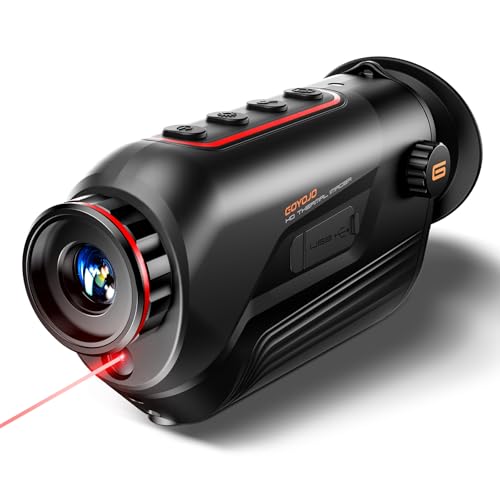
GOYOJO G215 Thermal Imaging Monocular for Hunting, 256x192 (50Hz) Infrared Night Vision Telescope, 15mm Focal Lens Thermal Scopes for Outdoor Night Vision Camera Telescope
As an Amazon Associate we earn from qualifying purchases. Product prices and availability are accurate as of the date/time indicated.

Night Vision Monocular Digital Infrared Monocular Telescope for 100% Darkness with 8X Zoom 2000mAh Rechargeable Battery Upgrade Tripod 32 GB SD Card & Card Reader, for Hunting Camping Green
As an Amazon Associate we earn from qualifying purchases. Product prices and availability are accurate as of the date/time indicated.
Maximum and minimum height, folded length, weight, load capacity, leg material and sections, head or clamp type, and mounting interfaces are each maker’s specification for the current exact model and configuration and must be confirmed in that maker’s current documents before purchase. Prices are typical street ranges as described; adapters, trays, or heads required by your specific thermal monocular may be additional. Confirm your monocular’s tripod thread or mounting provision in its maker’s documents before choosing an interface.
Detailed Reviews: Best Thermal Monocular Tripod for Hunting Picks
1. Leofoto LS-324C Carbon Class – Best Overall
Leofoto’s carbon class leads the scanning table because observation is a head-and-legs problem and it answers both: carbon legs in Leofoto’s stated classes that carry their steadiness at a walkable weight, and a ball-head ecosystem in its documents that pans a light thermal monocular with the smoothness a systematic sweep requires — slow, even, stoppable without the image bouncing past the signature and having to be found again. For a monocular that weighs little, the tripod’s capacity is generous headroom, and headroom is smoothness.
Verify the exact model’s head and plate arrangement against your monocular’s thread or adapter in both makers’ documents, and practise the whole mount at home until it can be done by feel and by headlamp. Set up that way, it disappears under the monocular, which is the highest state a tripod can achieve: the field, steady, and the hunter’s whole attention on the reading of it.
2. Kopfjäger K700 with Reaper Class – Best Dual-Duty Shooting Tripod
The K700 class is the mobile hunter’s institution: an aluminium tripod and a holding system in Kopfjäger’s stated designs that clamp a rifle for the shot, with the height and stance to shoot standing, kneeling, or seated as the terrain dictates. For the scan, a thermal monocular rides it by the adapter or accessory route Kopfjäger’s and the monocular maker’s documents describe, and the same legs then serve the rifle — one carry, two duties, and a system a predator hunter can run across a night of stands without a Sherpa.
Its weight is aluminium’s honesty, read in Kopfjäger’s figures, and its clamp should be used exactly as its maker directs, with any firearm verified unloaded during every setup, adjustment, and rehearsal at home. As a working system for the lawful night hunter who moves, it is the table’s most complete single purchase.
3. BOG DeathGrip Class – Best Value Dual-Duty
BOG’s DeathGrip class brings the clamp-tripod idea to the widest audience: a tilting clamp head in BOG’s stated design, in leg materials spanning aluminium to carbon across its models in its documents, at prices that let a hunter own the dual-duty system without a flagship’s commitment. For scanning, its head’s tilt and pan serve a monocular on an adapter adequately; for the shot, its clamp is the product, used as BOG directs.
Choose its leg material by your walking, from BOG’s stated weights, and confirm the clamp’s behaviour with your own equipment at home — unloaded, always — before a night depends on it. It is the value row in the honourable sense: the same idea as the leaders, priced for the hunter whose season is counted in weekends.
4. Two Vets Sporting Tripod Class – Best Purpose-Built Sporting
Two Vets’ tripod classes are built by and for the precision and sporting field, with leg and head arrangements in its documents aimed at a shooter who sets up on broken ground and expects the legs to level the instrument rather than the other way around. Under a thermal monocular, that fieldcraft shows as a sweep that stays level across a hillside scan, which is a subtle and genuine optical advantage: a level pan keeps the horizon, and the brain’s reading of a signature, honest.
Its models span weights and heights in Two Vets’ figures, so choose by your carry and your shooting positions, and verify the head’s plate system against your monocular’s mount as with every row. For the hunter who also shoots precision by day on the same legs, it is the system’s natural centre.
5. Fatboy Traverse Class – Best Stationary Steadiness
The Traverse class is the vigil’s tripod: heavy-duty legs and a build in Fatboy’s stated classes that treat steadiness as the whole specification, for the set position watched all night. A thermal on a Traverse, levelled and settled, gives the stillest image in this table, and stillness at 3 a.m. is identification — the extra minute of watching that separates a hog from a calf in the mind’s eye is bought with exactly this kind of iron.
Buy it only for the stationary life its weight prescribes, from Fatboy’s documents, and site it where the vehicle or a short carry makes its mass a non-event. In that life it has no rival here; outside it, it has no business, and a guide that respects both facts serves the hunter better than a ranking that respects neither.
6. Kopfjäger K400 Carbon Class – Best Lighter Kopfjäger
The K400 class carries the Kopfjäger system into carbon, in its stated figures, for the dual-duty hunter whose stands are far apart and whose shoulders file reports. It keeps the family logic — a holding system for the shot, an adapter route for the scan — at a weight that changes which hunts are thinkable, which is the most practical sentence in this entire guide: the best tripod is the one that is there, and carbon is how a tripod gets to be there at mile three.
Price it against the Leofoto row by your primary duty — Kopfjäger’s clamp system for the shooter, Leofoto’s head ecosystem for the pure observer — with both makers’ documents open. Either is a decade’s legs; the night will not know the difference, but your shoulders will, and they vote every stand.
Buying Guide: Choosing the Best Thermal Monocular Tripod for Hunting
Verify the mount first, then the legs: interface, capacity, and height
Begin with the joint between the two purchases, because it is where systems fail. Read your thermal monocular’s documents for its mounting provision — the thread size, the adapter its maker offers or approves, any tray or rail it expects — and read the tripod’s documents for its head, plate, or clamp system, and confirm in writing, from the two makers’ materials or their support, that the two meet, with every adapter priced into the total. Then size the legs: capacity comfortably above the mounted load, which for a monocular alone is easily met and for a dual-duty rifle system must be read seriously in the tripod maker’s figures; height that serves your positions — scanning standing, seated in a blind, or prone at a field edge — at both ends of its stated range; and leg locks and feet that work with cold, gloved hands, tested in a shop if one allows, because a tripod adjusted by frustration at midnight will be adjusted loudly. Set the whole system up at home, in daylight, rehearse the mount, the sweep, and the transition to any rifle rest with the firearm verified unloaded, and carry the rehearsal’s lessons — the adapter that wants a coin, the leg that wants marking for your height — into a small field kit, so the night is spent hunting rather than engineering.
Hunt the system lawfully and identify absolutely: the night discipline
Before the season, settle the law for your exact hunt from your wildlife authority’s current regulations: the species, the season and hours, the land, the equipment permitted — thermal, lights, calls, bait, vehicles, and dogs each have their own rules in many jurisdictions — and any permit or landowner permission required, kept with you as the rules direct. In the field, let the tripod serve the discipline it was bought for: scan systematically from a set position, in overlapping sweeps, at a pace that lets behaviour register; stop on every signature and identify it completely — species, and where the law or ethics require, more than species — using the thermal’s steady image, other lawful optics, and time, and treat any doubt as a negative, permanently, because a shot not taken is a story and a shot wrongly taken is everything else. Know your backstop and your field of fire in daylight before the night begins, know where roads, houses, livestock, and other hunters are in relation to your position, and never let a thermal’s glowing world persuade you that it is the whole world — it shows heat, not fences, not distances, not what stands behind the target in the dark. Keep every firearm’s muzzle in a safe direction, verify it unloaded during every setup and adjustment, and follow the land’s and the law’s rules for transport and storage when the night ends. That discipline, and not any product in this table, is what makes thermal hunting a creditable sport, and the tripod is simply its steadiest servant.
Maintain the legs and the log, season over season
Clean the tripod as its maker directs after the mud and the marsh — leg sections rinsed or wiped of grit before they are collapsed, locks and head kept free of the sand that grinds them, carbon inspected for the cracks that matter and aluminium for the bends that announce themselves — and store it dry, with its adapters, plates, and the monocular’s mounting hardware together in one pouch, because a system whose joint lives in another bag is a system that will one night be two objects. Keep a season log with the hunting records your law and your own standards require: positions, conditions, what the thermal showed and how the tripod served, the stands that worked and the interfaces that annoyed, because the second season’s setup should begin from the first season’s evidence rather than from its advertising. Replace worn feet, tired locks, and doubtful adapters before they fail at a stand, keep the makers’ documents with the kit, and re-read your regulations every season, because they change and the hunter is responsible for the current version. The best thermal monocular tripod for hunting is finally the one under a lawful, patient observer: mounted by verified documents, level on honest ground, holding the image still while its owner does the slowest and most important work in night hunting, which is being certain — and any tripod in this table, chosen and used inside that discipline, will hold that certainty steady for a decade of dark fields.
Frequently Asked Questions About the Best Thermal Monocular Tripod for Hunting
What is the best tripod for a thermal monocular for hunting?
For pure scanning and observation, the Leofoto LS carbon class leads this table for its smooth head work and walkable weight. For the mobile hog or predator hunter whose tripod must also rest the rifle, Kopfjäger’s K700 and K400 classes and BOG’s DeathGrip class are the dual-duty answers, with Two Vets’ classes as the purpose-built sporting option and Fatboy’s Traverse as the stationary vigil’s legs. The best one for you is decided first by the mount — your monocular’s thread or adapter, verified in both makers’ documents, meeting the tripod’s head or clamp system exactly — and then by your night’s shape: how far you walk, from what positions you scan, and whether the legs must also shoot. Confirm the law for your species, season, and land before any of it, because no tripod in this table is equipment for a hunt the regulations do not permit.
Can I mount any thermal monocular on a camera tripod?
Often, but verify rather than assume, because the joint is a specification and not a hope. Many thermal monoculars provide a standard tripod thread, commonly the photographic 1/4-inch thread, as their makers’ documents state, and those mount directly to camera-style heads and plates; others expect a maker’s adapter, a tray, or a clamp arrangement, and some provide no rigid mounting provision at all, in which case a tray or clamp accessory designed for the purpose, from a reputable maker, is the route. Check three things in the documents before the field: the thread or provision on your exact monocular, the head or plate system on the exact tripod, and the combined behaviour — a light monocular on a heavy head may need a small plate or adapter to balance and lock properly. Rehearse the mount at home, in daylight, until it can be done by feel, keep every adapter in one pouch with the tripod, and never improvise a mount in the dark with tape and optimism, because a thermal monocular is an expensive object to drop from a height onto frozen ground, and the drop is always scheduled for the best stand of the season.
Is thermal hunting legal, and what should I check before a night hunt?
It depends entirely on where, what, and when — and the only authority is your jurisdiction’s current wildlife regulations, read for your exact species, season, land type, and equipment, with any uncertainty settled by asking that authority directly. Thermal and night-vision rules differ sharply between jurisdictions and between species: feral hogs and certain predators on private land are lawful thermal quarry in some places, tightly conditioned in others, and prohibited in others again, while deer and most game animals are protected from night and thermal hunting almost universally. Check also the surrounding rules that travel with a night hunt — shooting hours, lights, bait, calls, suppressors where separately regulated, vehicle use, landowner permission, and any permit or reporting duties — and carry what the rules require you to carry. This guide provides no legal advice and no product changes a regulation. The hunters who use this equipment creditably treat the rulebook as part of the kit, re-read every season, and let a doubtful answer end the plan, because at night the sport’s entire reputation rides on the restraint of everyone holding a thermal.
How do I identify animals reliably with a thermal monocular?
With time, steadiness, and more than one kind of evidence — which is precisely what the tripod is for. A thermal image shows a heat signature, not an identity: size, shape, gait, posture, behaviour, company, and context must be read together, over minutes rather than glances, and the steady, mounted image this guide is about exists to make that reading possible. Learn the signatures of everything in your hunting country, including the non-targets — deer, livestock, dogs, other wildlife, and people — by observing them lawfully and often, so that the target species is recognised against a known cast rather than in a vacuum. Use the monocular’s magnification and palettes as its maker directs, cross-check with other lawful means where the situation allows, and know the ground in daylight: where the fences, feeders, roads, and neighbouring properties are, and what has a safe backstop behind it. Above all, keep the rule absolute and simple: if the identification is not complete, there is no shot, at any distance, on any night, for any reason — the animal will be there again, and the hunter’s record, once spent on a mistake, does not refill. Identification is not the delay before the hunt; at night, identification is the hunt, and the tripod’s stillness is its instrument.
Related guides
- Best Tripod for Travel Lightweight Packing in 2026: 7 Lightweight Travel Tripods That Pack Small, Hold a Spotting Scope Steady, and Fit in Your Carry-On
- Best Spotting Scope for Beginners Easy Setup in 2026: Forgiving Scopes, Simple Tripods, and a First Session That Ends With a Bird — Not a Manual
- Best Spotting Scope vs Binoculars for Beginners in 2026: 6 Top Spotting Scope vs Binoculars for Beginners Options, Easy Viewing, and Easy Use
- Best Digiscoping Under 100 Dollars for Moon Viewing: 6 Affordable Adapters and Scopes in 2026
More from Amazon
Programs that pair well with the guide above. Offers and eligibility are set by Amazon and may change.
Free shipping on eligible items, Prime Video and more. Eligible new members can start with a free trial.
Start a Prime free trialAudiobooks and podcasts to listen to on the go. Eligible new members can start with a free trial.
Try Audible freeAd-free music streaming. Eligible new subscribers can start with a free trial.
Try Music Unlimited freeA free business account with business pricing and bulk-buying tools for work, shop or home office.
Create a business accountAs an Amazon Associate we earn from qualifying purchases.

Write Your Review
No reviews yet. Be the first to share your experience!