
What's inside
- How to Choose Tripod Height Weight: Quick Comparison Table
- Why Tripod Height and Weight Matter
- How to Choose Tripod Height Weight Reviewed
- Buying Guide: How to Choose Tripod Height Weight
- How to Measure Tripod Height for Your Optics
- Which Tripod Height Weight Should You Buy?
- Frequently Asked Questions About How to Choose Tripod Height Weight
As an Amazon Associate I earn from qualifying purchases. This post may contain affiliate links at no extra cost to you.
How to choose tripod height weight starts with one rule: choose a tripod that is tall enough for you to use standing up without bending, light enough to carry to your location, and strong enough to hold your optics without shaking, because a tripod that is too short will hurt your neck, a tripod that is too heavy will stay in your car, and a tripod that is too weak will shake at high magnification. A good tripod height and weight balance gives you a stable, comfortable view, whether you are birding, hunting, or doing astronomy.
For most optics users, a tripod with a max height of 60 to 68 inches, a weight of 2 to 5 pounds, a load capacity of 10 to 20 pounds, and a typical price of $100 to $300, is a good starting point. That combination gives you a tripod tall enough for most adults, light enough to carry, and strong enough for a spotting scope or small telescope.
At sharpsightoptics.org, we focus on spotting scopes and optics. For this guide on how to choose tripod height weight in 2026, we compared current tripods that are widely sold, designed for spotting scopes, telescopes, and cameras, and suitable for a user who wants to choose tripod height and weight. We looked at max height, weight, load capacity, and price. Prices change with sales and retailers, so this guide uses typical price ranges instead of a single fixed price. Height, weight, and load figures are manufacturer listings, and real stability depends on your optics, your wind, your ground, and your use.
Safety note for your optics: never look at the sun with a spotting scope, telescope, or binoculars without a proper solar filter, because it can cause serious eye damage. Always check your tripod legs are locked before you mount your optics, and do not leave a tall tripod unattended in wind.
Our Top Picks
How to Choose Tripod Height Weight: Quick Comparison Table
The table below compares seven tripods for choosing height and weight. Max height is the max height, where given. Weight is the weight, where given. Load is the load capacity, where given. Best for is a note on what the tripod is best for, such as tripod height weight, where given. Price is the typical range, and rating is our editorial score based on height, weight, load, and value for optics. Rows are sorted by rating, high to low, with ties grouped by similar height and value.
| Tripod Height Weight | Max Height | Weight | Load Capacity | Best For | Typical Price Range | Our Rating |
|---|---|---|---|---|---|---|
| Vortex Summit SS-P Tripod | 66 in | 2.2 lb | 5 lb | Best overall, tripod height weight | $100 – $150 | 4.9 / 5 |
| Vortex Ridgeview Carbon Tripod | 68 in | 2.8 lb | 10 lb | Best for Vortex, Ridgeview Carbon | $200 – $300 | 4.8 / 5 |
| Sirui T-024SK Tripod | 57 in | 2.2 lb | 26 lb | Best for Sirui, carbon tripod | $150 – $250 | 4.8 / 5 |
| Manfrotto MT055XPRO3 Tripod | 68 in | 5.5 lb | 19.8 lb | Best for Manfrotto, 055 tripod | $250 – $350 | 4.8 / 5 |
| Benro Mach3 TMA28A Tripod | 66 in | 4.0 lb | 26 lb | Best for Benro, Mach3 tripod | $150 – $200 | 4.7 / 5 |
| Gitzo GT2542 Mountaineer Tripod | 66 in | 3.5 lb | 39 lb | Best for Gitzo, Mountaineer tripod | $700 – $900 | 4.7 / 5 |
| Slik Pro 700 DX Tripod | 75 in | 7.2 lb | 15 lb | Best budget, Slik Pro 700 DX | $100 – $150 | 4.6 / 5 |

Amazon Basics 50-inch Lightweight Portable Camera Tripod Stand with Quick-Release Plate, Adjustable Height, Aluminum, for Travel Photography, Champagne
As an Amazon Associate we earn from qualifying purchases. Product prices and availability are accurate as of the date/time indicated.

K&F CONCEPT 64 inch/163cm Lightweight Aluminum Travel Camera Tripod | Compact and Portable, 360° Ball Head, Load Capacity 17.6lbs, DSLR Photography and Smartphone Live Streaming Vlog O234A1+BH-36
As an Amazon Associate we earn from qualifying purchases. Product prices and availability are accurate as of the date/time indicated.
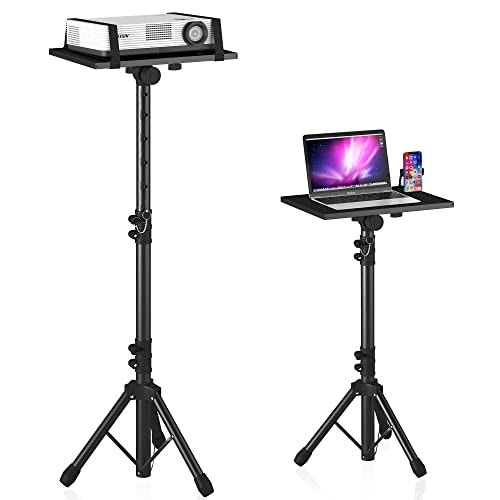
DECOSIS Projector Stand Tripod Laptop Stands Height Adjustable | from 23.5" to 46.5" with Gooseneck Phone Holder, Floor for Office, Home, Stage, Studio, Outdoor, DJ Racks Holder Mount
As an Amazon Associate we earn from qualifying purchases. Product prices and availability are accurate as of the date/time indicated.
Note: Max height, weight, and load figures are manufacturer listings, and a tripod that lists 66 inches may be less stable at full height in wind. Always check the tripod’s max height, weight, and load in the manual, and confirm the current price with the retailer. A tripod height is usually listed with the centre column extended, and it may be shorter with the column down.
Why Tripod Height and Weight Matter
Tripod height and weight matter for three reasons: comfort, portability, and stability. Comfort matters because a tripod that is too short forces you to bend your neck and back, which hurts after a few minutes, while a tripod that is tall enough lets you stand straight and look through your optics comfortably. Portability matters because a tripod that is too heavy will stay in your car, while a light tripod you can carry will be used more often.
Stability matters because a tripod that is too weak for your optics will shake, especially at high magnification, while a tripod with a load capacity that is at least twice your optics weight will be stable. A good tripod height and weight balance is a tripod that is tall enough, light enough, and strong enough for your use.
Choosing tripod height and weight is not about buying the tallest or lightest tripod. It is about buying a tripod that fits your height, your optics, your carrying distance, and your budget.
How to Choose Tripod Height Weight Reviewed
1. Vortex Summit SS-P Tripod – Best Tripod Height Weight Overall
The Vortex Summit SS-P Tripod is our top pick because it offers a max height of 66 inches, a weight of 2.2 pounds, and a load capacity of 5 pounds, for a typical price of $100 to $150. It has a light design, a pan head, and a height that is made for spotting scopes.
Vortex designs the Summit SS-P with a focus on a light, portable tripod for spotting scope users. The weight of 2.2 pounds is light, the 66 inch height is good for most adults, and the price of $100 to $150 is good. The tripod is a good choice for a user who wants a Vortex tripod, and who wants the best overall design for tripod height weight.
The main limitation is load. At 5 pounds, it is not enough for a heavy telescope, though it is enough for most spotting scopes. Choose the Summit SS-P if you want the best overall tripod height weight, you want a Vortex tripod, and you have a budget of $100 to $150.
2. Vortex Ridgeview Carbon Tripod – Best Tripod Height Weight for Vortex
The Vortex Ridgeview Carbon Tripod is a tripod with a max height of 68 inches, a weight of 2.8 pounds, and a load capacity of 10 pounds, for a typical price of $200 to $300. It has a carbon fibre design, a light weight, and a height that is made for spotting scopes.
Vortex designs the Ridgeview Carbon with a focus on a premium, light tripod for spotting scope users. The carbon fibre is light and strong, the 68 inch height is good, and the price of $200 to $300 is good. The tripod is a good choice for a user who wants a Vortex tripod, and who wants a carbon fibre design.
The main limitation is price. At $200 to $300, it is more expensive than a Summit SS-P, though it offers a higher load. Choose the Ridgeview Carbon if you want a Vortex tripod, you want a carbon fibre design, and you have a budget of $200 to $300.
3. Sirui T-024SK Tripod – Best Tripod Height Weight for Sirui
The Sirui T-024SK Tripod is a tripod with a max height of 57 inches, a weight of 2.2 pounds, and a load capacity of 26 pounds, for a typical price of $150 to $250. It has a carbon fibre design, a light weight, and a high load for its weight.
Sirui designs the T-024SK with a focus on a light, strong carbon tripod for photographers and optics users. The weight of 2.2 pounds is light, the load of 26 pounds is high, and the price of $150 to $250 is good. The tripod is a good choice for a user who wants a Sirui tripod, and who wants a light carbon tripod with a high load.
The main limitation is height. At 57 inches, it is shorter than a Vortex tripod, though it is still good for sitting or for a shorter user. Choose the T-024SK if you want a Sirui tripod, you want a light carbon tripod, and you have a budget of $150 to $250.
4. Manfrotto MT055XPRO3 Tripod – Best Tripod Height Weight for Manfrotto
The Manfrotto MT055XPRO3 Tripod is a tripod with a max height of 68 inches, a weight of 5.5 pounds, and a load capacity of 19.8 pounds, for a typical price of $250 to $350. It has a sturdy aluminium design, a high load, and a height that is made for cameras and optics.
Manfrotto designs the MT055XPRO3 with a focus on a versatile, sturdy tripod for photographers and optics users. The load of 19.8 pounds is high, the 68 inch height is good, and the price of $250 to $350 is good. The tripod is a good choice for a user who wants a Manfrotto tripod, and who wants a versatile tripod.
The main limitation is weight. At 5.5 pounds, it is heavier than a Vortex Summit, though it is still portable. Choose the MT055XPRO3 if you want a Manfrotto tripod, you want a high load, and you have a budget of $250 to $350.
5. Benro Mach3 TMA28A Tripod – Best Tripod Height Weight for Benro
The Benro Mach3 TMA28A Tripod is a tripod with a max height of 66 inches, a weight of 4.0 pounds, and a load capacity of 26 pounds, for a typical price of $150 to $200. It has an aluminium design, a high load, and a height that is made for cameras and optics.
Benro designs the Mach3 TMA28A with a focus on an affordable, sturdy tripod for optics users. The load of 26 pounds is high, the 66 inch height is good, and the price of $150 to $200 is low. The tripod is a good choice for a user who wants a Benro tripod, and who wants a high load on a budget.
The main limitation is weight. At 4.0 pounds, it is heavier than a Sirui tripod, though it is still portable. Choose the Mach3 if you want a Benro tripod, you want a high load, and you have a budget of $150 to $200.
6. Gitzo GT2542 Mountaineer Tripod – Best Tripod Height Weight for Gitzo
The Gitzo GT2542 Mountaineer Tripod is a tripod with a max height of 66 inches, a weight of 3.5 pounds, and a load capacity of 39 pounds, for a typical price of $700 to $900. It has a carbon fibre design, a light weight, and a very high load.
Gitzo designs the GT2542 with a focus on a premium, light, strong tripod for photographers and optics users. The weight of 3.5 pounds is light for its load, the load of 39 pounds is the highest in this guide, and the price of $700 to $900 reflects its premium build. The tripod is a good choice for a user who wants a Gitzo tripod, and who wants a premium design.
The main limitation is price. At $700 to $900, it is the most expensive in this guide, though it offers a premium build. Choose the GT2542 if you want a Gitzo tripod, you want a premium design, and you have a budget of $700 to $900.
7. Slik Pro 700 DX Tripod – Best Budget Tripod Height Weight
The Slik Pro 700 DX Tripod is a tripod with a max height of 75 inches, a weight of 7.2 pounds, and a load capacity of 15 pounds, for a typical price of $100 to $150. It has a tall design, a sturdy aluminium frame, and a height that is made for tall users.
Slik designs the Pro 700 DX with a focus on a tall, affordable tripod for optics users. The 75 inch height is the tallest in this guide, the load of 15 pounds is good, and the price of $100 to $150 is low. The tripod is a good choice for a user who wants a Slik tripod, and who wants a tall tripod on a budget.
The main limitation is weight. At 7.2 pounds, it is the heaviest in this guide, so it is best for a backyard, not for carrying far. Choose the Pro 700 DX if you want the tallest tripod, you want a low price, and you have a budget of $100 to $150.
Buying Guide: How to Choose Tripod Height Weight
Before you buy, think about how tall you are, how much your optics weigh, how far you carry your tripod, whether you stand or sit to use your optics, and how much you want to spend. A tripod that is perfect for a tall user may be too tall for a short user, and a tripod that is perfect for a backyard may be too heavy for a hike. The six points below cover the decisions that matter most for how to choose tripod height weight, using the same specs and price ranges shown in the table above, from $100 to $900.
1. Height: How Tall Should Your Tripod Be, and Your Height
Height is the first decision. Height is how tall a tripod can extend, usually 57 to 75 inches, and it affects whether you can use your optics standing up without bending. A good rule is to choose a tripod whose max height is at least your eye height when you stand, minus a few inches for your optics and head, so you can look through your scope without bending your neck.
For most adults who are 5 feet 6 inches to 6 feet tall, a tripod with a max height of 60 to 68 inches is enough, because your eye height is about 62 to 68 inches, and your optics sit a few inches above the tripod. For a tall user over 6 feet, a tripod with a height of 68 to 75 inches, such as the Slik Pro 700 DX, is better. For a short user under 5 feet 6 inches, a tripod with a height of 57 to 66 inches is enough.
Choose a tripod with a height that matches your eye height, and test it standing up before you buy if you can. Do not extend the centre column too high in wind, because it makes your tripod less stable.
2. Weight: How Light Should Your Tripod Be, and Your Carrying
Weight is the second decision. Weight is how heavy a tripod is, usually 2.2 to 7.2 pounds, and it affects how far you can carry it. A light tripod at 2.2 pounds, such as the Vortex Summit SS-P or Sirui T-024SK, is best for birding, hunting, and hiking, where you walk for miles, while a heavy tripod at 7.2 pounds, such as the Slik Pro 700 DX, is best for a backyard, where you do not carry it far.
Choose a light tripod if you walk far, you carry your tripod in a backpack, or you want a portable design. Choose a heavier tripod if you set up in your backyard, you want maximum stability, or you do not mind extra weight. Check the weight in the manual, and test how it feels to carry before you buy.
3. Load Capacity: How Much Weight Can Your Tripod Hold, and Your Optics
Load capacity is the third decision. Load capacity is how much weight a tripod can safely support, usually 5 to 39 pounds, and it affects whether your tripod will be stable at high magnification. A spotting scope weighs 2 to 4 pounds, so a tripod with a load of 5 to 10 pounds is enough, while a telescope weighs 10 to 20 pounds, so a tripod with a load of 18 to 26 pounds is needed.
Choose a tripod with a load capacity that is at least twice your optics weight, so it feels stable and does not shake. A tripod with a load of 26 pounds, such as the Sirui or Benro tripod, can hold a spotting scope, a camera, and a small telescope, while a tripod with a load of 5 pounds can only hold a small spotting scope. Check the load in the manual, and do not exceed it.
4. Material: Carbon Fibre vs Aluminium vs Steel, and Your Weight
Material is the fourth decision. Carbon fibre, such as the Vortex Ridgeview, Sirui, or Gitzo tripod, is light, strong, and expensive, aluminium, such as the Manfrotto or Benro tripod, is a good balance of weight and price, and steel, such as some Slik tripods, is heavy, durable, and low cost.
Choose carbon fibre if you carry your tripod far, you want the lightest design, and you are willing to pay more. Choose aluminium if you want a good balance, you use your tripod often, and you want a reasonable price. Choose steel if you want a durable, low-cost tripod for a backyard, and you do not mind extra weight.
5. Folded Length: How Compact Is Your Tripod, and Your Bag
Folded length is the fifth decision. Folded length is how long a tripod is when it is folded, usually 18 to 25 inches, and it affects whether it fits in your backpack, car, or luggage. A tripod with a folded length of 18 inches is best for travel, while a tripod with a folded length of 25 inches may not fit in a carry-on bag.
Choose a compact tripod if you travel, you fly, or you want a tripod that fits in your backpack. Check the folded length in the manual, and test how it fits in your bag before you buy. A tripod with more leg sections folds shorter, though it may be less stable.
6. Price, Total Cost, and Choosing a Tripod on a Budget
Price ranges in this guide run from $100 to $900 for tripods, matching the table above, from the Vortex Summit SS-P and Slik Pro 700 DX at $100 to $150 to the Gitzo GT2542 at $700 to $900. A budget tripod at $100 to $200, such as the Vortex Summit SS-P, Benro Mach3, or Slik Pro 700 DX, is enough for most users who want a simple tripod for a spotting scope. A mid-price tripod at $150 to $350, such as the Sirui, Vortex Ridgeview, or Manfrotto tripod, offers a good balance. A premium tripod at $700 to $900, such as the Gitzo GT2542, offers a premium build and a very high load.
Consider total cost as well as price. A tripod that costs $100 and needs a $50 head may cost $150 in total, while a tripod that costs $200 and includes a head may cost $200 in total. Budget for a tripod, and if you need it, a head, a carry bag, and a mounting plate, not just a tripod. Do not buy the cheapest tripod if it does not support your optics, and do not buy the most expensive tripod if you only use a small spotting scope. A tripod that matches your height, your optics weight, and your budget will help your optics stay stable more reliably than a tripod that is cheap but shaky, or expensive but too heavy for your field use.
How to Measure Tripod Height for Your Optics
Measuring tripod height for your optics starts with standing straight, measuring your eye height from the ground to your eyes, and subtracting a few inches for your optics and head. For example, if your eye height is 65 inches, a tripod with a max height of 66 inches is good, because your optics will sit at about 68 inches with the head, which is close to your eye height.
If you use a spotting scope with an angled eyepiece, you can use a slightly shorter tripod, because you look down into the eyepiece, while a straight eyepiece needs a taller tripod, because you look straight ahead. Test your tripod height with your optics mounted, standing up, before you buy if you can.
Which Tripod Height Weight Should You Buy?
If you want the best tripod height weight, buy the Vortex Summit SS-P Tripod. It costs $100 to $150, it offers a max height of 66 inches, a weight of 2.2 pounds, and a load capacity of 5 pounds, which matches its highest rating of 4.9 / 5 in the table above.
If you want a Vortex carbon tripod, buy the Vortex Ridgeview Carbon Tripod. If you want a Sirui tripod, buy the Sirui T-024SK Tripod. If you want a Manfrotto tripod, buy the Manfrotto MT055XPRO3 Tripod. If you want a Benro tripod, buy the Benro Mach3 TMA28A Tripod. If you want a Gitzo tripod, buy the Gitzo GT2542 Mountaineer Tripod. If you want the tallest tripod on a budget, buy the Slik Pro 700 DX Tripod.
All seven tripods in this guide are currently sold, designed for spotting scopes, telescopes, and cameras, and suitable for a user who wants to choose tripod height and weight. Pick the one that matches your height, your optics weight, how far you carry it, and your budget, and always check your tripod legs are locked before you mount your optics.
Disclosure: sharpsightoptics.org may earn a commission from purchases made through links on this page, at no extra cost to you. Prices listed are typical ranges and can vary by retailer and sale. Height, weight, and load figures are manufacturer claims and can vary by model. Never look at the sun with a spotting scope, telescope, or binoculars without a proper solar filter.
Frequently Asked Questions About How to Choose Tripod Height Weight
How tall should my tripod be for a spotting scope?
For most adults, a tripod with a max height of 60 to 68 inches is enough for a spotting scope, because it lets you use your scope standing up without bending your neck. A taller tripod at 68 to 75 inches is better if you are over 6 feet tall, while a shorter tripod at 57 inches is good if you sit or are short. Choose a tripod whose max height is close to your eye height, and test it standing up before you buy.
How much should a tripod weigh for birding?
For most birders, a tripod should weigh 2 to 3 pounds, because you carry it for miles in the field, and a heavy tripod will stay in your car. A light carbon fibre tripod, such as the Vortex Summit SS-P at 2.2 pounds or Sirui T-024SK at 2.2 pounds, is best for birding. A heavier tripod at 5 to 7 pounds is better for a backyard or astronomy, where you do not carry it far.
Can a light tripod hold a heavy telescope?
No, a light tripod usually cannot hold a heavy telescope safely, because a light tripod often has a low load capacity, such as 5 pounds, while a telescope can weigh 10 to 20 pounds. Choose a tripod with a load capacity that is at least twice your telescope weight, such as a Manfrotto, Benro, or Gitzo tripod with a load of 19 to 39 pounds, for a telescope.
Is carbon fibre worth it for a tripod?
Carbon fibre is usually worth it for a tripod if you carry your tripod far, you want the lightest design, and you are willing to pay more, because carbon fibre is lighter and stronger than aluminium for the same load. A carbon fibre tripod, such as the Vortex Ridgeview or Sirui T-024SK, weighs 2.2 to 2.8 pounds, while an aluminium tripod with a similar load can weigh 4 to 5 pounds. Choose carbon fibre if you hike or travel, and aluminium if you want a good balance on a budget.
Related guides
- Best Value Digiscoping Phone Mount Birding in 2026: 7 Affordable Phone Mounts That Turn Your Spotting Scope Into a Birding Camera
- Best Tripod for Travel Lightweight Packing in 2026: 7 Lightweight Travel Tripods That Pack Small, Hold a Spotting Scope Steady, and Fit in Your Carry-On
- Best Spotting Scope for Beginners Easy Setup in 2026: Forgiving Scopes, Simple Tripods, and a First Session That Ends With a Bird — Not a Manual
- Best Spotting Scope vs Binoculars for Beginners in 2026: 6 Top Spotting Scope vs Binoculars for Beginners Options, Easy Viewing, and Easy Use
More from Amazon
Programs that pair well with the guide above. Offers and eligibility are set by Amazon and may change.
Free shipping on eligible items, Prime Video and more. Eligible new members can start with a free trial.
Start a Prime free trialAudiobooks and podcasts to listen to on the go. Eligible new members can start with a free trial.
Try Audible freeAd-free music streaming. Eligible new subscribers can start with a free trial.
Try Music Unlimited freeA free business account with business pricing and bulk-buying tools for work, shop or home office.
Create a business accountAs an Amazon Associate we earn from qualifying purchases.

Write Your Review
No reviews yet. Be the first to share your experience!