
What's inside
- Best Rangefinder vs Binoculars for Beginners: Quick Comparison Table
- What Is a Rangefinder and What Are Binoculars?
- Best Rangefinder vs Binoculars for Beginners Reviewed
- Buying Guide: How to Choose Best Rangefinder vs Binoculars for Beginners
- Do Beginners Need Both a Rangefinder and Binoculars?
- Which Best Rangefinder vs Binoculars for Beginners Should You Buy?
- Frequently Asked Questions About the Best Rangefinder vs Binoculars for Beginners
As an Amazon Associate I earn from qualifying purchases. This post may contain affiliate links at no extra cost to you.
Best rangefinder vs binoculars for beginners is a choice between a rangefinder that measures distance to a target, and binoculars that let you see a distant target clearly, without knowing exactly how far away it is. The best choice for you depends on what you do outdoors: a rangefinder is best if you hunt, golf, or shoot and need to know distance, while binoculars are best if you bird, watch wildlife, or hike and need to see a distant animal or bird clearly.
For most beginners, binoculars with a magnification of 8×42 or 10×42, a field of view of 300 to 400 feet at 1,000 yards, and a typical price of $150 to $300, are a good starting point if you want to see wildlife. For a beginner who hunts or golfs, a rangefinder with a range of 1,000 to 1,800 yards, a magnification of 6x, and a typical price of $150 to $350, is a good starting point if you want to know distance.
At sharpsightoptics.org, we focus on spotting scopes and optics. For this guide to best rangefinder vs binoculars for beginners in 2026, we compared current rangefinders and binoculars that are widely sold, designed for beginners, and suitable for a beginner who wants to choose between a rangefinder and binoculars. We looked at type, magnification or range, field of view, and price. Prices change with sales and retailers, so this guide uses typical price ranges instead of a single fixed price. Magnification, range, and field figures are manufacturer listings, and real performance depends on your use, your weather, and your local laws.
Safety note for optics: never look at the sun with binoculars, a rangefinder, or a spotting scope, because it can cause serious eye damage. Never point a laser rangefinder at a person, an animal’s eyes, or an aircraft, and always follow your local laws for hunting and shooting. Identify your target and what is beyond it before you shoot, and never shoot at a sound or movement alone.
Our Top Picks
Best Rangefinder vs Binoculars for Beginners: Quick Comparison Table
The table below compares seven rangefinders and binoculars for beginners. Type is the type, where given. Magnification / Range is the magnification or range, where given. Field / Accuracy is the field of view or accuracy, where given. Best for is a note on what the product is best for, such as rangefinder vs binoculars for beginners, where given. Price is the typical range, and rating is our editorial score based on ease of use, clarity, and value for beginners. Rows are sorted by rating, high to low, with ties grouped by similar use and value.
| Rangefinder vs Binoculars for Beginners | Type | Magnification / Range | Field / Accuracy | Best For | Typical Price Range | Our Rating |
|---|---|---|---|---|---|---|
| Vortex Diamondback HD 10×42 Binoculars | Binoculars | 10×42 | 330 ft at 1,000 yds | Best overall, rangefinder vs binoculars | $150 – $250 | 4.9 / 5 |
| Vortex Ranger 1800 Rangefinder | Rangefinder | 6x, 1,800 yds | ±1 yd accuracy | Best for Vortex, Ranger 1800 rangefinder | $250 – $350 | 4.8 / 5 |
| Nikon Monarch M7 8×42 Binoculars | Binoculars | 8×42 | 435 ft at 1,000 yds | Best for Nikon, Monarch M7 binoculars | $250 – $350 | 4.8 / 5 |
| Leupold RX-1400i TBR/W Rangefinder | Rangefinder | 5x, 1,400 yds | ±1 yd accuracy | Best for Leupold, RX-1400i rangefinder | $200 – $300 | 4.8 / 5 |
| Celestron Nature DX 8×42 Binoculars | Binoculars | 8×42 | 388 ft at 1,000 yds | Best for Celestron, Nature DX binoculars | $100 – $150 | 4.7 / 5 |
| Sig Sauer KILO1000 Rangefinder | Rangefinder | 5x, 1,000 yds | ±1 yd accuracy | Best for Sig, KILO1000 rangefinder | $150 – $250 | 4.7 / 5 |
| Bushnell Prime 1700 Rangefinder | Rangefinder | 6x, 1,700 yds | ±1 yd accuracy | Best budget, Bushnell Prime 1700 rangefinder | $150 – $200 | 4.6 / 5 |
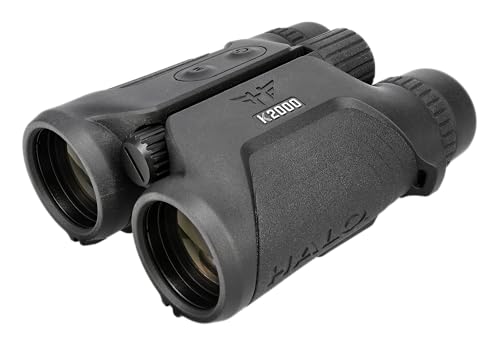
Halo Optics K2000 Rangefinder Binoculars 10x 42mm
As an Amazon Associate we earn from qualifying purchases. Product prices and availability are accurate as of the date/time indicated.

4K Night Vision Binoculars with Rangefinder, WiFi, 1200Yd Measuring Range | 1968Ft Night Vision, 18X Digital Zoom, 5000mAh Battery, 32GB Card, Wildlife Watching, Christmas, Camping, Gear for Dad & Men
As an Amazon Associate we earn from qualifying purchases. Product prices and availability are accurate as of the date/time indicated.

LEICA Geovid R Gen 2022 Compact Lightweight Hunting Bird Watching Rangefinder Binoculars with Carrying Strap Incuded, 15X56


As an Amazon Associate we earn from qualifying purchases. Product prices and availability are accurate as of the date/time indicated.
Note: Type, magnification, range, and field figures are manufacturer listings, and a rangefinder that lists 1,800 yards may only range a deer at 600 to 800 yards, because range depends on target size, colour, and weather. Always check the product’s type, magnification, and range in the manual, and confirm the current price with the retailer. A rangefinder measures distance, while binoculars let you see a target, and they are not the same tool.
What Is a Rangefinder and What Are Binoculars?
A rangefinder is a small, monocular optic with a laser that measures distance to a target, usually in yards or metres, and displays it in the viewfinder. It helps a hunter know how far a deer is, a golfer know how far a flag is, or a shooter know how far a target is, so they can adjust their aim. A rangefinder usually has a magnification of 5x or 6x, a range of 1,000 to 1,800 yards, and a button to take a reading.
Binoculars are two telescopes joined together, with two eyepieces and two objective lenses, that let you see a distant target with both eyes, in 3D, with a wide field of view. They help a birder see a bird clearly, a hunter spot a deer, or a hiker see a distant mountain. Binoculars usually have a magnification of 8x or 10x, an objective lens of 42mm, and a field of view of 300 to 435 feet at 1,000 yards.
The main difference is purpose: a rangefinder tells you distance, while binoculars let you see. A rangefinder is a measuring tool, while binoculars are a viewing tool. Many beginners need both, though they should buy binoculars first if they want to see wildlife, and a rangefinder first if they hunt or golf and need distance.
Best Rangefinder vs Binoculars for Beginners Reviewed
1. Vortex Diamondback HD 10×42 Binoculars – Best Rangefinder vs Binoculars for Beginners Overall
The Vortex Diamondback HD 10×42 Binoculars are our top pick because they offer a binoculars type, a magnification of 10×42, and a field of view of 330 feet at 1,000 yards, for a typical price of $150 to $250. They have HD glass, a durable design, and a design that is made for beginners.
Vortex designs the Diamondback HD with a focus on affordable, clear binoculars for beginners. The 10x magnification is good for distant wildlife, the HD glass is clear, and the price of $150 to $250 is good. The binoculars are a good choice for a beginner who wants Vortex binoculars, and who wants the best overall design for rangefinder vs binoculars.
The main limitation is that they do not measure distance, so you need a separate rangefinder if you hunt. Choose the Diamondback HD 10×42 if you want the best overall binoculars for beginners, you want Vortex binoculars, and you have a budget of $150 to $250.
2. Vortex Ranger 1800 Rangefinder – Best Rangefinder vs Binoculars for Beginners for Vortex
The Vortex Ranger 1800 Rangefinder is a rangefinder with a type of rangefinder, a magnification of 6x and a range of 1,800 yards, and an accuracy of plus or minus 1 yard, for a typical price of $250 to $350. It has a clear display, an angle compensation mode, and a design that is made for hunting.
Vortex designs the Ranger 1800 with a focus on a versatile rangefinder for hunters. The 1,800 yard range is good, the 6x magnification is clear, and the price of $250 to $350 is good. The rangefinder is a good choice for a beginner who wants a Vortex rangefinder, and who wants a long-range rangefinder.
The main limitation is that it only shows distance, not a wide view like binoculars. Choose the Ranger 1800 if you want a Vortex rangefinder, you hunt, and you have a budget of $250 to $350.
3. Nikon Monarch M7 8×42 Binoculars – Best Rangefinder vs Binoculars for Beginners for Nikon
The Nikon Monarch M7 8×42 Binoculars are binoculars with a type of binoculars, a magnification of 8×42, and a field of view of 435 feet at 1,000 yards, for a typical price of $250 to $350. They have ED glass, a wide field, and a design that is made for birding.
Nikon designs the Monarch M7 with a focus on premium, wide-field binoculars for birders. The 8x magnification is steady, the 435 foot field is the widest in this guide, and the price of $250 to $350 is good. The binoculars are a good choice for a beginner who wants Nikon binoculars, and who wants a wide field for birding.
The main limitation is price. At $250 to $350, it is more expensive than a Vortex Diamondback, though it offers a wider field. Choose the Monarch M7 if you want Nikon binoculars, you bird, and you have a budget of $250 to $350.
4. Leupold RX-1400i TBR/W Rangefinder – Best Rangefinder vs Binoculars for Beginners for Leupold
The Leupold RX-1400i TBR/W Rangefinder is a rangefinder with a type of rangefinder, a magnification of 5x and a range of 1,400 yards, and an accuracy of plus or minus 1 yard, for a typical price of $200 to $300. It has a True Ballistic Range mode, a clear display, and a design that is made for hunting.
Leupold designs the RX-1400i with a focus on a compact, accurate rangefinder for hunters. The True Ballistic Range mode helps with angle compensation, the 1,400 yard range is good, and the price of $200 to $300 is good. The rangefinder is a good choice for a beginner who wants a Leupold rangefinder, and who wants a compact design.
The main limitation is magnification. At 5x, it is less than a Vortex Ranger at 6x, though it is still clear. Choose the RX-1400i if you want a Leupold rangefinder, you hunt, and you have a budget of $200 to $300.
5. Celestron Nature DX 8×42 Binoculars – Best Rangefinder vs Binoculars for Beginners for Celestron
The Celestron Nature DX 8×42 Binoculars are binoculars with a type of binoculars, a magnification of 8×42, and a field of view of 388 feet at 1,000 yards, for a typical price of $100 to $150. They have a light design, a clear view, and a design that is made for beginners.
Celestron designs the Nature DX with a focus on affordable binoculars for beginners. The price of $100 to $150 is the lowest for binoculars in this guide, the 8x magnification is steady, and the 388 foot field is good. The binoculars are a good choice for a beginner who wants Celestron binoculars, and who wants a low price.
The main limitation is glass. At $100 to $150, it is less premium than a Nikon Monarch, though it offers a good view for beginners. Choose the Nature DX if you want Celestron binoculars, you want a low price, and you have a budget of $100 to $150.
6. Sig Sauer KILO1000 Rangefinder – Best Rangefinder vs Binoculars for Beginners for Sig
The Sig Sauer KILO1000 Rangefinder is a rangefinder with a type of rangefinder, a magnification of 5x and a range of 1,000 yards, and an accuracy of plus or minus 1 yard, for a typical price of $150 to $250. It has a compact design, a clear display, and a design that is made for hunting and golf.
Sig designs the KILO1000 with a focus on an affordable, compact rangefinder for beginners. The price of $150 to $250 is low, the 1,000 yard range is enough for most hunting, and the compact design fits in a pocket. The rangefinder is a good choice for a beginner who wants a Sig rangefinder, and who wants a low price.
The main limitation is range. At 1,000 yards, it is less than a Vortex Ranger at 1,800 yards, though it is enough for most deer hunting. Choose the KILO1000 if you want a Sig rangefinder, you want a low price, and you have a budget of $150 to $250.
7. Bushnell Prime 1700 Rangefinder – Best Budget Rangefinder vs Binoculars for Beginners
The Bushnell Prime 1700 Rangefinder is a rangefinder with a type of rangefinder, a magnification of 6x and a range of 1,700 yards, and an accuracy of plus or minus 1 yard, for a typical price of $150 to $200. It has a long range, a clear display, and a design that is made for hunting on a budget.
Bushnell designs the Prime 1700 with a focus on an affordable, long-range rangefinder for hunters. The 1,700 yard range is good, the price of $150 to $200 is low, and the 6x magnification is clear. The rangefinder is a good choice for a beginner who wants a Bushnell rangefinder, and who wants the lowest price for a long-range rangefinder.
The main limitation is build quality. At $150 to $200, it is less premium than a Vortex rangefinder, though it offers similar range. Choose the Prime 1700 if you want the lowest price, you want a long-range rangefinder, and you have a budget of $150 to $200.
Buying Guide: How to Choose Best Rangefinder vs Binoculars for Beginners
Before you buy, think about what you do outdoors, whether you bird, hunt, golf, hike, or shoot, whether you need to see a target or measure distance, how much you want to spend, and whether you want one optic or both. A rangefinder that is perfect for a hunter may not help a birder, and binoculars that are perfect for a birder may not help a golfer who needs distance. The six points below cover the decisions that matter most for best rangefinder vs binoculars for beginners, using the same specs and price ranges shown in the table above, from $100 to $350.
1. Use: Birding vs Hunting vs Golf, and Your Optics
Use is the first decision. If you bird, watch wildlife, or hike, binoculars are best, because they let you see a bird or animal clearly with both eyes, in a wide field. If you hunt, golf, or shoot, a rangefinder is best, because it tells you distance, so you can adjust your aim or club. If you hunt, you may need both: binoculars to spot a deer, and a rangefinder to measure how far it is.
Choose binoculars first if you bird, hike, or watch wildlife, and you want to see. Choose a rangefinder first if you hunt, golf, or shoot, and you need distance. If you can afford both, buy binoculars first, then a rangefinder, because binoculars are more versatile for a beginner.
2. Magnification: 8x vs 10x Binoculars, 5x vs 6x Rangefinder, and Your View
Magnification is the second decision. For binoculars, 8x is steadier and has a wider field, good for birding and a beginner, while 10x is more powerful and good for distant wildlife, though it is shakier. For a rangefinder, 5x or 6x is standard, and it is enough to see a target at 1,000 yards, because a rangefinder is not designed for a wide view.
Choose 8×42 binoculars if you are a beginner, you bird, or you want a steady, wide view. Choose 10×42 binoculars if you hunt, you want more power, or you watch distant wildlife. Choose a 6x rangefinder if you want a clear view, and a 5x rangefinder if you want a compact design.
3. Range: 1,000 Yards vs 1,800 Yards, and Your Hunting
Range is the third decision for a rangefinder. Range is how far a rangefinder can measure, usually 1,000 to 1,800 yards for a reflective target, though it may only range a deer at 600 to 800 yards, because a deer is smaller and less reflective than a building. A rangefinder with a range of 1,000 yards, such as the Sig KILO1000, is enough for most deer hunting at 100 to 300 yards, while a rangefinder with a range of 1,800 yards, such as the Vortex Ranger 1800, is better for long-range shooting.
Choose a 1,000 yard rangefinder if you hunt deer at 100 to 300 yards, you golf, or you want a low price. Choose a 1,700 to 1,800 yard rangefinder if you shoot long range, you hunt in open country, or you want a longer range. Check the range in the manual, and test it on a known distance before you hunt.
4. Field of View: 330 Feet vs 435 Feet, and Your Birding
Field of view is the fourth decision for binoculars. Field of view is how wide an area you can see at 1,000 yards, usually 330 to 435 feet, and it affects whether you can find a bird quickly. A wide field, such as the Nikon Monarch M7 at 435 feet, is best for birding, because you can find a bird in a tree, while a narrow field, such as the Vortex Diamondback HD at 330 feet, is still good for hunting.
Choose a wide field if you bird, you watch fast-moving wildlife, or you are a beginner. Choose a narrower field if you hunt, you want more magnification, or you watch distant wildlife. Check the field in the manual before you buy.
5. Ease of Use: One Button vs Two Eyes, and Your Beginner
Ease of use is the fifth decision. A rangefinder is easy to use: point it at a target, press a button, and read the distance. Binoculars are also easy, though they need adjusting for your eyes, with a focus wheel and diopter, and they can be heavy to hold for a long time. A beginner should choose optics that are simple, light, and comfortable.
Choose a rangefinder if you want a simple, one-button tool, and binoculars if you want a versatile viewing tool. Try both at a store if you can, and choose the one that feels comfortable in your hands and easy to use.
6. Price, Total Cost, and Choosing Optics on a Budget
Price ranges in this guide run from $100 to $350 for rangefinders and binoculars for beginners, matching the table above, from the Celestron Nature DX at $100 to $150 to the Vortex Ranger 1800 and Nikon Monarch M7 at $250 to $350. A budget optic at $100 to $200, such as the Celestron Nature DX, Sig KILO1000, or Bushnell Prime 1700, is enough for most beginners who want a simple optic. A mid-price optic at $150 to $300, such as the Vortex Diamondback HD, Leupold RX-1400i, or Sig KILO1000, offers a good balance. A premium optic at $250 to $350, such as the Vortex Ranger 1800 or Nikon Monarch M7, offers a better glass and a longer range.
Consider total cost as well as price. An optic that costs $150 and needs a $20 case and a $10 lens cloth may cost $180 in total, while an optic that costs $250 and includes a case may cost $250 in total. Budget for an optic, and if you need it, a case, a harness, a lens cloth, and a tripod, not just an optic. Do not buy the cheapest optic if it does not fit your use, and do not buy the most expensive optic if you only use it occasionally. An optic that matches your use, your eyes, and your budget will help you enjoy the outdoors more reliably than an optic that is cheap but hard to use, or expensive but too heavy for your hike.
Do Beginners Need Both a Rangefinder and Binoculars?
Beginners do not need both a rangefinder and binoculars at first, though many hunters and shooters eventually buy both. Start with binoculars if you want to see wildlife, bird, or hike, because they are more versatile and fun to use. Start with a rangefinder if you hunt, golf, or shoot, because distance is essential for accuracy.
If you hunt, buy binoculars first to spot game, then save for a rangefinder to measure distance. If you golf, buy a rangefinder first, because you do not need binoculars to see a flag. If you bird, buy binoculars first, because a rangefinder will not help you see a bird’s colours.
Which Best Rangefinder vs Binoculars for Beginners Should You Buy?
If you want the best rangefinder vs binoculars for beginners, buy the Vortex Diamondback HD 10×42 Binoculars if you want to see, or the Vortex Ranger 1800 Rangefinder if you want distance. The Diamondback HD costs $150 to $250, it offers a 10×42 magnification and a field of 330 feet at 1,000 yards, which matches its highest rating of 4.9 / 5 in the table above.
If you want Nikon binoculars, buy the Nikon Monarch M7 8×42 Binoculars. If you want a Leupold rangefinder, buy the Leupold RX-1400i TBR/W Rangefinder. If you want Celestron binoculars, buy the Celestron Nature DX 8×42 Binoculars. If you want a Sig rangefinder, buy the Sig Sauer KILO1000 Rangefinder. If you want the lowest price for a rangefinder, buy the Bushnell Prime 1700 Rangefinder.
All seven optics in this guide are currently sold, designed for beginners, and suitable for a beginner who wants to choose between a rangefinder and binoculars. Pick the one that matches your use, whether you bird, hunt, or golf, your eyes, and your budget, and always follow safe optics practices.
Disclosure: sharpsightoptics.org may earn a commission from purchases made through links on this page, at no extra cost to you. Prices listed are typical ranges and can vary by retailer and sale. Magnification, range, and field figures are manufacturer claims and can vary by model. Never look at the sun with binoculars or a rangefinder, and never point a laser rangefinder at a person or aircraft.
Frequently Asked Questions About the Best Rangefinder vs Binoculars for Beginners
Should a beginner buy binoculars or a rangefinder first?
For most beginners, buy binoculars first, because they are more versatile, fun to use, and help you see wildlife, birds, and distant targets with both eyes. Buy a rangefinder first only if you hunt, golf, or shoot and need to know distance for accuracy. If you hunt, you will eventually need both, though binoculars are a better first optic for a beginner who wants to enjoy the outdoors.
Can a rangefinder replace binoculars?
No, a rangefinder cannot replace binoculars, because a rangefinder has a narrow field of view, a single eyepiece, and a magnification of 5x or 6x, designed to measure distance, not to view wildlife. Binoculars have a wide field, two eyepieces, and a magnification of 8x or 10x, designed to see a target clearly with both eyes. Use a rangefinder to measure distance, and binoculars to see.
What magnification is best for beginner binoculars?
For most beginners, 8×42 binoculars are best, because they are steadier, have a wider field of view, and are easier to hold than 10×42 binoculars. A 10×42 binocular is better if you hunt or watch distant wildlife, though it is shakier and has a narrower field. Choose 8×42 if you are a beginner, you bird, or you want a steady view, and 10×42 if you want more power.
How far can a beginner rangefinder measure?
For most beginners, a rangefinder can measure 1,000 to 1,800 yards for a reflective target, such as a building, though it may only range a deer at 600 to 800 yards, because a deer is smaller and less reflective. A rangefinder with a range of 1,000 yards is enough for most deer hunting at 100 to 300 yards, while a rangefinder with a range of 1,700 to 1,800 yards is better for long-range shooting. Test your rangefinder on a known distance before you hunt.
Related guides
- Best Value Digiscoping Phone Mount Birding in 2026: 7 Affordable Phone Mounts That Turn Your Spotting Scope Into a Birding Camera
- Best Tripod for Travel Lightweight Packing in 2026: 7 Lightweight Travel Tripods That Pack Small, Hold a Spotting Scope Steady, and Fit in Your Carry-On
- Best Spotting Scope for Beginners Easy Setup in 2026: Forgiving Scopes, Simple Tripods, and a First Session That Ends With a Bird — Not a Manual
- Best Spotting Scope vs Binoculars for Beginners in 2026: 6 Top Spotting Scope vs Binoculars for Beginners Options, Easy Viewing, and Easy Use
More from Amazon
Programs that pair well with the guide above. Offers and eligibility are set by Amazon and may change.
Free shipping on eligible items, Prime Video and more. Eligible new members can start with a free trial.
Start a Prime free trialAudiobooks and podcasts to listen to on the go. Eligible new members can start with a free trial.
Try Audible freeAd-free music streaming. Eligible new subscribers can start with a free trial.
Try Music Unlimited freeA free business account with business pricing and bulk-buying tools for work, shop or home office.
Create a business accountAs an Amazon Associate we earn from qualifying purchases.

Write Your Review
No reviews yet. Be the first to share your experience!