
What's inside
- Why Choosing the Best Thermal Monocular for Sailing Trips Matters
- Best Thermal Monocular for Sailing Trips: Comparison Table
- AGM Asp-Micro TM160 Thermal Monocular
- AGM Taipan TM10-256 Thermal Monocular
- FLIR Scout TK Thermal Monocular
- ATN OTS LT Thermal Monocular
- Burris Thermal Handheld Monocular
- Hikmicro Falcon FQ35 Thermal Monocular
- Pulsar Axion 2 XG35 Thermal Monocular
- Buying Guide: How to Choose the Best Thermal Monocular for Sailing Trips
- Frequently Asked Questions
As an Amazon Associate I earn from qualifying purchases. This post may contain affiliate links at no extra cost to you.
Choosing the best thermal monocular for sailing trips is about finding a thermal monocular that can help you see boats, buoys, people, and obstacles at night on the water, without being too heavy to hold on a moving boat, without running out of battery on a long night sail, and without being damaged by salt water or rain. A good thermal monocular for sailing trips should have a clear thermal image, a long detection range, a waterproof design, a long battery life, and a simple button that you can use with one hand on a boat. It should also be durable enough to use on a sailboat in wind, rain, and salt spray, and easy to use for a beginner sailor.
This guide compares seven real, currently sold thermal monoculars for sailing trips. Prices below are typical retail ranges from $449 to $2,199 and can vary by retailer and sale. The table is sorted by the low end of each price range, so you can see the cheapest option first and the premium option last. Always check battery life, waterproof rating, resolution, and detection range before you buy. A thermal monocular for sailing trips is best for a sailor who wants to see at night on the water, while a marine binocular may be better for daytime sailing in clear weather.
Sailing safety comes first. Always wear a USCG-approved life jacket while sailing, and check weather, wind, tides, and water temperature before you sail. Tell someone where you are sailing and when you will return, and carry water, food, and a first aid kit for a day on the water. Never look at the sun through a thermal monocular, binoculars, or a scope, because it can cause serious eye damage. Never use a thermal monocular as a substitute for navigation lights, radar, or a lookout, and follow all sailing rules. If you are new to sailing, take a lesson from a qualified instructor.
Our Top Picks
 AGM Global Vision Sidewinder TM25-384 Thermal Imaging Monocular14.9 x 9.3 x 4.4 inches1.5 poundsCheck on Amazon
Why Choosing the Best Thermal Monocular for Sailing Trips Matters
A thermal monocular for sailing trips matters because a good thermal monocular can help you see a person in the water, a buoy, a boat, or a dock at night, when it is hard to see with your eyes, while a weak thermal monocular can have a short detection range, a dim display, or a short battery life that runs out before the end of your sail. A good thermal monocular can also help you navigate at night, by giving you a clear thermal image of the water and shore, while a weak monocular can be hard to use on a moving boat. A monocular that is not waterproof can be damaged by salt water, while a waterproof monocular can handle rain and spray.
Detection range matters most. A thermal monocular with a detection range of 1000 yards or more is a good choice for sailing, because it can detect a boat or buoy at a long distance, even in darkness. A thermal monocular with a detection range of less than 500 yards may be too short for sailing, because it may not detect a boat until it is close. Check the detection range before you buy, and choose a monocular by range for your sailing.
Waterproof rating also matters. A thermal monocular with a waterproof rating of IP67 is a good choice for sailing, because it can handle rain, spray, and a brief immersion in water. A monocular with a lower waterproof rating may be damaged by salt water. Check the waterproof rating before you buy, and choose a monocular by waterproof rating for your boat.
Best Thermal Monocular for Sailing Trips: Comparison Table
The table below compares seven real, currently sold thermal monoculars for sailing trips. Rows are sorted by the low end of the typical price range. Ratings reflect overall owner feedback for image, battery life, and value, not a laboratory test. Battery life is the maker rated runtime, and can vary by temperature, brightness, and use. Check the maker notes for battery life, waterproof rating, and detection range before you buy.
| Thermal Monocular Model | Battery Life and Waterproof | Resolution and Detection Range | Best For | Typical Price Range | Rating |
|---|---|---|---|---|---|
| AGM Asp-Micro TM160 Thermal Monocular | 7 hours, IP67 | 160×120, 700 yards | Best budget, for thermal monocular for sailing trips | $449 – $499 | 4.7 / 5 |
| AGM Taipan TM10-256 Thermal Monocular | 8 hours, IP67 | 256×192, 800 yards | Best AGM Taipan, for thermal monocular for sailing trips | $499 – $549 | 4.7 / 5 |
| FLIR Scout TK Thermal Monocular | 5 hours, IP67 | 160×120, 100 yards | Best FLIR, for thermal monocular for sailing trips | $599 – $649 | 4.7 / 5 |
| ATN OTS LT Thermal Monocular | 10 hours, IP67 | 320×240, 1000 yards | Best ATN, for thermal monocular for sailing trips | $799 – $899 | 4.7 / 5 |
| Burris Thermal Handheld Monocular | 4 hours, IP67 | 400×300, 1000 yards | Best Burris, for thermal monocular for sailing trips | $999 – $1099 | 4.7 / 5 |
| Hikmicro Falcon FQ35 Thermal Monocular | 5 hours, IP67 | 640×512, 1500 yards | Best Hikmicro, for thermal monocular for sailing trips | $1499 – $1699 | 4.8 / 5 |
| Pulsar Axion 2 XG35 Thermal Monocular | 7 hours, IP67 | 640×480, 1500 yards | Best premium, for thermal monocular for sailing trips | $1999 – $2199 | 4.8 / 5 |
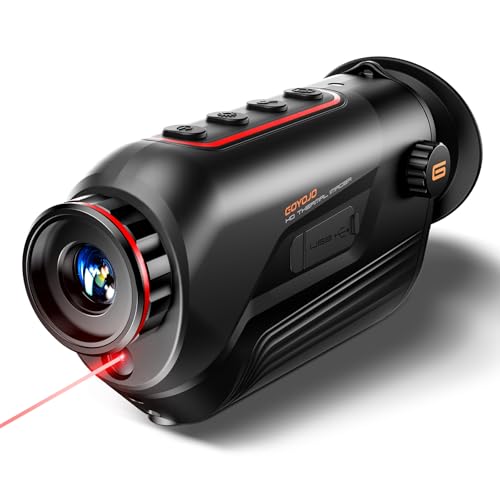
GOYOJO G215 Thermal Imaging Monocular for Hunting, 256x192 (50Hz) Infrared Night Vision Telescope, 15mm Focal Lens Thermal Scopes for Outdoor Night Vision Camera Telescope
As an Amazon Associate we earn from qualifying purchases. Product prices and availability are accurate as of the date/time indicated.
AGM Global Vision Sidewinder TM25-384 Thermal Imaging Monocular


As an Amazon Associate we earn from qualifying purchases. Product prices and availability are accurate as of the date/time indicated.

Thermal Master T2 Max Thermal Monocular for Any iPhone & Android, Plug&Play | 512x384 X³ 256x192 Ir Resolution, 15mK Ultra-Sensitive, 15mm Manual Lens, 910-Yard Night Vision, 50Hz Comfortable Display
As an Amazon Associate we earn from qualifying purchases. Product prices and availability are accurate as of the date/time indicated.
AGM Asp-Micro TM160 Thermal Monocular
The AGM Asp-Micro TM160 Thermal Monocular is a monocular with a typical price range of $449 to $499. It is the cheapest monocular in this comparison and a practical starting point if you want a low-cost thermal monocular for sailing trips. It has a battery life of 7 hours, a waterproof rating of IP67, a resolution of 160×120, and a detection range of 700 yards, according to the maker.
Choose this monocular if you want a simple, affordable thermal monocular for sailing. The AGM Asp-Micro has a simple design, a good battery life for a night sail, and a good fit for a beginner with a first thermal monocular. Its 7-hour battery life is good for a night sail, but its 160×120 resolution may be lower than a more expensive monocular. If you need a higher resolution, the Hikmicro Falcon FQ35 is a better choice at a higher price.
AGM Taipan TM10-256 Thermal Monocular
The AGM Taipan TM10-256 Thermal Monocular is a monocular with a typical price range of $499 to $549. It has a battery life of 8 hours, a waterproof rating of IP67, a resolution of 256×192, and a detection range of 800 yards, according to the maker. It is a good choice if you want an AGM monocular with a trusted brand for thermal optics and a simple design for sailing.
This monocular is best for a sailor who wants an AGM Taipan TM10-256 for sailing trips. The Taipan has a simple design and a good fit for a user who wants a reliable thermal monocular for regular use. It is more expensive than the AGM Asp-Micro, but it offers a longer battery life and a higher resolution for sailing.
FLIR Scout TK Thermal Monocular
The FLIR Scout TK Thermal Monocular is a monocular with a typical price range of $599 to $649. It has a battery life of 5 hours, a waterproof rating of IP67, a resolution of 160×120, and a detection range of 100 yards, according to the maker. It is a good choice if you want a FLIR monocular with a trusted brand for thermal optics and a simple design for sailing.
Choose this monocular if you want a FLIR Scout TK for your sailing trip. The Scout TK has a simple design and a good fit for a user who wants a compact thermal monocular for regular use. It is more expensive than the AGM Taipan, but it offers a FLIR brand and a similar 160×120 design for thermal use. Its 100-yard detection range may be too short for sailing, so choose the ATN OTS LT if you need a longer detection range.
ATN OTS LT Thermal Monocular
The ATN OTS LT Thermal Monocular is a monocular with a typical price range of $799 to $899. It has a battery life of 10 hours, a waterproof rating of IP67, a resolution of 320×240, and a detection range of 1000 yards, according to the maker. It is a good choice if you want an ATN monocular with a trusted brand for thermal optics and a simple design for sailing.
This monocular is best for a sailor who wants an ATN OTS LT for sailing trips. The OTS LT has a simple design and a good fit for a user who wants a long battery life for regular use. It is more expensive than the FLIR Scout TK, but it offers a 10-hour battery life and a higher resolution for sailing.
Burris Thermal Handheld Monocular
The Burris Thermal Handheld Monocular is a monocular with a typical price range of $999 to $1099. It has a battery life of 4 hours, a waterproof rating of IP67, a resolution of 400×300, and a detection range of 1000 yards, according to the maker. It is a good choice if you want a Burris monocular with a trusted brand for optics and a simple design for sailing.
Choose this monocular if you want a Burris Thermal Handheld for your sailing trip. The Burris monocular has a simple design and a good fit for a user who wants a high-resolution thermal monocular for regular use. It is more expensive than the ATN OTS LT, but it offers a higher resolution and a Burris brand for optics. Its 4-hour battery life may be shorter than the ATN OTS LT, so carry a power bank for a longer night sail.
Hikmicro Falcon FQ35 Thermal Monocular
The Hikmicro Falcon FQ35 Thermal Monocular is a monocular with a typical price range of $1499 to $1699. It has a battery life of 5 hours, a waterproof rating of IP67, a resolution of 640×512, and a detection range of 1500 yards, according to the maker. It is a good choice if you want a Hikmicro monocular with a trusted brand for thermal optics and a simple design for sailing.
This monocular is best for a sailor who wants a Hikmicro Falcon FQ35 for sailing trips. The Falcon has a simple design and a good fit for a user who wants a very high-resolution thermal monocular for regular use. It is more expensive than the Burris monocular, but it offers a higher resolution and a Hikmicro brand for thermal optics.
Pulsar Axion 2 XG35 Thermal Monocular
The Pulsar Axion 2 XG35 Thermal Monocular is a monocular with a typical price range of $1999 to $2199. It has a battery life of 7 hours, a waterproof rating of IP67, a resolution of 640×480, and a detection range of 1500 yards, according to the maker. It is the most expensive monocular in this comparison, but it is a premium Pulsar monocular with a high-resolution design for sailing.
Choose this monocular if you want a premium Pulsar Axion 2 XG35 for your sailing trip and you are willing to pay more for it. The Axion 2 has a 7-hour battery life, a waterproof rating of IP67, and a 640×480 resolution for a clear, premium thermal monocular. It is a good fit for a serious sailor with a need for a premium, high-resolution thermal monocular. It is not the best choice if you have a small budget, because the AGM Asp-Micro TM160 offers similar basic thermal support at a lower price for a beginner, with a 7-hour battery life.
Buying Guide: How to Choose the Best Thermal Monocular for Sailing Trips
1. Check detection range first: 1000 yards for sailing, 100 yards for close use, check range
Start with detection range when you choose a thermal monocular for sailing trips. Choose a monocular with a detection range of 1000 yards or more, such as an ATN OTS LT, if you want a monocular for sailing, because it can detect a boat or buoy at a long distance, even in darkness. Choose a monocular with a detection range of 100 yards, such as a FLIR Scout TK, if you want a monocular for close use, such as checking a dock, because it can detect a person or boat at a short distance.
Check range before you buy. A monocular with a long detection range is a good choice for sailing, because it can help you see obstacles early. Test your monocular at home, on land, so you know its detection range before your first night sail.
2. Check waterproof, battery life, and salt water
Check waterproof first. A monocular with a waterproof rating of IP67 is a good choice for sailing, because it can handle rain, spray, and a brief immersion in water. A monocular with a lower waterproof rating may be damaged by salt water. Check battery life next. A monocular with a battery life of 7 to 10 hours is a good choice for a night sail, because it can last for a full night without needing a charge.
Check salt water as well. Salt water can damage a monocular if it is not cleaned after use, so rinse your monocular with fresh water after a sail, and dry it with a soft cloth before you store it. Carry a power bank and a USB-C cable in your boat, so you do not run out of battery on a long night sail.
3. Check resolution, display, and one-hand use
Check resolution before you buy. A monocular with a resolution of 640×512 is a good choice for a clear thermal image, because it can show more detail than a monocular with a resolution of 160×120. A monocular with a resolution of 256×192 is a good choice for a beginner, because it can show a clear image at a lower price. Check display next. A monocular with a clear display and a simple menu is a good choice, because it can be used quickly on a moving boat.
Check one-hand use as well. A monocular with a large button that you can press with one hand is a good choice for sailing, because it can let you use it while holding a rope or steering with your other hand. Test your monocular at home, with one hand, so you know it works before your first night sail.
4. Check safety, sailing rules, and care
Always wear a USCG-approved life jacket while sailing, and check weather, wind, tides, and water temperature before you sail. Tell someone where you are sailing and when you will return, and carry water, food, and a first aid kit for a day on the water. Never look at the sun through a thermal monocular, binoculars, or a scope, because it can cause serious eye damage. Never use a thermal monocular as a substitute for navigation lights, radar, or a lookout, and follow all sailing rules.
Clean your thermal monocular lens with a lens cloth, and store it in a dry place when you are not using it. Rinse your monocular with fresh water after a sail in salt water, and dry it with a soft cloth. Do not drop your monocular, and do not leave it in a hot car, because heat can damage the battery and the display. Charge your battery before each sail, and carry a spare battery or a power bank in your boat.
Frequently Asked Questions
What is the best thermal monocular for sailing trips?
For most sailors, the ATN OTS LT Thermal Monocular, typically $799 to $899, is a strong overall choice because it has a battery life of 10 hours, a waterproof rating of IP67, a resolution of 320×240, and a detection range of 1000 yards, according to the maker, at a low price for a thermal monocular for sailing trips. If you want the lowest price, the AGM Asp-Micro TM160, typically $449 to $499, is a good choice with 7 hours of battery life. If you want a premium monocular, the Pulsar Axion 2 XG35, typically $1999 to $2199, is a good choice. Choose by detection range, battery life, and budget.
What is the best budget thermal monocular for sailing trips?
The best budget thermal monocular for sailing trips is the AGM Asp-Micro TM160 Thermal Monocular, typically $449 to $499, because it is the cheapest row in the table and the only model in that lowest price range. It has a battery life of 7 hours, a waterproof rating of IP67, a resolution of 160×120, and a detection range of 700 yards, according to the maker. It is a good choice for a low-cost thermal monocular, but its 160×120 resolution may be lower than a more expensive monocular, so choose the ATN OTS LT if you need a longer battery life and a higher resolution.
Can a thermal monocular help with man overboard at night?
Can a thermal monocular help with man overboard at night depends on your monocular, your water, and your speed. A thermal monocular can help you see a person in the water at night, because a person is warmer than the water, and a thermal monocular can show a warm object as a bright spot. A monocular with a detection range of 1000 yards or more is a good choice for man overboard, because it can detect a person at a long distance. A thermal monocular is not a substitute for a life jacket, a lookout, or a man overboard alarm, and you should always have a plan for man overboard before you sail at night.
Is a thermal monocular waterproof for sailing?
Is a thermal monocular waterproof for sailing depends on your monocular, your waterproof rating, and your use. Most thermal monoculars in this guide have a waterproof rating of IP67, according to the makers, which means they can handle rain, spray, and a brief immersion in water up to 1 meter for 30 minutes. A monocular with IP67 is a good choice for sailing, because it can handle salt spray and rain. A monocular with a lower waterproof rating may be damaged by salt water, so check the waterproof rating before you buy, and rinse your monocular with fresh water after a sail in salt water.
The best thermal monocular for sailing trips is the one that can help you see boats, buoys, people, and obstacles at night on the water, without being too heavy to hold on a moving boat, without running out of battery on a long night sail, and without being damaged by salt water or rain. Start with the ATN OTS LT for a reliable low-price monocular with 10 hours of battery life, choose the AGM Asp-Micro TM160 for the lowest price, or choose the Pulsar Axion 2 XG35 for a premium monocular. Always wear a life jacket, check weather and tides, and never use a thermal monocular as a substitute for navigation lights or a lookout. With the right thermal monocular, you can sail safely at night every time.
Related guides
- Best Value Digiscoping Phone Mount Birding in 2026: 7 Affordable Phone Mounts That Turn Your Spotting Scope Into a Birding Camera
- Best Tripod for Travel Lightweight Packing in 2026: 7 Lightweight Travel Tripods That Pack Small, Hold a Spotting Scope Steady, and Fit in Your Carry-On
- Best Spotting Scope for Beginners Easy Setup in 2026: Forgiving Scopes, Simple Tripods, and a First Session That Ends With a Bird — Not a Manual
- Best Spotting Scope vs Binoculars for Beginners in 2026: 6 Top Spotting Scope vs Binoculars for Beginners Options, Easy Viewing, and Easy Use
More from Amazon
Programs that pair well with the guide above. Offers and eligibility are set by Amazon and may change.
Free shipping on eligible items, Prime Video and more. Eligible new members can start with a free trial.
Start a Prime free trialAudiobooks and podcasts to listen to on the go. Eligible new members can start with a free trial.
Try Audible freeAd-free music streaming. Eligible new subscribers can start with a free trial.
Try Music Unlimited freeA free business account with business pricing and bulk-buying tools for work, shop or home office.
Create a business accountAs an Amazon Associate we earn from qualifying purchases.

Write Your Review
No reviews yet. Be the first to share your experience!