
What's inside
- Best Night Vision Scope for Hog Hunting by Feeder
- Quick Comparison: Best Night Vision Scope for Hog Hunting Models
- Detailed Reviews: Best Night Vision Scope for Hog Hunting Picks
- Buying Guide: Choosing the Best Night Vision Scope for Hog Hunting
- Frequently Asked Questions About the Best Night Vision Scope for Hog Hunting
As an Amazon Associate I earn from qualifying purchases. This post may contain affiliate links at no extra cost to you.
The best night vision scope for hog hunting is a digital scope matched to a feeder, and the matching begins with two facts the shelf will not volunteer. The first is legal, and it outranks every specification in this article: hogs are hunted at night under rules that belong to your state’s wildlife authority and to the land you stand on — the seasons, the hours, the lights and devices permitted, the landowner’s permissions and notifications, in the authority’s current published terms — and those rules differ by state, by county in some parishes, and by whether the ground is public or private, so they are read for your exact ground before a scope is bought, because the finest night vision scope in this table is an expensive paperweight in a parish where the night hunt itself is not lawful as you intend to hunt it. The second fact is optical: the digital night vision parish — every scope in this table — sees by infrared light it either carries or is given, and its effective parish is the illuminator’s parish, not the sensor’s headline. A scope’s stated detection figures in its maker’s documents assume its illuminator’s stated terms; the feeder at the parish’s ordinary distances — the bait site, the field’s edge, the sendera’s crossing, read off your own ground’s geography — is the distance the purchase is actually for, and it is a mercifully modest one in the hog parish, which is why the digital scopes serve it so well. This guide compares the real, currently sold digital night vision scopes the hog parish actually hunts with — ATN’s X-Sight 4K Pro class as the feature reference in its maker’s stated design, Sightmark’s Wraith classes as the parish’s value standard, Pulsar’s Digex class as the tube-form traditionalist’s digital scope, ATN’s X-Sight LTV class as the simplified parish, and AGM’s Neith class — and it enforces the constitution that governs every hunting optic on this site: the scope is an aiming instrument and never a searching one — the hogs are found and, above all, identified with the handheld parish, the scanner or the naked eye’s patience, because a rifle is never pointed at anything not already identified as a lawful target with a safe parish beyond it; the shot is taken only at the identified hog, at the distance the scope and the shooter have proven on paper in daylight and confirmed at night, with the backstop the ground provides; and the illuminator is used under the land’s and the authority’s current terms, because light itself is a regulated citizen in some parishes.
The comparison fields the hog parish’s proven scopes across their philosophies. ATN’s X-Sight 4K Pro class is the feature parish in its stated design: the stated sensor and display classes in its documents, the stated ballistic and recording parishes in its documents’ terms, and its house’s stated illuminator parish — a scope that is a computer with a reticle, for the hunter who wants the computer. Sightmark’s Wraith classes are the value standard in its stated design: the stated day-and-night parish in its documents, the form the parish’s rifles already wear, at the price that has put more hog hunters into the night than any other row. Pulsar’s Digex class is the traditionalist’s digital in its stated design — a scope shaped like a scope in its documents’ account, for the rifle whose owner distrusts the tablet parish. ATN’s LTV class is the simplification in its stated design, the feature parish pruned to the hunt’s essentials in its documents’ terms. AGM’s Neith class is its house’s digital parish in its stated design. Sensor and display classes, stated magnification ranges, stated illuminator terms, battery parish and stated runtimes, and stated recoil and mounting terms are each maker’s specification for the current exact model and must be confirmed in that maker’s current documents, against your rifle, your feeder distances, and your authority’s current rules, before purchase. Prices are typical ranges rather than exact figures.
The hog hunter’s frame is the night’s shape, stated once. The feeder or the field is ranged in daylight, its distances marked in the hunter’s own account — the parish’s standing preparation, because the night scope’s parish is known ground or it is a guess with a reticle. The scope is zeroed in daylight on paper, in the ordinary doctrine, and its night zero is confirmed at the feeder’s distance under the illuminator before the first hog is asked to grade it, because the digital parish’s zero and the illuminator’s parish are a system and the system is proven whole. The batteries are the night’s ammunition: the scope’s stated parish and the illuminator’s, carried in their spares in the parish’s discipline, because a dead scope at the feeder’s hour is a walk home in the dark with a story. The identification is the frame’s iron law, repeated from the constitution because the night is where it matters most: the scanner or the eye finds, the mind identifies — the species, the parish beyond, the shot’s whole geography — and only then does the rifle rise, its scope confirming what is already known. And the harvest’s parish closes the frame: the hog recovered and handled as the game laws and the land’s terms direct, the night’s equipment accounted for, the authority’s rules obeyed in their current terms as the hunt’s first and last chapter. Within that frame, the right night scope turns the feeder’s dark into a lit parish at the exact distance the hunt requires; bought by the detection headline, it is a television for watching hogs at distances no ethical shot will ever be taken, and this guide’s purpose is the feeder’s arithmetic.
Our Top Picks
Best Night Vision Scope for Hog Hunting by Feeder
The feature parish: ATN X-Sight 4K Pro class
For the hunter who wants the computer — the stated ballistic parish in ATN’s documents, the recording parish for the hunt’s film and the zero’s evidence, the stated day-night sensor parish in its documents — the 4K Pro class is this guide’s first reach in its stated design, with its house’s stated illuminator parish read in its documents as part of the system, because the scope and its light are bought as one instrument. Its parish is the established feeder and the field’s edge at their known distances, where its features are spent on the hunt and not on the learning curve, and its documents’ stated battery parish is planned like ammunition, in the frame’s discipline.
The value standard: Sightmark Wraith classes
Sightmark’s Wraith classes are the hog parish’s volume in its stated design: the stated digital parish in its documents — the day’s colour and the night’s illuminated account in its stated terms — in a scope’s honest form, at the price that outfits the lease’s second rifle and the beginner’s first. Its stated magnification parish in its documents suits the feeder’s geography exactly, which is the parish’s whole requirement, and its stated illuminator parish in its documents is read and, where the hunt’s distances ask, supplemented in the parish’s stated terms by the external illuminator’s citizens — a system decision the buying guide teaches.
The traditional form: Pulsar Digex, ATN LTV, and AGM Neith classes
Pulsar’s Digex class serves the rifle that wants a scope’s shape in its stated design — the tube parish in its documents that mounts in the ordinary rings’ parish and shoulders like the daylight glass it replaces — for the hunter whose distrust of the tablet form is a preference this guide honours. ATN’s LTV class prunes its house’s parish to the essentials in its stated design, for the hunter who wants the night without the syllabus. AGM’s Neith class is its house’s digital account in its stated design. All three are read by the same feeder arithmetic and the same constitution, because the night does not grade the form — it grades the identification, the zero, and the light.
Quick Comparison: Best Night Vision Scope for Hog Hunting Models
| Model | Key Specs | Best For | Typical Price Range | Rating |
|---|---|---|---|---|
| ATN X-Sight 4K Pro Class | Stated sensor, magnification, illuminator, and battery classes per ATN documents for the exact model | Best night vision scope for hog hunting overall | $600 – $800 | 4.6 / 5 |
| Sightmark Wraith HD Class | Stated sensor, magnification, and illuminator classes per Sightmark documents for the exact model | Best value night scope | $450 – $600 | 4.5 / 5 |
| Pulsar Digex Class | Stated sensor, tube-form, and illuminator classes per Pulsar documents for the exact model | Best traditional form | $1,100 – $1,400 | 4.6 / 5 |
| ATN X-Sight LTV Class | Stated simplified sensor and battery classes per ATN documents for the exact model | Best simple night scope | $400 – $550 | 4.4 / 5 |
| Sightmark Wraith Mini Class | Stated compact sensor and magnification classes per Sightmark documents for the exact model | Best compact night scope | $400 – $550 | 4.4 / 5 |
| AGM Neith Class | Stated sensor and illuminator classes per AGM documents for the exact model | Best alternative parish | $500 – $700 | 4.3 / 5 |

AGM Global Vision Rattler V2 19-256 Thermal Scope High-Sensitivity Sensor | 19mm Lens, 256×192 12μm Thermal Sensor, OLED Display, High-Sensitivity Imaging, WiFi, Video Recording
As an Amazon Associate we earn from qualifying purchases. Product prices and availability are accurate as of the date/time indicated.

Triton StarStrike Gen II 5-20x HD Night Vision Rifle Scope | IR Infrared Scope


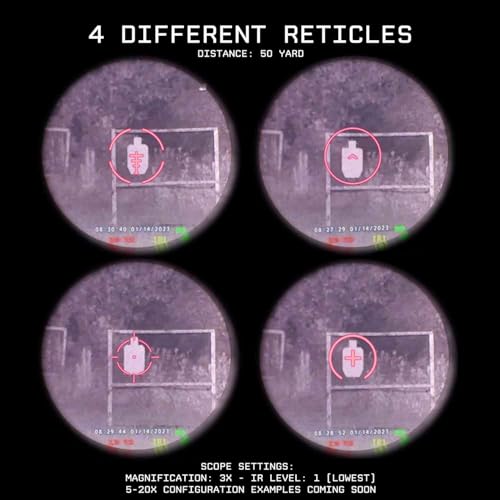


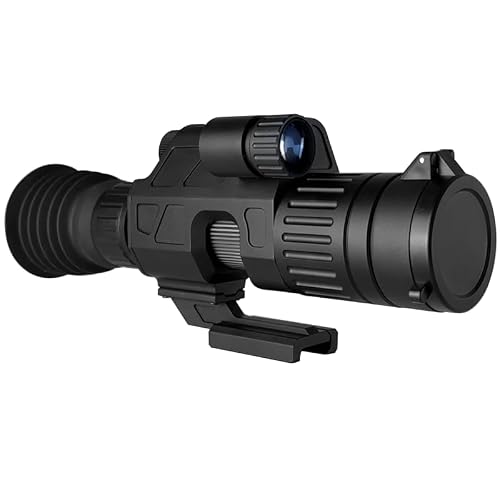

As an Amazon Associate we earn from qualifying purchases. Product prices and availability are accurate as of the date/time indicated.
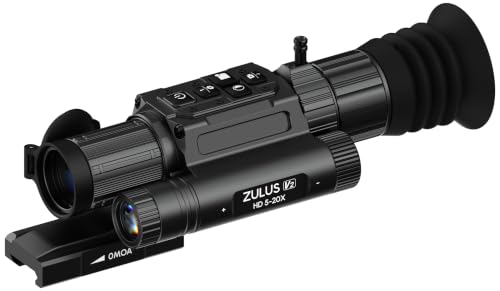
DNT Optics Zulus HD V2 5-20x Digital Day Night Vision Rifle Scope with Built-in Infrared for Hunting


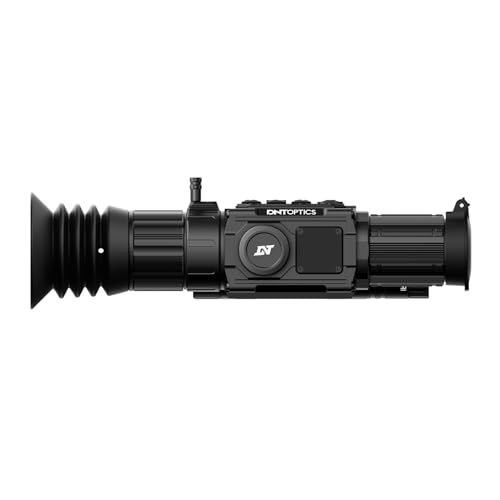


As an Amazon Associate we earn from qualifying purchases. Product prices and availability are accurate as of the date/time indicated.
Sensor and display classes, stated magnification range, stated illuminator type and terms, battery type and stated runtime, stated recoil rating, and mounting arrangement are each maker’s specification for the current exact model and must be confirmed in that maker’s current documents, against your rifle and your feeder distances, before purchase. Prices are typical street ranges as described. Night hunting’s legality, permitted devices, and hours are set by your wildlife authority and your land’s terms, in their current published form, and govern every use in this article.
Detailed Reviews: Best Night Vision Scope for Hog Hunting Picks
1. ATN X-Sight 4K Pro Class – Best Overall
The 4K Pro leads the hog table because its stated design is the complete feeder system: the stated sensor parish in ATN’s documents that serves the day’s zeroing and the night’s hunt from one mounting, the stated feature parish in its documents — the ballistic account, the recording citizen — spent where the feeder hunter actually spends them, and its house’s stated illuminator parish in its documents read as the system’s second half. Its stated magnification parish in its documents covers the feeder’s geography with the field of view the identification’s confirmation wants.
Its price is the feature parish’s, stated in its row, and its learning curve is its documents’ honest length. Zeroed by day, confirmed by night at the feeder’s distance, its parish is the hunt entire in one instrument, and its owners’ freezers are its review, filled under their authorities’ rules.
2. Sightmark Wraith HD Class – Best Value Night Scope
The Wraith HD is the hog parish’s standard in Sightmark’s stated design: the stated digital parish in its documents in a scope’s honest form and weight, the stated magnification parish in its documents matched to the feeder’s distances as if the parish had specified it — because across a decade of feeders, it has — and a stated illuminator parish in its documents that the external citizens supplement in the parish’s stated terms where the field’s edge asks more. Its day parish in its documents makes the zeroing an ordinary afternoon.
Its price is the value parish’s crown, stated in its row. For the lease’s rifles and the beginner’s first night, it is the scope the parish hands its sons, and its tenure there is the review the table respects most.
3. Pulsar Digex Class – Best Traditional Form
The Digex is the digital parish in a daylight scope’s body in Pulsar’s stated design: the tube form in its documents that mounts in the ordinary parish and carries like the glass it replaces, the stated sensor and display parish in its documents for the feeder’s night, and its house’s stated illuminator parish in its documents. Its parish is the hunter whose rifle is a tradition and whose night is a necessity — the form’s familiarity being a genuine feature at the feeder’s dark hour, when the hands should find everything by memory.
Its price is the premium parish’s, stated in its row. For its hunter, it is the only digital scope that feels like a scope, and that feeling, at 2 a.m. over a feeder, is worth its row’s whole argument.
4. ATN X-Sight LTV Class – Best Simple Night Scope
The LTV prunes its house’s parish in ATN’s stated design: the stated essentials in its documents — the sensor’s day-night parish, the reticle’s account, the battery’s stated terms — without the feature syllabus, for the hunter whose hunt is a feeder, a distance, and a shot, and whose scope should be the same. Its stated design’s simplicity in its documents is its parish’s whole request, answered.
Its price sits below its sibling’s, stated in its row. As the second rifle’s and the minimalist’s night scope, it is the composed choice, and its owners’ reports praise what it does not do, which in the night parish is a review of real weight.
5. Sightmark Wraith Mini Class – Best Compact Night Scope
The Wraith Mini scales its house’s parish in Sightmark’s stated design: the stated compact form in its documents for the light rifle and the short parish — the brush feeder, the small field — with the stated sensor and magnification parish in its documents read against the compact hunt’s distances exactly, in the guide’s arithmetic. Its stated illuminator parish in its documents is its size’s, and the external parish supplements it in the stated terms where the geography opens.
Its price is its parish’s, stated in its row. For the rifle that is carried more than it is posted, it is the night in a smaller parish, and its owners’ shoulders file its review nightly.
6. AGM Neith Class – Best Alternative Parish
AGM’s Neith is its house’s digital account in its stated design: the stated sensor and illuminator parish in its documents, in the form its house’s parish prefers, from a maker whose thermal citizens this site’s readers know. Its row is the table’s breadth — the parish is wider than three houses — and its documents are read with the same feeder arithmetic as every row’s.
Its price is the middle parish’s, stated in its row. For the hunter whose dealer and whose experience run with its house, it is the coherent choice, and its nights at the feeder are its review, accumulating under the same constitution as every row here.
Buying Guide: Choosing the Best Night Vision Scope for Hog Hunting
The law first: your authority’s night, your land’s terms
The purchase’s first document is not a scope’s. Read your wildlife authority’s current published rules for the night hog hunt on your exact ground: the species’ parish in your state — the hog’s status, the season or its absence, the hours — the devices’ parish, because the night vision’s, the thermal’s, and the light’s permissions are separate citizens in the rules and are not interchangeable; the land’s parish, public against private, with the landowner’s permissions and any notifications the rules require; and the municipality’s and the lease’s own terms where they add theirs. The rules change, and the current published form governs — the parish’s standing doctrine in every hunting article this site files. A scope bought inside the law is equipment; a scope bought outside it is evidence, and the price difference between the two is one evening with the authority’s publication, which is the cheapest reading in this article. The land’s safety parish joins the law’s: the neighbours’ geography, the livestock’s, the roads’ — the night hunt’s backstop account written in daylight, in the frame’s preparation, because the dark does not forgive a geography the day did not teach.
The illuminator is the scope: light, distance, and the feeder’s arithmetic
The digital scope’s night parish is its illuminator’s, and the buying is the matching of the light to the ground. Read the stated illuminator parish in the scope’s documents — its type and its stated terms — against your feeder’s measured distances, in the frame’s daylight preparation: the bait’s parish, the field’s edge, the crossing’s — the distances the hunt actually offers, which in the hog parish are mercifully the distances these systems are built for. The external illuminator’s parish, in its makers’ stated terms, is the system’s honest upgrade where the geography opens: the stated terms read in its documents, its mounting in the parish’s stated arrangements, its own battery parish planned as ammunition — with the constitution’s caution that the light is a regulated citizen in some parishes and its use is read in the authority’s current terms like everything else in this article. The magnification is matched to the same arithmetic: the feeder’s distance wants the field of view that shows the sounder and its parish, in the scopes’ stated magnification terms — the parish’s error being the telescope bought for a detection headline, whose narrow field at the feeder turns the identification’s confirmation into a search through a straw, with a rifle, which the constitution forbids in spirit and in letter. Buy the light for the feeder, the magnification for the field of view, and the sensor for the pair of them, in that order.
The system at night: zero, batteries, and the identification’s law
The scope is proven as a system before it is hunted as one, in the frame’s doctrine stated here as the guide’s law. The zero is set on paper in daylight at the feeder’s distance, by the ordinary doctrine — the rifle verified, the group centred, the turrets’ account in the scope’s documents — and confirmed at night under the illuminator at the same distance, because the digital parish’s picture and the day’s are cousins and the hunt grades the night’s. The batteries are planned as the night’s ammunition: the scope’s stated parish and the illuminator’s in their documents, the spares carried, the rechargeable parish’s discipline in its makers’ terms, because the feeder’s hour does not pause for a charging cable. The identification is the law the whole article stands under: the hogs found by the handheld parish — the scanner’s, the eye’s — the target identified completely, the parish beyond it accounted, and only then the rifle raised, its scope confirming a shot already decided lawful and safe; the scope is never the search, in any parish, at any hour, because a muzzle is not a flashlight and the night is not an excuse the constitution recognises. The best night vision scope for hog hunting is finally a lawful light at a known distance: the authority’s rules read, the feeder ranged by day, the illuminator matched, the zero proven in the dark it will hunt in, the identification made before the rifle moves — and any scope in this table, so chosen and so hunted, will turn the feeder’s night into the parish’s most productive hours, which is the only review a hog scope has ever asked for.
Frequently Asked Questions About the Best Night Vision Scope for Hog Hunting
What is the best night vision scope for hog hunting?
ATN’s X-Sight 4K Pro class leads this table as the complete feeder system — its stated sensor, feature, and illuminator parishes in ATN’s documents — with Sightmark’s Wraith HD class as the value standard the parish hunts with most, Pulsar’s Digex class for the traditional tube form, ATN’s LTV class for the simplified hunt, and Sightmark’s Mini and AGM’s Neith classes completing the parish. The best one for you is chosen by your ground, in the guide’s order: your wildlife authority’s current rules read first, for your exact land and the devices they permit; your feeder’s distances measured in daylight; the scope’s stated illuminator parish matched to those distances in its maker’s current documents, with the external illuminator’s parish where the geography opens; the magnification chosen for the field of view the identification wants, not for a detection headline. Zero it by day, confirm it by night at the feeder’s distance, plan its batteries as ammunition, and hunt it under the constitution: found and identified by the handheld parish first, the rifle raised only on the known target. So chosen, any row here will hunt; chosen by the headline, the finest row is a television.
Is night vision legal for hog hunting?
In many parishes yes, in some no, and in all of them only on the authority’s exact terms — which is why this guide’s first buying chapter is a reading assignment and not a specification. The hog’s legal parish varies by state: its status as game, pest, or unprotected species; the night hunt’s permission and its hours; the devices named lawful — the night vision’s parish, the thermal’s, the artificial light’s, each a separate citizen in the rules; the land’s terms, public against private, with the landowner’s permissions and the notifications some parishes require; and the local additions a county or a lease may lay over the state’s. The authority publishes the current rules for exactly this reading, and the current published form governs — last season’s parish and the neighbouring state’s are both foreign law. Read yours before the purchase, because the scope’s legality is a property of the hunt and not of the scope: the same instrument is equipment on one side of a state line and evidence on the other, and the hunter’s knowledge of which side they are standing on is the first optic this article sells, at the price of an evening’s reading.
How far can a digital night vision scope see for hog hunting?
As far as its illuminator honestly serves, at the distances your feeder actually offers — and the second clause is the one that matters, because the hog parish’s shots are the feeder’s, the field’s edge’s, the crossing’s: the known, modest distances the daylight preparation measured. The makers’ stated figures in their documents describe their systems under their stated terms — the illuminator’s parish, the ambient’s, the target’s size in the stated account — and are read as a system’s ceiling and not as a hunting distance. The practical parish is the identification’s: the distance at which the scope and its light show the hog as a hog — its species certain, its parish beyond accounted — which is the constitution’s requirement and is always shorter than the distance at which a shape can be detected, in this parish’s standing doctrine that detection, recognition, and identification are three distances and the shot belongs to the third. Match the illuminator to your measured ground, supplement it in its stated parish where the geography opens, and let the headline belong to the marketing parish: the feeder does not care what the scope can detect, and neither, at the moment of the shot, should you.
Do I need a separate thermal scanner with a night vision scope?
The constitution requires the function, whatever instrument performs it: the hogs must be found and identified before the rifle is raised, because the scope is an aiming instrument and is never used to search — a rule this site prints for every aiming optic it files, and one the night makes more binding, not less. The handheld parish performs the function: the thermal scanner in its parish is the parish’s finest finder, reading the field’s heat through the brush’s edge in its stated terms; the monocular night vision parish serves it too, in its documents’ account; and the patient eye at the known feeder, where the geography is daylight-known and the hogs announce themselves, is the old parish’s method, lawful where the authority’s terms allow the hunt’s arrangement. What is not permitted — by this guide’s constitution, and by the safety parish entire — is the rifle doing the finding, its muzzle interviewing every shape in the field. Buy the scope for the shot and the handheld for the search, in whichever houses your budget assembles them, and the night hunt is the parish’s safest and most productive hours; reverse the instruments, and no scope in this table can make the hunt a lawful one.
Related guides
- Best Value Digiscoping Phone Mount Birding in 2026: 7 Affordable Phone Mounts That Turn Your Spotting Scope Into a Birding Camera
- Best Tripod for Travel Lightweight Packing in 2026: 7 Lightweight Travel Tripods That Pack Small, Hold a Spotting Scope Steady, and Fit in Your Carry-On
- Best Spotting Scope for Beginners Easy Setup in 2026: Forgiving Scopes, Simple Tripods, and a First Session That Ends With a Bird — Not a Manual
- Best Spotting Scope vs Binoculars for Beginners in 2026: 6 Top Spotting Scope vs Binoculars for Beginners Options, Easy Viewing, and Easy Use
More from Amazon
Programs that pair well with the guide above. Offers and eligibility are set by Amazon and may change.
Free shipping on eligible items, Prime Video and more. Eligible new members can start with a free trial.
Start a Prime free trialAudiobooks and podcasts to listen to on the go. Eligible new members can start with a free trial.
Try Audible freeAd-free music streaming. Eligible new subscribers can start with a free trial.
Try Music Unlimited freeA free business account with business pricing and bulk-buying tools for work, shop or home office.
Create a business accountAs an Amazon Associate we earn from qualifying purchases.

Write Your Review
No reviews yet. Be the first to share your experience!