
What's inside
As an Amazon Associate I earn from qualifying purchases. This post may contain affiliate links at no extra cost to you.
A rangefinder watch is not a laser in a smaller box, and the buyer who understands that distinction in the shop will be delighted on the course, while the buyer who discovers it on the first tee will feel misled by a product that never claimed otherwise. The best rangefinder watch measures by satellite: it knows where it stands on a hole from its maker’s course library, and it gives the distance from that spot to the front, the middle, and the back of the green, to hazards and layup points in the better models’ mapping, instantly, at a glance, with nothing aimed and nothing carried in a pocket. What it cannot do is measure to the flag itself, because the satellite does not know where today’s pin is cut, nor to a tree, a bunker edge of your choosing, or the stranger’s ball you are helping to find, because a GPS watch measures to the points its map contains. Judged as what it is, a wrist-worn caddie of mapped distances, it is among the most useful instruments in golf. Judged as a laser, it will always be found wanting, and this guide grades it firmly in its own category, with the laser’s role stated plainly at the end.
The virtues that follow from the satellite design are the reasons the category owns so many wrists. The distance is already there when the ball is reached, with no unholstering, no aiming with a shaking hand, and no delay to the group behind, which makes the watch the fastest legal yardage in the game and the one a beginner or a high-handicapper will actually use on every shot rather than on the shots that feel important. It works in the rain that fogs a laser’s lens and in the scramble where a partner’s ball is forty yards from yours and the cart holds the laser. Its distances to the middle of the green are, for most club golfers, the most useful number in the sport, because the middle is where their dispersion says they were aiming all along. Its weaknesses are its map’s weaknesses: a course must be in the library and correctly mapped, a remodelled green or a new bunker may lag a season behind the ground truth, and its numbers are only as current as its maker’s last update, which is why this guide treats library size, update method, and any subscription a feature hides behind as buying facts of the first rank rather than as footnotes.
The products compared here are real, currently sold GPS golf watches from Garmin, Shot Scope, Bushnell, and Voice Caddie, spanning the category from a value watch that does the essential job to a flagship that maps the hole in colour and tracks every shot. They are graded on distance presentation, front, middle, back, hazards, and layups in the makers’ stated features, course library and update provisions, display legibility in sunlight, battery life in the makers’ stated golf mode figures, shot tracking and its subscription terms where offered, water resistance for a game played in weather, and value. No watch in this table measures laser distances, and a model that pairs with a laser or with a phone in its maker’s system is described as doing so, because the honest comparison is between a watch alone, a watch in an ecosystem, and the laser a serious player may carry beside either.
Our Top Picks
Best Rangefinder Watch: What the Satellite Knows and What It Cannot
Front, Middle, Back, and the Number a Club Golfer Should Hit
The watch’s native information is a trio: front, middle, and back of the green from wherever the wearer stands. Used well, that trio is a complete strategy for the majority of approach shots. The middle is the default target and the number to select a club by, because a club golfer’s shot pattern around a well-chosen middle club scatters onto the green’s safe acreage, while a club chosen for the back number visits the trouble behind the green on every strike that comes off perfectly, and a club chosen for a front pin visits the bunker or the fringe on every strike that does not. The front and back numbers earn their place as boundaries rather than as targets: they say how much green a shot has to work with, whether a mishit still finds grass, and when a layup short or a bail-out long is the intelligent miss. Better models in this table extend the map’s knowledge to hazards, doglegs, and layup points in their makers’ stated features, which converts the watch from a green-measurer into a tee-shot planner, and the difference between a model that gives hazards and one that gives only the green is the largest functional gap in the category, worth more to a score than any display refinement.
The flag is the map’s honest gap, and the category’s answers to it divide its tiers. Some models let a wearer move a pin position on the green’s map by hand, in the maker’s design, refining the middle number toward today’s cut by the wearer’s own reading of the flag’s position, which is genuinely useful in practised hands and theatre in careless ones. Shot tracking ecosystems in the Shot Scope pattern take a different road, recording where shots were actually played from and to, building the wearer’s real distances and dispersion in the maker’s app, which teaches the lesson the watch exists to teach: that the golfer’s own numbers, their true carry with each club in ordinary conditions, are worth more than any single yardage, to a flag or to a middle, ever printed on a screen.
Battery, Library, and the Subscription Question
A golf watch’s battery is graded in rounds, not in days, and the figure that matters is its maker’s stated life in GPS golf mode, because a watch that plays thirty-six holes on a trip weekend without its cable is a different product from one that must be charged in the car between rounds, however fine its screen. Travelling golfers should read that figure first and the display’s beauty second, and every buyer should confirm what a full recharge restores and how the watch behaves, warned or silent, as its battery fades on a back nine. The course library is the second infrastructure fact: its stated size in tens of thousands of courses in the major makers’ libraries, whether the courses the buyer actually plays are in it, which can be checked on a maker’s website before purchase and should be, and how updates arrive, by phone app, by computer, automatically or on request, because a library that updates itself is a library that stays true to remodelled greens and new bunkers, while a library that waits for its owner is a snapshot aging from the day of purchase.
Subscriptions divide the category’s business models and must be priced into the watch’s real cost. Some makers include their full feature set in the purchase, some reserve advanced mapping, statistics, or club recommendations for a paid tier in their stated terms, and a watch that is cheaper by a hundred and dearer by a yearly fee is a different bargain from its shelf price. This guide does not treat a subscription as a fault. It treats an undiscovered one as a buyer’s failure, and directs the reader to price the watch across three years of the features they actually intend to use, watch, fees, and any sensors or tags the tracking system needs, against the same three years of its rivals.
Quick Comparison: Best Rangefinder Watch Models
| Model | Display, Features and Key Specs | Best For | Typical Price Range | Rating |
|---|---|---|---|---|
| Garmin Approach S70 | GPS golf watch in Garmin’s line, colour hole mapping in maker’s terms, stated golf mode battery class, course library access | Best rangefinder watch overall | $600 – $700 | 4.7 / 5 |
| Shot Scope X5 | GPS golf watch in Shot Scope’s line, shot tracking with club tags in maker’s system, stated course library | Best for shot tracking | $280 – $330 | 4.5 / 5 |
| Garmin Approach S50 | GPS golf watch in Garmin’s line, front middle back and hazard provisions in maker’s terms, stated battery class | Best mid-range Garmin | $380 – $450 | 4.5 / 5 |
| Bushnell Ion Elite | GPS golf watch in Bushnell’s line, front middle back distances in maker’s terms, stated course library and battery class | Best simple distances | $200 – $250 | 4.3 / 5 |
| Voice Caddie T11 Pro | GPS golf watch in Voice Caddie’s line, hole view and distance provisions in maker’s terms, stated library class | Best value with hole views | $230 – $300 | 4.3 / 5 |
| Shot Scope V5 | GPS golf watch in Shot Scope’s line, tracking provisions in maker’s system, button operated design by version | Best tracking on a budget | $230 – $280 | 4.4 / 5 |
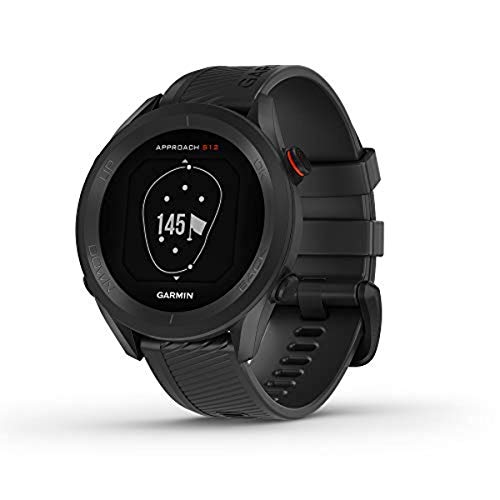
Garmin Approach S12, Easy-to-Use GPS Golf Watch, 42k+ Preloaded Courses, Black, 010-02472-00
As an Amazon Associate we earn from qualifying purchases. Product prices and availability are accurate as of the date/time indicated.
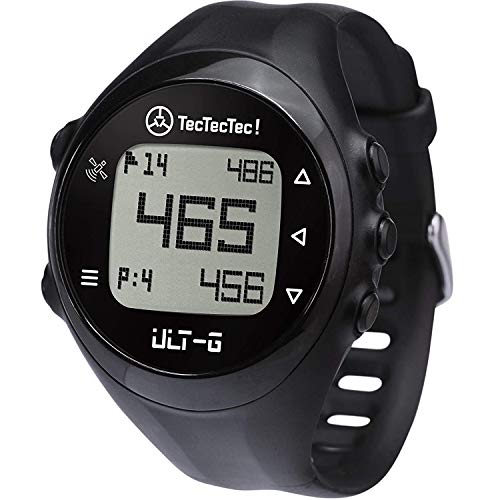
TecTecTec ULT-G Golf GPS Watch – Simple & Easy Distance Watch, No App Required on Course, Front/Back/Middle Distances, 40,000+ Courses Preloaded, Lightweight & Water-Resistant – Black


As an Amazon Associate we earn from qualifying purchases. Product prices and availability are accurate as of the date/time indicated.

Bushnell Golf iON Elite GPS Watch, Black | Color Touchscreen, Slope‑Adjusted Yardages, 38,000+ Courses, Shot Tracker, USB‑C, Magnetic Charger
As an Amazon Associate we earn from qualifying purchases. Product prices and availability are accurate as of the date/time indicated.
Prices shown are approximate and for reference only. Prices change often, so please check the current price on Amazon before you buy.
Distance features, hazard and layup provisions, hole mapping, shot tracking and its included tags or sensors, course library size and update method, any subscription for stated features, display type and size, water resistance, and battery life in GPS golf mode and in watch mode are each maker’s stated details for the current version. Prices are typical retail ranges and vary by size, colour, retailer, region, and promotion, and any subscription a buyer intends should be added across the years they expect to use it. Ratings are editorial for wrist GPS use: distance usefulness and presentation, library and update reliability, sunlight legibility, battery across a golf trip, tracking value where offered, and total cost of ownership.
Detailed Reviews: Best Rangefinder Watch Picks
1. Garmin Approach S70 – Best Overall
Garmin’s flagship takes the overall rating by being the most complete mapped caddie the wrist currently offers in its line: colour hole views in the maker’s terms that make a tee shot’s strategy legible at a glance, front, middle, and back with the hazard and layup knowledge this guide prizes, a display that reads in full sun, and a battery in its stated golf class that treats a golf trip as a single charge’s errand. For the golfer who plays widely and often, it is the watch the rest of the table is measured against.
Its price is the flagship’s, and some of Garmin’s wider ecosystem features follow the maker’s stated terms, which should be read before purchase. As the category’s summit, it earns its rating in full.
2. Shot Scope X5 – Best for Shot Tracking
Shot Scope’s X5 is built around the insight that a golfer’s own data outranks any map: its tracking system in the maker’s design, with tags in the clubs, builds true distances, dispersion, and the strokes a round actually loses and where, while its GPS distances in the maker’s terms do the watch’s native job competently beside it. For the improving golfer, that record is worth more than a finer screen, and the maker’s subscription position in its stated terms should be priced into the comparison as this guide directs.
Tagging clubs is a small setup duty and the system’s value grows across a season rather than a round. For the data-minded player, it is the thinking purchase.
3. Garmin Approach S50 – Best Mid-Range Garmin
The S50 brings Garmin’s library, mapping, and distance presentation down to the middle of the market in its line, keeping the features this guide grades highest, the hazard knowledge, the updates through the maker’s app, the sunlight-legible face, at a price that competes with the tracking specialists. For a golfer loyal to no ecosystem and wanting the satellite job done thoroughly, it is the balanced answer.
It omits the flagship’s grandest refinements, as its price records. Within its tier, it is the recommendation.
4. Shot Scope V5 – Best Tracking on a Budget
The V5 offers Shot Scope’s tracking philosophy at the lower price in its line, in a button-operated design in its versions that some golfers prefer to a touchscreen with wet or gloved hands, which is a genuine course condition and not a quirk. Its distances and its data serve the improving golfer’s whole programme at the table’s friendliest tracking price.
Its presentation is plainer than its sibling’s. For the golfer buying data rather than display, the plainness is the bargain working as intended.
5. Bushnell Ion Elite – Best Simple Distances
Bushnell’s Ion Elite serves the golfer who wants the watch’s native job and nothing else’s rent: front, middle, and back from a maker’s library in its stated terms, in a watch that is set up in minutes and read at a glance, from the maker whose name in distance golf carries its own reassurance. It is the category’s honest appliance, and a great many wrists need exactly an appliance.
Its mapping and tracking ambitions are its price’s, deliberately. Judged as the simple instrument it sets out to be, it is properly rated.
6. Voice Caddie T11 Pro – Best Value With Hole Views
Voice Caddie’s T11 Pro gives the value tier a taste of the flagship’s pleasure, hole views in the maker’s terms at a price nearer the simple watches, with distances and library provisions in its stated class that cover a club golfer’s ordinary map completely. For the golfer who plays a handful of courses and wants to see them, it is the table’s shrewd middle path.
Confirm your home courses in its library before buying, as this guide directs for every model here. Where they are present, its value is difficult to argue with.
Buying Guide: How to Choose the Best Rangefinder Watch
Check Your Courses, Your Fees, and Your Rounds per Charge
Before any model is admired, run the three infrastructure checks this guide has built. First, the library: list the courses you actually play, home, away, the annual trip, and confirm each in the maker’s published library, because a watch that does not know your course is a bracelet with a battery. Second, the money across time: the watch’s price, any subscription for the features you intend, any tags or sensors its tracking needs, and a replacement strap’s cost in the maker’s line, totalled across three years against its rivals’ same three years. Third, the battery against your real golf: the stated GPS golf mode figure measured against your longest day and your longest trip, thirty-six holes, a weekend without a cable, because a watch that dies on a trip’s second morning has failed at the one job it travelled for. A model that passes all three checks can then be chosen on the pleasures, screen, hole views, tracking, and the rest can be chosen by preference with a clear conscience.
Fit and legibility close the purchase. A golf watch is worn against a glove, under a cuff, in rain, and read in a half-second’s glance at arm’s length in hard sun, so its case size against your wrist, its display’s behaviour in sunlight in the maker’s terms and in reviewers’ outdoor photographs, its button operation where a touchscreen would be working through a wet glove, and its strap’s comfort across a sweating afternoon are course facts, not shop facts. Buy where an exchange is painless, wear it for a full round before the window closes, and test the one feature you bought it for, hazards, tracking, hole views, in that round rather than assuming it.
Use the Middle Number, and Know When the Laser Earns Its Place
Play the watch as it was designed to be played for a full season before judging it: club selection from the middle number as the default, the front and back read as the shot’s margins, hazards consulted on the tee rather than discovered from inside them, and a pin adjustment used only where the model offers one and the flag’s position can genuinely be read. Keep the small discipline of updating the library when the maker offers it, charging on the trip’s eve rather than its morning, and recording, where a tracking model is worn, the data’s lesson at the season’s end, because a watch that teaches a golfer their true seven iron has paid for itself in a currency no single round can show.
Admit the laser where it belongs, without treating the admission as a defeat for the watch. A laser rangefinder measures to the flag itself, to a tree, to any point it is aimed at, and for the low-handicap player whose approach game is built on exact flag numbers, for practice sessions on a range without markers, and for the golfer whose home course is absent from every library, it remains the primary instrument, with the watch as its fast, always-ready partner for the middle numbers and the hazards. Many serious golfers carry both, and the pairing is coherent: the watch for the round’s rhythm, the laser for the shots that justify its aiming. Choose the watch first if one must be chosen, because it will be used on every shot of every round, and let the laser follow when the game asks for it. Do that, and the best rangefinder watch becomes what it should be on a golfer’s wrist: the distance already known before the ball is reached, the middle number trusted, the hazards read on the tee, and a round that moves at the pace of a player who never has to ask how far it is, because their caddie, in satellite and silicon, has already told them.
Frequently Asked Questions About Best Rangefinder Watch
What is the best rangefinder watch?
Garmin’s Approach S70 is the best overall for its colour hole mapping, complete front, middle, and back distances with hazard and layup knowledge, sunlight-legible display, and a battery that covers a golf trip in its stated golf mode class. Shot Scope’s X5 and V5 are the choices where shot tracking and the golfer’s own data matter most, Garmin’s Approach S50 is the mid-range balance, Bushnell’s Ion Elite is the simple distances appliance, and Voice Caddie’s T11 Pro is the value pick with hole views. Every choice should pass three checks first: your courses present in the maker’s library, the total three-year cost including any subscription for the features you intend, and a stated battery figure that covers your longest golf day and trip. Remember that a rangefinder watch measures mapped points by satellite, not the flag by laser.
Does a rangefinder watch measure to the pin?
No. A GPS rangefinder watch measures from your position to the points in its maker’s course map, principally the front, middle, and back of the green, with hazards and layup points in the better models’ stated features. It does not know where today’s pin is cut, and its middle number is therefore its most honest and, for most club golfers, its most useful figure, because a shot pattern centred on the middle of the green scores better than one chasing a flag’s exact yardage with a club golfer’s dispersion. Some models let you move a pin position on the green’s map by hand in the maker’s design, refining the number by your own reading of the flag. Only a laser rangefinder measures to the flag itself, and a golfer whose game genuinely needs that number should carry one alongside the watch or instead of it.
Are rangefinder watches legal in competition?
Distance measuring devices, including GPS watches that give distances, are permitted under the Rules of Golf in most competition play where the committee has not prohibited them, but features that go beyond distance, such as wind measurement, elevation-adjusted or plays-like distances, club recommendations, and green reading aids, may breach the rules even on a watch that is otherwise legal, depending on the feature and the competition’s conditions. Many watches offer a tournament or rules mode in their makers’ terms that restricts the device to permitted functions. The responsibility is the player’s: check the conditions of the specific competition, enable any tournament mode the maker provides, and if a feature cannot be disabled or its status is unclear, do not use the watch in that event. Club and casual golf follows the same features in most places without concern, but a competitive golfer should treat this as a rules question to settle before the first tee, not after a scorecard is signed.
How long does a rangefinder watch battery last?
It depends on the model and the mode, and the figure to read is the maker’s stated life in GPS golf mode, which in this category commonly covers from a couple of rounds to a full golf trip’s several rounds on one charge, with ordinary watch mode lasting far longer between charges in the makers’ stated terms. Display type and brightness, hole mapping, and shot tracking all draw on that figure, so a flagship’s real endurance on a trip should be checked against its own stated golf number rather than against the category’s best. Charge on the eve of a trip rather than its morning, carry the cable on any trip longer than the stated figure covers, and learn how your watch warns of a low battery before the back nine teaches you. A watch chosen with its battery matched to your longest golf is a watch that never becomes the reason a round went unmeasured.
Related guides
- Rain Cover Pros and Cons Guide: A Complete Rain Cover Pros and Cons Guide for Optics in 2026
- Night Vision Monocular for Beginners vs Experts Hunting in 2026: Nightfox Cub, SiOnyx Aurora, Bushnell Equinox Z2, AGM Wolf-14, and PVS-14 Compared for Digital Against Analogue, Infrared Illuminators, True Detection Ranges, and the Laws That Decide Whether Any of It May Be Used at Night at All
- Best Buy It Once Spotting Scope in 2026: 7 Buy It Once Spotting Scopes That Offer Lifetime Clarity, Premium Glass, and Reliable Performance for Birders and Hunters
- Handheld Thermal Pros and Cons Guide in 2026: Handheld Thermal Pros and Cons Guide
More from Amazon
Programs that pair well with the guide above. Offers and eligibility are set by Amazon and may change.
Free shipping on eligible items, Prime Video and more. Eligible new members can start with a free trial.
Start a Prime free trialAudiobooks and podcasts to listen to on the go. Eligible new members can start with a free trial.
Try Audible freeAd-free music streaming. Eligible new subscribers can start with a free trial.
Try Music Unlimited freeA free business account with business pricing and bulk-buying tools for work, shop or home office.
Create a business accountAs an Amazon Associate we earn from qualifying purchases.


Write Your Review
No reviews yet. Be the first to share your experience!