
What's inside
- Bluetooth Rangefinder Pros and Cons Guide: The Honest Ledger
- Bluetooth Rangefinder Pros and Cons Guide: Six Connected Models Compared
- The Six Connected Rangefinders Reviewed
- Buying Guide: How to Choose a Bluetooth Rangefinder Without Regretting the Radio
- Frequently Asked Questions About Bluetooth Rangefinders
As an Amazon Associate I earn from qualifying purchases. This post may contain affiliate links at no extra cost to you.
This bluetooth rangefinder pros and cons guide exists because connectivity is the most argued-over feature in the modern rangefinder, and both sides of the argument are partly right. A Bluetooth rangefinder talks to a phone app, and through it to ballistic solvers, weather meters, and mapping tools, so the distance it measures can become a firing solution, a marked pin, or a logged data point without your thumbs doing arithmetic in the cold. That is a genuine capability, and for the long-range shooter it borders on transformative. It is also a chain of dependencies, phone, app, battery, pairing, firmware, subscription tiers, laid across a tool whose entire ancestral virtue was that it worked alone, instantly, in the rain, with gloves, for a decade on one battery. This guide weighs the pros and cons honestly, compares six real, currently sold Bluetooth rangefinders graded as connected instruments, and gives the verdicts by user: who should pay for the radio, who should pocket the savings, and what to verify before the connected rangefinder is trusted with a shot that matters, all inside this site’s standing law for the shooting disciplines: follow your local law and hunting regulations, positively identify your target and what is beyond it, treat every solver’s output as a calculation to be verified against your rifle’s real data, and let no app ever make a decision that a hunter’s or a shooter’s judgment owns.
Understand what the Bluetooth actually does in each ecosystem, because the word covers three different products wearing one label. At the lightest level, the rangefinder sends its measured distance to an app that logs it, marks it on a map, or displays it large, convenience features that organize a hunt or a practice session. At the ballistic level, the app holds your rifle and load profiles, receives the range, adds angle and atmospherics, and returns a corrected solution to the rangefinder’s display or the phone, which is the capability the long-range world pays for. At the system level, the rangefinder joins a family, wind meters that feed it live wind, scopes that receive its solution, binoculars that share its profiles, an architecture that rewards the buyer who commits to one maker’s ecosystem and taxes the one who mixes. The pros and cons below are graded against those three levels separately wherever they diverge, because a verdict that is true of the logging tier is false of the ballistic tier, and most arguments about Bluetooth rangefinders are two people grading different products.
Our Top Picks
Bluetooth Rangefinder Pros and Cons Guide: The Honest Ledger
The Pros: Solutions, Not Just Distances
The first pro is the transformation of the product’s output. A conventional rangefinder answers how far; a connected ballistic rangefinder answers what to do about it, dial or hold in your load’s own numbers, computed from the measured range, the shot’s angle, and the atmosphere, in the seconds a shooter actually has. For the long-range hunter and the precision shooter, this collapses a workflow, range card, dope book, phone solver, turret, that took a minute of dry-weather fumbling into a single button press, and it eliminates the transcription errors that were that workflow’s characteristic failure. The second pro is data: profiles for every rifle and load you own live in the app, updated once and synced, rather than taped inside a stock pack in fading pencil, and sessions, ranges, and solutions can be logged and reviewed at home, which is how a shooter’s understanding of their own rifle compounds across seasons. The third pro is the ecosystem’s ceiling: a wind meter feeding live wind into the same solution, a scope receiving the correction, mapping apps receiving the ranged point, capabilities that no standalone instrument can grow into. The fourth pro is quieter: firmware and ballistic libraries that update, so the connected rangefinder can improve and absorb new loads in a way its standalone ancestors, frozen at their factory truth, never could.
The Cons: Dependencies, Friction, and the Cold Morning Test
The first con is the chain itself. The connected workflow’s full power requires a phone that is charged, an app that is updated, a pairing that survived the night, and, in some ecosystems, an account or a subscription tier for the advanced features, and every link is a failure mode that a standalone rangefinder does not possess. Mitigations exist, the better designs in this table solve onboard and use the phone as an editor rather than a crutch, and the guide’s buying steps make that distinction a purchase criterion, because a rangefinder that cannot solve without its phone is a rangefinder with a landlord. The second con is friction at the moment of use: gloves, cold, a buck quickly, are unkind to phone screens and pairing dialogs, and the discipline the connected shooter needs, profiles built at home, settings settled before the season, the phone demoted to a pocket role in the field, is real work that the standalone buyer skips. The third con is longevity’s arithmetic: a rangefinder’s optics and laser serve for a decade or more, while apps are updated, redesigned, paywalled, and occasionally discontinued on a software industry’s schedule, so the connected features carry an expiry risk the glass does not, and the wise buyer grades the instrument as a standalone first and the connectivity as a bonus with a half-life. The fourth con is price, a radio and a software ecosystem folded into the sticker, typically a meaningful step above the same maker’s standalone glass.
Where the Ledger Balances: By Shooter, Not by Slogan
The verdicts sort cleanly by discipline once the levels are separated. The long-range precision shooter and the western hunter, whose shots are measured in hundreds of yards and whose solutions genuinely change with angle and air, gain the most: the ballistic tier’s pro is their daily workflow, and its cons are managed by preparation they already practice. The bowhunter and the short-range hunter gain the least from ballistics and the most from the con side’s simplicity, since their ranges are short, their angle compensation is a standalone feature older than Bluetooth, and their moments are the coldest and gloved-est in this article; the logging and mapping tier may still charm them, at a price this guide would spend on glass instead. The golfer, surveyor of a different fairway, has their own connected ecosystem and should grade it by mapping value rather than by anything written here. And the buyer of any discipline should hold the guide’s central rule: buy the rangefinder whose standalone virtues, range, speed, optics, durability, justify its price with the radio switched off, and let the Bluetooth be the reason you chose it over its twin, never the reason you forgave its glass.
Bluetooth Rangefinder Pros and Cons Guide: Six Connected Models Compared
| Bluetooth Rangefinder Model | Key Specs | Best For | Typical Price Range | Rating |
|---|---|---|---|---|
| SIG Sauer KILO5K | Ballistic rangefinder class, BDX ecosystem and app in class, onboard solver features in class, long ranging class | Best bluetooth rangefinder overall | $650 – $800 | 4.7 / 5 |
| Vortex Fury HD 5000 AB (rangefinding binocular) | Binocular with applied ballistics onboard in class, app profile editing, laser and glass in one | Best onboard solver, no phone needed in field | $1,400 – $1,700 | 4.7 / 5 |
| Leica Rangemaster CRF 3500.COM | Premium monocular class, Bluetooth with ballistic app class, exceptional optics and ranging in class | Best premium connected monocular | $900 – $1,100 | 4.6 / 5 |
| Vortex Razor HD 4000 GB | GeoBallistics ecosystem and app in class, onboard modes in class, premium monocular build | Best for precision rifle shooters | $700 – $850 | 4.6 / 5 |
| Bushnell Nitro 1800 | Ballistic app connectivity in class, angle compensation in class, mid-price, hunting focus | Best value connected hunting rangefinder | $300 – $400 | 4.3 / 5 |
| SIG Sauer KILO6K-HD (rangefinding binocular) | BDX binocular class, app and onboard ballistic features in class, HD glass class | Best connected binocular for hunters | $1,100 – $1,400 | 4.5 / 5 |

Bushnell Golf Pro X3+ Link Laser Rangefinder | Wind Speed, Slope & Elements Compensation,1300-Yard Range, 7X Magnification, Dual Display, Visual JOLT & Magnetic Cart Mount
As an Amazon Associate we earn from qualifying purchases. Product prices and availability are accurate as of the date/time indicated.

Callaway Golf 300 Pro Slope Laser Rangefinder
As an Amazon Associate we earn from qualifying purchases. Product prices and availability are accurate as of the date/time indicated.

Precision Pro NX10 Slope Golf Rangefinder, 20+ Interchangeable Looks


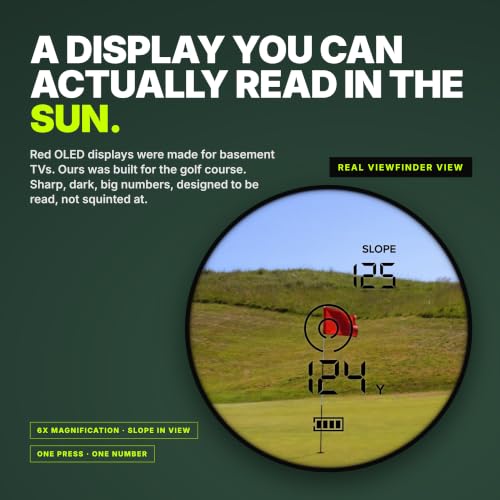

As an Amazon Associate we earn from qualifying purchases. Product prices and availability are accurate as of the date/time indicated.
Prices shown are approximate and for reference only. Prices change often, so please check the current price on Amazon before you buy.
Ranges, solver features, and app tiers summarize manufacturers’ published information for current versions and change with software updates; verify the current app model, including any subscription features, before purchase. Ratings are editorial, weighing standalone ranging and optics, onboard solving independence, app quality, ecosystem, and value.
The Six Connected Rangefinders Reviewed
1. SIG Sauer KILO5K: Best Overall Connected Rangefinder
The KILO5K leads because SIG built the BDX ecosystem around the shooter’s actual workflow: profiles created in the app, synced to the unit, and solutions computed with the rangefinder’s own sensors for angle and atmosphere, so the field workflow is a button press with the phone asleep in a pocket, which is this guide’s central criterion passed at the head of the class. Its ranging performance is the serious class’s, its onboard modes cover the hunter who never opens the app, and its ecosystem reaches into BDX scopes that light a hold point from its data, the system-level pro in its most realized form. Its cons are the ledger’s own: an app to maintain, an ecosystem to commit to, and a price above standalone glass of similar range. For the shooter who will use the ballistics, it is the most complete connected instrument in the table.
2. Vortex Fury HD 5000 AB: Best Onboard Solver
The Fury HD 5000 AB answers the con side’s strongest argument by moving the solver into the binocular: Applied Ballistics onboard, profiles edited in the app at home and carried in the glass, solutions in the view while both hands hold the instrument you were already glassing with. As a rangefinding binocular it collapses two tools into one carry, its laser and solver serve the long-range hunter’s exact workflow, and Vortex’s warranty culture insures the electronics with the glass. Its price is two instruments’ because it is two instruments, its weight is a binocular’s, and its app remains an editor rather than a field dependency, which is the architecture this guide recommends most warmly. For the western hunter building one premium system, it is the connected purchase with the fewest regrets in this article.
3. Leica Rangemaster CRF 3500.COM: Best Premium Connected Monocular
Leica’s connected flagship sells the standalone virtues first, optics and ranging at the summit of the monocular class, speed and precision that need no app’s permission, and adds Bluetooth ballistics through its app partnerships as the second story of a house already worth its price. That ordering is exactly this guide’s doctrine, and the Leica buyer who never pairs a phone owns a magnificent rangefinder, while the one who does gains curve-fitted solutions in the Leica manner, measured and unhurried. Its price is the premium class’s full fare and its ecosystem is a partnership rather than an empire, which its constituency counts as taste. For the hunter who wants the connected option without the connected dependency, it is the connoisseur’s row.
4. Vortex Razor HD 4000 GB: Best for Precision Rifle
The Razor GB is the precision shooter’s connected monocular: GeoBallistics profiles built in the app with the rigor that discipline demands, onboard environmental sensing and solving modes in its class, and ranging performance spec’d for the reflective distances of the steel game, in Vortex’s premium build with its unconditional warranty behind the electronics. Its workflow rewards the prepared shooter who builds range cards at home and verifies solutions against the rifle’s trued data, which is the only way this guide permits any solver to be used, and its app is a workshop rather than a toy. Shooters already in the GeoBallistics world will find it the natural hand unit; hunters should weigh its precision focus against the KILO’s hunting polish and choose by their season’s calendar.
5. Bushnell Nitro 1800: Best Value Connected Hunting
The Nitro 1800 brings app ballistics to the hunting class’s price: angle-compensated ranges and app-delivered ballistic data in a waterproof hunting monocular whose standalone manners, speed, brightness, and simplicity, respect the bow and rifle hunter’s moments. Its connected tier is the lighter one, more dependent on the phone’s participation than the onboard champions above it, and its glass and ranging are its price’s honest class, which this guide grades as the correct trade for its buyer: the hunter who wants solutions for the occasional long poke across a canyon, in a unit that costs what a standalone did a generation ago. Verify its current app and feature set at purchase, since value-tier software evolves fastest, and it earns its row as the connected experiment a hunter can afford to run.
6. SIG Sauer KILO6K-HD: Best Connected Binocular for Hunters
The KILO6K-HD puts the BDX system into a hunting binocular at a price below the Fury’s flagship: HD glass for the glassing hours, a laser for the moment, and app-built profiles with onboard environmental compensation in its class, so the hunter’s two-handed glass and their solver are the same carry. Its solutions lean on the BDX ecosystem’s phone-built profiles with more onboard independence than the value tier and less than the Applied Ballistics flagship, a middle this table grades fairly. For the SIG-committed hunter it completes a system, scope, binocular, and app speaking one language, and system coherence, once the shooting is verified, is a genuine accuracy feature, because it removes the translation errors between one maker’s numbers and another’s.
Buying Guide: How to Choose a Bluetooth Rangefinder Without Regretting the Radio
Step One: Grade the Standalone Instrument First
Apply the radio-off test to every candidate: cover the Bluetooth line in its specifications and grade what remains, maximum range on reflective and non-reflective targets, ranging speed and consistency, angle compensation, optics, size and controls with gloves, battery life and type, and waterproofing, against its standalone rivals at the same price. A connected rangefinder that wins that comparison has earned its radio as a bonus; one that loses it is asking the app to subsidize the glass, a trade that expires with the app’s next redesign. Then grade the connected layer on this guide’s central criterion: does it solve onboard in the field, with the phone as a home editor, or does the solution live in the phone, with the rangefinder as its remote control? Buy the first architecture for any shot that matters and the second only for logging, mapping, and practice, where a dead phone costs a data point rather than an opportunity.
Step Two: Audit the App Like a Contract
Before the hardware ships, install the app, free in every ecosystem here, and read it as the contract it is. Build your actual rifle and load profile in it and see whether the solver’s inputs match your data’s reality; check which features sit behind an account or a subscription tier and price them across the years you will own the glass; read the recent reviews for the words discontinued, broken after update, and pairing, which are this category’s obituaries; and confirm the app runs on your phone’s current system, since the finest solver in this table is a paperweight to a phone it has abandoned. Check the maker’s update history for the rangefinder’s firmware with the same cold eye. This audit takes an evening at home and is the entire difference between buying a system and adopting a dependency, and it is the step the disappointed owners in every forum thread skipped in the same order.
Step Three: Verify the Whole Chain Against Your Rifle’s Truth
No solver, onboard or app, is trusted until it has been verified against the rifle’s own record, and the verification is a range protocol, not a setting. Build the profile from your chronographed velocities and your confirmed zero, then shoot the solutions at known distances across your working range, comparing the solver’s calls against the impacts and truing the profile, velocity and ballistic coefficient, until the two agree inside your discipline’s tolerance. Only then does the connected workflow go to the field, where it is used inside the law and the ethics that govern every shot: ranges confirmed, target and beyond identified by your own eyes, wind read by the shooter the solver serves rather than replaces, and any solution that disagrees with your verified dope treated as a question to be answered on paper targets, not in a hunting moment. Keep the standalone skills, the dope book, the known holds, current alongside the system, because the chain that makes the connected rangefinder powerful is a chain, and the shooter who can shoot without it owns it; the one who cannot is owned by it, which is the final line of this guide’s ledger.
Frequently Asked Questions About Bluetooth Rangefinders
Is Bluetooth worth it on a rangefinder for hunting?
For the long-range hunter, yes, with this guide’s architecture condition; for the short-range and bow hunter, usually no, and the distance between those answers is the honest summary of the whole category. Where shots stretch into the distances where angle, atmosphere, and a tenth of a mil decide outcomes, the onboard-solver class converts a minute of workflow into a button press and removes the transcription errors that workflow bred, a genuine ethical gain as well as a practical one, since a verified solution is a cleaner harvest. Where the hunting is inside two hundred yards and the cover is thick, the standalone’s angle compensation already answers the only ballistic question being asked, and the radio’s price buys glass, boots, or tags with a better return. Decide by your longest honest shot rather than your longest imagined one, verify whatever you buy against your rifle’s record, and the feature will have been bought by evidence instead of by the box’s enthusiasm.
What happens if the app is discontinued or my phone dies in the field?
The phone’s death is the smaller event and the better designs in this table shrug it off: onboard-solver models carry their profiles and compute in the field, so a dead phone costs you logging and edits, not solutions, which is precisely why this guide makes onboard solving its purchase criterion for serious use. The app’s discontinuation is the longer risk, and it is managed at purchase rather than in the field: favor makers whose ballistic features live substantially in the hardware, whose apps have a multi-year update history, and whose profiles can be exported or at least recorded, and keep your verified dope in a paper book as the system’s permanent memory, a habit this guide prescribes for every connected shooter regardless of brand. A rangefinder bought by the radio-off test remains a fine rangefinder the day its app retires; one bought for the app becomes a souvenir, and the difference was visible in the specifications all along.
Do Bluetooth rangefinders drain batteries faster?
Modestly, and the honest accounting favors the prepared. The radio and the onboard solver draw more than a standalone’s laser and display, and the connected models’ battery lives, while still measured in thousands of ranges for the class leaders, reward the owner who treats the battery as a consumable with a schedule: a fresh cell or charge before the season, a spare in the pack, and the Bluetooth toggled off for the standalone days when its services are not in use, a setting the better designs expose for exactly this reason. The larger battery risk in the connected workflow is not the rangefinder’s but the phone’s, cold being unkind to both, which the field discipline answers by keeping the phone warm and asleep and the solving onboard. Budget the electrons as you budget the ammunition, by the season’s plan, and the radio’s appetite becomes a line item rather than a surprise.
Can a ballistic rangefinder replace learning my rifle’s dope?
No, and the guide ends on this because it is the safety and ethics core of the connected question. A solver computes from the profile you gave it, garbage in the velocity or the zero becomes precision out the other end, a confidently wrong number delivered faster than you could have misread a dope card, which is why the verification protocol in this guide is not a suggestion: chronograph the load, confirm the zero, shoot the solutions at known distances, and true the profile until solver and rifle agree. What the connected rangefinder replaces is the field arithmetic and its transcription errors, not the knowledge; the shooter who has done the verification understands their rifle better than the dope-book generation ever had to, because the solver forced the questions. Used that way, as an instrument verified against reality and backed by a paper record, it is the most honest ballistic tool ever carried. Used as a substitute for the verification, it is a faster route to a miss, or worse, and no Bluetooth pairing in this table changes that arithmetic.
Related guides
- Best ED Glass Spotting Scope for Hunting: 6 Best ED Glass Spotting Scope for Hunting Picks in 2026
- Best Professional Thermal Monocular for Hunting in 2026: Best Professional Thermal Monocular for Hunting
- Best Premium Thermal Monocular for Stadium Viewing in 2026: What Heat Vision Actually Shows You From the Stands, and the Models Worth Their Price
- Best All in One Birding Bundle in 2026: Scope, Tripod, and Carry Kits That Take a Beginner From Box to First Warbler
More from Amazon
Programs that pair well with the guide above. Offers and eligibility are set by Amazon and may change.
Free shipping on eligible items, Prime Video and more. Eligible new members can start with a free trial.
Start a Prime free trialAudiobooks and podcasts to listen to on the go. Eligible new members can start with a free trial.
Try Audible freeAd-free music streaming. Eligible new subscribers can start with a free trial.
Try Music Unlimited freeA free business account with business pricing and bulk-buying tools for work, shop or home office.
Create a business accountAs an Amazon Associate we earn from qualifying purchases.

Write Your Review
No reviews yet. Be the first to share your experience!