
What's inside
- Best Spotting Scope for Stargazing Beginners Backyard: Why Aperture Matters at Night
- Best Spotting Scope for Stargazing Beginners Backyard Comparison
- Best Spotting Scope for Stargazing Beginners Backyard Reviewed for 2026
- Buying Guide: How to Choose Best Spotting Scope for Stargazing Beginners Backyard
- Frequently Asked Questions About Best Spotting Scope for Stargazing Beginners Backyard
As an Amazon Associate I earn from qualifying purchases. This post may contain affiliate links at no extra cost to you.
Choosing the best spotting scope for stargazing beginners backyard is different from choosing a scope for birding or hunting, because the night sky needs a scope that can gather light, give a clear image of the Moon and planets, and be easy to set up in a backyard. A spotting scope is not a telescope, but it can be a good first step for a beginner who wants to look at the Moon, Jupiter, and bright star clusters without buying a large telescope.
A good backyard stargazing scope should have a large objective lens, a zoom eyepiece, and a stable tripod, because those three things help you see more in low light. It should also be simple to use, because a beginner should be able to point it at the Moon, focus it, and enjoy the view without a complex setup or a computer.
This guide explains the best spotting scope for stargazing beginners backyard, what to look for in a scope for night use, and which models are practical for a beginner. It compares six real, currently sold spotting scopes, from an affordable Celestron LandScout to a premium Vortex Diamondback, so you can see how price, aperture, and magnification change as you move up the range. Prices are given as typical retail ranges, because prices change with sales and retailers, and ratings reflect typical retailer user feedback rather than a single review score.
Our Top Picks
Best Spotting Scope for Stargazing Beginners Backyard: Why Aperture Matters at Night
Aperture is the diameter of the objective lens, and it is the most important factor for stargazing, because a larger aperture gathers more light. In daylight, a 60mm scope can be enough, but at night, a 70mm or 80mm scope will give a brighter image of the Moon and planets, and it will show more detail in star clusters. A larger aperture also gives a brighter image at higher magnification, which is useful when you zoom in on the Moon.
Magnification is also important, but it is not the only factor. A scope with 20-60x magnification can show the Moon in detail, and it can show Jupiter as a small disc with its four brightest moons, but it will not show planets as large as a telescope will. A beginner should start at low magnification, around 20x, to find an object, then zoom in slowly, because high magnification makes the image dimmer and harder to keep steady.
For backyard stargazing, a spotting scope with a 60mm to 85mm objective, a 20-60x zoom, and a stable tripod is a good starting point. A tripod is essential, because at high magnification, even a small shake will blur the image, and a spotting scope without a tripod is almost unusable for stargazing. Check that the scope comes with a tripod, or budget for a sturdy tripod separately.
Objective Lens, Eyepiece, and Tripod for Backyard Stargazing
Objective lens size is measured in millimetres, such as 60mm, 70mm, 80mm, or 85mm. A larger objective gathers more light, which is good for night use, but it also makes the scope heavier and larger. For a backyard beginner, an 80mm scope is a good balance, because it gathers enough light for the Moon and planets, but it is still portable enough to carry into a backyard.
Eyepiece type matters for comfort. A zoom eyepiece, such as 20-60x, lets you change magnification without swapping eyepieces, which is convenient for a beginner. An angled eyepiece is often more comfortable for looking up at the sky, because you do not need to bend your neck as much, while a straight eyepiece can be easier to point at the Moon. Most spotting scopes in this guide have an angled or straight design, and both can work for stargazing.
Tripod stability is critical for night use. A tripod that is too light will shake in wind, and a tripod that is too short will be uncomfortable to use when looking up. Choose a tripod that is sturdy, with a pan head that lets you move the scope smoothly, and check that it can hold the weight of the scope without tipping. A tripod with a quick release plate is also useful, because it lets you attach and remove the scope quickly.
What a Spotting Scope Can and Cannot Show
A spotting scope can show the Moon in detail, including craters, mountains, and maria, which are the dark plains on the Moon. It can show Jupiter as a small disc, with its four Galilean moons as tiny points of light, and it can show Saturn as a small oval, with its rings visible as a thin line at higher magnification. It can also show bright star clusters, such as the Pleiades, and the Orion Nebula as a faint cloud.
A spotting scope cannot show planets in the same detail as a telescope, because its aperture is smaller, and its magnification is limited. It cannot show faint deep sky objects, such as distant galaxies, in detail, because those objects need a larger aperture and a darker sky. A beginner should set realistic expectations, and enjoy the Moon and planets first, before trying to find fainter objects.
Best Spotting Scope for Stargazing Beginners Backyard Comparison
The table below compares six real, currently sold spotting scopes suitable for backyard stargazing beginners. Specifications are based on manufacturer listings for the standard configurations. Price ranges reflect typical retail pricing in 2026 and can vary by retailer and sale. Ratings summarize typical retailer user feedback for night image brightness, ease of use, build quality, and value.
| Spotting Scope | Magnification | Objective Lens | Eye Relief | Weight | Typical Price Range | Rating |
|---|---|---|---|---|---|---|
| Celestron LandScout 12-36×60 | 12-36x | 60mm | 18mm | 1.5 lbs | $60-$70 | 4.6 / 5 |
| Celestron Travel Scope 70 | 15-75x | 70mm | 18mm | 3.0 lbs | $70-$80 | 4.6 / 5 |
| Gosky 20-60×80 | 20-60x | 80mm | 18mm | 2.5 lbs | $80-$90 | 4.6 / 5 |
| SVBONY SV28 25-75×70 | 25-75x | 70mm | 18mm | 2.0 lbs | $100-$120 | 4.6 / 5 |
| Celestron Ultima 80 | 20-60x | 80mm | 18mm | 3.0 lbs | $150-$180 | 4.7 / 5 |
| Vortex Diamondback HD 20-60×85 | 20-60x | 85mm | 20mm | 4.0 lbs | $400-$500 | 4.8 / 5 |
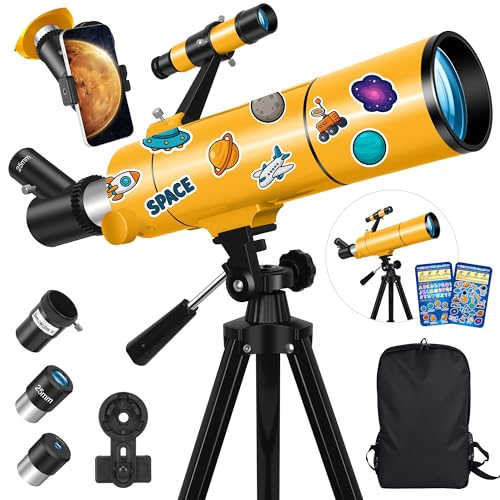
MEEZAA Telescope for Adults & Kids, 80mm Aperture 500mm Refractor | Portable Travel Telescopes, for Astronomy Beginners and Family Stargazing, with Tripod, Stickers, Phone Adapter, Backpack
As an Amazon Associate we earn from qualifying purchases. Product prices and availability are accurate as of the date/time indicated.

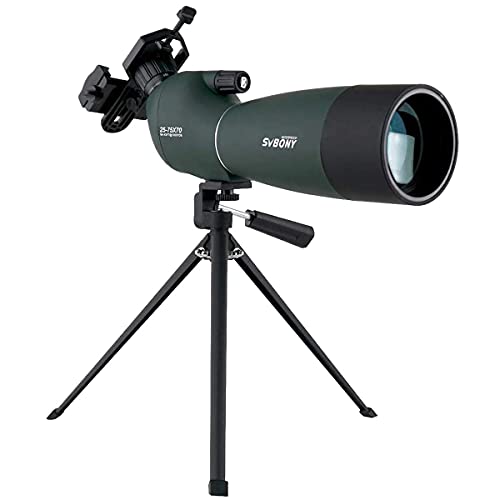
20-60x80 Spotting Scope with Tripod BAK4 FMC for Bird Watching | Spotting Scopes with Phone Adapter, Litght Waterproof Angle Birding Spotter Scope for Target Shooting, Stargazing Dark Green


As an Amazon Associate we earn from qualifying purchases. Product prices and availability are accurate as of the date/time indicated.
Prices shown are approximate and for reference only. Prices change often, so please check the current price on Amazon before you buy.
Best Spotting Scope for Stargazing Beginners Backyard Reviewed for 2026
1. Celestron LandScout 12-36×60 Best Spotting Scope for Stargazing Beginners Backyard
The Celestron LandScout 12-36×60 is a spotting scope with 12-36x magnification, 60mm objective lens, and 18mm eye relief. It is priced in the range of $60 to $70. Its 60mm objective is the smallest in this table, but its 12-36x magnification is easy to use, and its 1.5 lbs weight is the lightest.
For backyard stargazing, the LandScout is a practical first scope because it is affordable, it is light, and it can show the Moon in detail at 12-36x. Its 60mm aperture will give a dimmer image than an 80mm scope at night, but it is still useful for the Moon, and it is a good way to learn how to point and focus a scope. It suits a beginner who wants a cheap, portable scope to try stargazing.
2. Celestron Travel Scope 70 Best Spotting Scope for Stargazing Beginners Backyard
The Celestron Travel Scope 70 is a spotting scope with 15-75x magnification, 70mm objective lens, and 18mm eye relief. It is priced in the range of $70 to $80. Its 70mm objective gathers more light than a 60mm scope, and its 15-75x magnification gives a wider zoom range.
In use, the Travel Scope 70 is useful because it comes as a kit with a tripod and a backpack, which makes it easy to carry into a backyard. Its 70mm aperture is a step up for night use, and its 3.0 lbs weight is still portable. It is best for a beginner who wants a complete kit, with a scope and tripod, for a low price.
3. Gosky 20-60×80 Best Spotting Scope for Stargazing Beginners Backyard
The Gosky 20-60×80 is a spotting scope with 20-60x magnification, 80mm objective lens, and 18mm eye relief. It is priced in the range of $80 to $90. Its 80mm objective is larger than the Celestron models above, which means it gathers more light at night, and its 20-60x magnification is a standard range for spotting scopes.
For night use, the Gosky is a strong choice because its 80mm aperture gives a brighter image of the Moon and planets than a 60mm or 70mm scope, and its 2.5 lbs weight is reasonable. Its price is low for an 80mm scope, which makes it a good value for a beginner who wants a larger aperture without a large cost.
4. SVBONY SV28 25-75×70 Best Spotting Scope for Stargazing Beginners Backyard
The SVBONY SV28 25-75×70 is a spotting scope with 25-75x magnification, 70mm objective lens, and 18mm eye relief. It is priced in the range of $100 to $120. Its 25-75x magnification gives a high zoom range, and its 70mm objective is a good balance for portability and light gathering.
In a backyard, the SV28 is useful because its high magnification can show the Moon in detail, but its 25x minimum magnification can make it harder to find objects, because the field of view is narrower. Its 2.0 lbs weight is light, and its price is a step up from the Gosky, which reflects its higher magnification range. It suits a beginner who wants a high zoom scope for the Moon.
5. Celestron Ultima 80 Best Spotting Scope for Stargazing Beginners Backyard
The Celestron Ultima 80 is a spotting scope with 20-60x magnification, 80mm objective lens, and 18mm eye relief. It is priced in the range of $150 to $180. Its 80mm objective and 20-60x magnification are similar to the Gosky, but its build quality and optics are intended to be a step up, with a more durable body and a clearer image.
For a beginner who wants a better scope, the Ultima 80 is a solid choice because its 80mm aperture is good for night use, and its 20-60x zoom is easy to use. Its 3.0 lbs weight is a little heavier, but its tripod is more stable. It is best for a user who wants a reliable, mid price scope for regular backyard stargazing.
6. Vortex Diamondback HD 20-60×85 Best Spotting Scope for Stargazing Beginners Backyard
The Vortex Diamondback HD 20-60×85 is a spotting scope with 20-60x magnification, 85mm objective lens, and 20mm eye relief. It is priced in the range of $400 to $500. Its 85mm objective is the largest in this table, which means it gathers the most light at night, and its 20mm eye relief is the longest, which is comfortable for glasses wearers.
For a premium backyard scope, the Diamondback HD is a top choice because its 85mm aperture gives the brightest image in this table, and its HD optics are designed to give a clear, sharp image. Its 4.0 lbs weight is the heaviest, but its build quality is excellent. It suits a beginner who wants the best scope in this table, and who is willing to pay a premium price for it, or a user who will also use the scope for birding in daylight.
Buying Guide: How to Choose Best Spotting Scope for Stargazing Beginners Backyard
Start with your backyard, your budget, and how you will use the scope, not with a single specification. If your backyard is dark, choose a larger aperture, because it will gather more light. If your backyard has light pollution, choose a scope that is good for the Moon and planets, because those objects are bright enough to see even in a light polluted sky. Then check the practical details: aperture, magnification, eye relief, and tripod.
Choose Aperture for Night Brightness
Choose an aperture of 70mm to 85mm for backyard stargazing, because a larger aperture gathers more light and gives a brighter image at night. A 60mm scope can work for the Moon, but an 80mm scope will give a brighter, clearer image, especially at higher magnification. A larger aperture also helps with star clusters, because it shows more stars. If you can afford it, choose an 80mm scope, because it is a good balance for a beginner.
Choose Magnification for Finding and Viewing
Choose a magnification range that starts low, such as 12x or 20x, because a low magnification gives a wider field of view, which makes it easier to find the Moon or a planet. Once you find an object, zoom in slowly to 40x or 60x to see more detail, but do not use the highest magnification all the time, because the image will be dimmer and harder to keep steady. A 20-60x zoom is a good range for a beginner, because it is versatile and easy to use.
Check Tripod, Eye Relief, and Accessories
Check your tripod before you buy, because a spotting scope needs a stable tripod for stargazing, and a cheap, light tripod will shake. Check eye relief, especially if you wear glasses, because a longer eye relief, such as 18mm or 20mm, is more comfortable. Check if you need a phone adapter for digiscoping, a carrying case, or a dew shield, because those accessories are useful for night use, and they add cost. A dew shield is especially useful, because dew can form on the objective lens at night and blur the image.
Budget Guide for Best Spotting Scope for Stargazing Beginners Backyard
A scope in the $60-$90 range can provide good backyard stargazing if it is used for the Moon and bright planets, while a scope in the $100-$180 range often provides a larger aperture, a better tripod, and a clearer image. A scope in the $400-$500 range, such as the Vortex Diamondback HD 20-60×85, is for a user who wants the brightest image, the best optics, and a scope that will also work well for birding. The budget pick in this comparison is the Celestron LandScout 12-36×60, at $60-$70, because it is the cheapest model in the table and still offers a 12-36x magnification, a 60mm objective, and a 1.5 lbs weight that is easy to carry. For most beginners, learning to find and focus the Moon with a budget scope will help more than buying an expensive scope first. Spend the saving on a sturdy tripod and a star chart or app, if you need them.
Frequently Asked Questions About Best Spotting Scope for Stargazing Beginners Backyard
What is the best spotting scope for stargazing beginners backyard in 2026?
For best spotting scope for stargazing beginners backyard in 2026, the Celestron LandScout 12-36×60 is often the best budget choice because it offers 12-36x magnification, a 60mm objective, and a price of $60 to $70. The Gosky 20-60×80 is a strong choice for a larger aperture, while the Vortex Diamondback HD 20-60×85 is a good choice for a premium scope. Choose based on your backyard, your budget, and whether you want a portable scope or a larger aperture.
Can I see planets with a spotting scope?
You can see planets with a spotting scope, but they will look small. A fact not in the table is that Jupiter will look like a small disc, with its four brightest moons as tiny points, and Saturn will look like a small oval, with its rings visible as a thin line at 40x to 60x magnification, if the sky is clear and the scope is stable. You will not see the same detail as with a telescope, but you can still enjoy seeing planets for the first time with a spotting scope.
Do I need a tripod for stargazing?
You need a tripod for stargazing, because at high magnification, even a small shake will blur the image, and it is almost impossible to hold a spotting scope steady by hand at night. A fact not in the buying guide is that a tripod with a pan head, which lets you move the scope smoothly in both directions, is better than a tripod with a ball head for stargazing, because it makes it easier to track the Moon as it moves across the sky. Choose a sturdy tripod that can hold the weight of your scope without tipping.
What is the best time to stargaze in a backyard?
The best time to stargaze in a backyard is on a clear, dark night, when the Moon is not full, because a full Moon can wash out fainter stars. A fact not in the table is that the best time is often 1 to 2 hours after sunset, when the sky is dark but the air is still relatively warm, and dew has not yet formed on the lens. Avoid nights with clouds, haze, or strong wind, because those conditions will make the image blurry, and check a weather app for cloud cover before you set up your scope.
Related guides
- Best Low Cost Rangefinder: 6 Best Low Cost Rangefinder Picks in 2026
- Best Rangefinder for Kids Fishing Trips: 6 Best Rangefinder for Kids Fishing Trips Picks in 2026
- Best Non Leica Rangefinder in 2026: 6 Non Leica Rangefinders With Red OLED, at Least 1,000 Yards Reflective, and a Price Range, for Golf and Hunting
- Best Rangefinder for Windy Hunting: 6 Best Rangefinder for Windy Hunting Picks in 2026
More from Amazon
Programs that pair well with the guide above. Offers and eligibility are set by Amazon and may change.
Free shipping on eligible items, Prime Video and more. Eligible new members can start with a free trial.
Start a Prime free trialAudiobooks and podcasts to listen to on the go. Eligible new members can start with a free trial.
Try Audible freeAd-free music streaming. Eligible new subscribers can start with a free trial.
Try Music Unlimited freeA free business account with business pricing and bulk-buying tools for work, shop or home office.
Create a business accountAs an Amazon Associate we earn from qualifying purchases.



Write Your Review
No reviews yet. Be the first to share your experience!