
What's inside
- Best Night Vision Maintenance for Lens Care: Blow First, Brush Second, Wet Last, and Almost Never
- Quick Comparison: Night Vision Lens Care Products Compared
- The Six Lens Care Products Reviewed
- Buying Guide: Build the Small Kit, Follow the Sequence, Store It Powerless
- How We Selected These Lens Care Products
- Frequently Asked Questions: Night Vision Lens Care
As an Amazon Associate I earn from qualifying purchases. This post may contain affiliate links at no extra cost to you.
The best night vision maintenance for lens care is a discipline with two patients, and the beginner usually remembers only the first. The visible patient is the glass: the objective and ocular lenses whose coatings gather dust, dew, fingerprints, and the fine grit of a night’s fieldwork, and which must be cleaned in an order that removes the grit before any cloth touches the surface, because a lens wiped dirty is a lens being polished with sand. The invisible patient is the device itself, and in a true night vision instrument it is the more valuable and the more fragile of the two: an image intensifier tube can be damaged by bright light, a digital sensor can be harmed by neglect of a different kind, batteries left resident can leak or swell into a housing that costs more than a car repair, and moisture sealed into a case after a wet night will spend the winter quietly fogging and corroding what it was stored to protect. This guide treats both patients, in the order a careful owner works: hands off the glass until the loose parish is gone, the right tools in the right sequence, storage dark, dry, and powerless, and a seasonal round that takes twenty minutes and is the difference between a device that serves a decade and one that serves two seasons and a repair bill.
Know which night vision you own before you maintain it, because the doctrines divide. A traditional intensifier device amplifies light through its tube and must be protected from daylight and bright sources with its caps on, never switched on in a lit room to test it, and never pointed at the sun, a headlight, or any intense light, in use or in cleaning. A digital night vision device uses a camera sensor and a display, tolerates daylight handling far better, and is maintained more like the camera it is, though its infrared illuminator should never be stared into at close range and its lenses and sensor window deserve the same grit-first cleaning. A thermal device is a third parish again, its lens often made of materials unlike ordinary glass, and its maker’s cleaning instructions govern absolutely, because the wrong solvent on the wrong lens is an expensive education. In every parish the maker’s manual is the senior document; this guide composes the general doctrine around it, and where the two ever differ, the manual wins and this guide applauds.
The safety parish is brief. Work on a clean, dry, well-lit table — lit for your eyes, with an intensifier device’s caps kept on its lenses except for the moments of cleaning and its power off and batteries out where its design allows. Never use compressed air from a workshop line, never use household glass cleaner, paper towel, a shirttail, or any cloth that has lived in a pocket with keys and grit. Never attempt to open the housing or clean any internal surface; the inside of a night vision device is the maker’s parish, sealed against moisture and dust, and the owner’s authority ends at the outer glass. Keep cleaning solvents away from children, use them sparingly and as their makers direct, and let a cleaned device dry fully before it is cased. With those rules fixed, the rest is sequence and patience.
Our Top Picks
Best Night Vision Maintenance for Lens Care: Blow First, Brush Second, Wet Last, and Almost Never
The Cleaning Sequence for the Best Night Vision Maintenance for Lens Care
Cleaning is a sequence, and its order is the whole doctrine. The first pass removes nothing by contact at all: a hand-squeezed air blower, held near the lens and angled across it, lifts the loose dust and grit that do the damage, worked from the centre outward and repeated until the surface shows no particles in a raking light. The second pass, where particles persist, is a proper lens brush, soft, clean, kept capped and used for nothing else, drawn lightly across the glass in one direction. Only when the surface is free of everything that can scratch does any cloth arrive, and most nights it should not need to: a lens that has been blown and brushed and shows no smear is a clean lens, and the owner who stops there will still own its coatings in ten years. The wet parish is reserved for the fingerprint, the dew mark, and the smear that dry methods leave, and it is performed with a fresh lens tissue or a clean microfibre reserved for optics, a drop of proper lens solution placed on the tissue and never on the lens, and a gentle spiral from the centre outward, followed at once by a dry tissue’s pass before the solution can dry into a new mark of its own.
Restraint is the skill inside the sequence. Every cleaning is a small risk accepted to remove a larger harm, so the question is never whether a lens can be made to look perfect under a lamp, but whether what is on it is costing the image in the dark. Dust that is invisible in use is a lamp problem, not a night problem, and it should be left to the blower. A fingerprint, by contrast, is oils and acids sitting on a coating and a smear across every bright object in the field, and it earns its careful wet pass the night it is found. Judge by the image, clean by the sequence, and stop the moment the image is restored. The owner who polishes nightly will, across a decade, polish the coatings themselves into a haze no cleaning can reverse, and will have maintained the device to death with the best intentions in this guide.
Tools and Consumables for the Best Night Vision Maintenance for Lens Care
The correct kit is small, cheap, and boring, which is how you know it is correct. It consists of a hand blower of the rocket parish, large enough to move real air; a retractable lens brush and a LensPen-type tool, whose carbon compound tip is made for exactly the fingerprint parish and whose brush end serves the dry pass; proper lens tissues, used once and discarded, because a tissue’s second use is a grit delivery service; a small number of optical microfibre cloths, washed or replaced on a discipline and stored in a sealed bag; and a lens solution from an optics maker, used by the drop. Anti-fog treatments have their parish on the ocular of a device used in humid nights, applied as their makers direct. What the kit excludes matters as much: no canned air held close or tilted, whose propellant can spit onto a coating; no spectacle wipes of unknown chemistry carried loose; no silicone cloths, no household sprays, and no breath-and-sleeve, the traditional method, whose moisture carries the mouth’s parish and whose fabric carries the day’s grit.
Keep the kit with the device, in the case’s own parish, because maintenance that requires a journey to another room happens annually instead of nightly. Replace its consumables before they are exhausted or degraded, date the solution when it is opened, and retire any cloth that has touched the ground, a workshop, or anything that was not a lens. The table below grades the care products this guide trusts by name, because in this small parish the difference between a maker’s optical tissue and a generic substitute is the difference between a consumable and a contaminant, and it is measured in coatings rather than in pence.
Storage, Batteries, and the Tube for the Best Night Vision Maintenance for Lens Care
Storage is where night vision is mostly kept and mostly killed, and its doctrine is four words: dark, dry, cool, powerless. Dark, because an intensifier device lives its stored life with its caps on in a closed case, protected from the daylight that harms it; a digital device asks the same parish out of simple prudence for its display and plastics. Dry, because the device goes into its case only after it has aired from the night’s dew in a room’s ordinary air, never sealed wet, with a desiccant citizen in the case sized to its volume and renewed on its schedule, the same doctrine this site teaches for every valuable optic. Cool and steady, in a lived room’s cupboard rather than a loft’s oven or a garage’s frost. Powerless, because batteries come out for any storage longer than the interval between near-term uses, without exception: a leaked alkaline cell or a swollen lithium pack inside a night vision housing is a destruction out of all proportion to the minute saved, and the manual of nearly every serious device says so in its own words.
The seasonal round completes the parish. At the season’s turn, take the device out in its caps, inspect the glass in a raking light, clean only what the sequence says needs cleaning, check the case’s desiccant and the housing’s seals and caps for perishing or grit, cycle or charge its batteries as their makers direct where they are rechargeable, and operate the device briefly in proper darkness to confirm its health before the night it is needed. Record the date on a card in the case. A device kept on this round is ready whenever the night calls; a device neglected in a damp case is a discovery waiting to be made at the worst hour, and in night vision the worst hour is the product’s entire purpose.
Quick Comparison: Night Vision Lens Care Products Compared
| Care Product | Best For | Key Specs | Typical Price Range | Rating |
|---|---|---|---|---|
| LensPen Original parish | Dry cleaning — best night vision maintenance for lens care tool overall | Retractable brush and carbon compound cleaning tip parish as published, cap classes, compact form as published | $8 – $15 | 4.7 / 5 |
| Zeiss lens wipes and solution parish | Wet parish — best tissue and solution parish | Pre-moistened optical wipe classes as published, solution classes, tissue classes, and pack sizes as published | $8 – $20 by pack | 4.6 / 5 |
| Giottos Rocket Blower parish | First pass — best blower parish | Hand-squeezed air blower classes as published, size classes, one-way valve parish as published | $10 – $18 | 4.7 / 5 |
| Vortex / optics care kit parish | Kit — best composed parish | Brush, pen, tissue, cloth and solution kit parish as published, case classes as published | $15 – $30 per kit | 4.5 / 5 |
| Pelican / case with desiccant parish | Storage — best case parish | Hard case classes as published, foam parish, seal classes, and reusable desiccant classes as published | $50 – $110 by size | 4.6 / 5 |
| Panos / anti-fog parish | Ocular care — best anti-fog parish | Anti-fog treatment classes as published, cloth classes, and application parish as published | $8 – $16 | 4.3 / 5 |

yayaboqu Clip-On Night Driving Glasses with Polarized Yellow Lenses & Blue Light Blocking, Anti-Glare HD Vision for Safe Night Driving, Computer, Gaming, and Over Prescription Glasses for Men & Women


As an Amazon Associate we earn from qualifying purchases. Product prices and availability are accurate as of the date/time indicated.
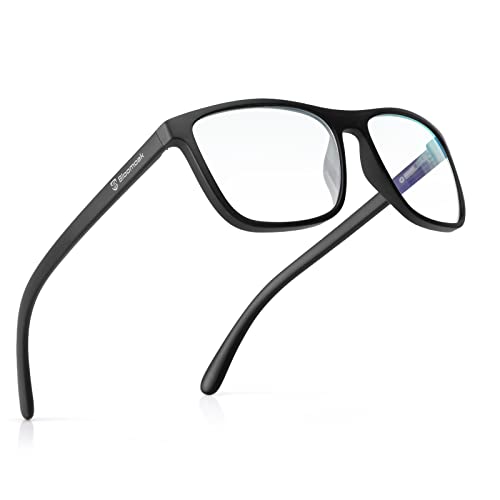
B BLOOMOAK Clear Night Driving Glasses, Anti-Glare Night Vision Glasses with AR Coating, Lightweight PC Lenses for Men Women


As an Amazon Associate we earn from qualifying purchases. Product prices and availability are accurate as of the date/time indicated.

SKYOAK Unbreakable TR90 Bifocal Night Vision Driving Glasses for Men +1.5x | Anti Glare Nighttime Readers with Bold Frame, HD Yellow Polarized Lens LowLight Conditions Safety Outdoors Far-Near Raining
As an Amazon Associate we earn from qualifying purchases. Product prices and availability are accurate as of the date/time indicated.
Prices shown are approximate and for reference only. Prices change often, so please check the current price on Amazon before you buy.
Ratings are editorial assessments based on makers’ published product specifications and value at typical prices. Always follow your night vision device’s own manual where its cleaning or storage instructions differ from general guidance.
The Six Lens Care Products Reviewed
1. LensPen Parish — Best Overall Tool
The LensPen’s brush-then-tip parish is the cleaning sequence in a pocket, and its carbon tip lifts the fingerprint that is the commonest true harm. For most owners, the kit begins in this row.
2. Giottos Parish — Best Blower
The rocket blower is the first pass made properly, real air with no propellant anywhere near a coating. As the first-pass parish, it shares the head.
3. Zeiss Parish — Best Wet Consumables
Zeiss’s wipes and solutions are the wet parish at its most trustworthy, consistent chemistry in single-use form. As the consumable parish, they earn their row.
4. Pelican Parish — Best Storage
The sealed hard case with a renewed desiccant is the storage doctrine given a product. As the case parish, it holds its row.
5. Vortex Parish — Best Composed Kit
The optics makers’ care kits gather the whole sequence in one case for the owner who wants it composed for them. As the kit parish, they hold their place.
6. Anti-Fog Parish — Best Ocular Extra
Anti-fog treatment is the one extra the humid-night owner genuinely needs, on the ocular where breath and dew conspire. As the extra parish, it completes the table.
Buying Guide: Build the Small Kit, Follow the Sequence, Store It Powerless
Step One: Write Your Device’s Parish
Identify what you own before you buy a wipe: intensifier, digital, or thermal, its maker’s stated cleaning and storage instructions read in full, its lens materials noted where the manual states them, and its battery parish and the maker’s word on resident storage. Note where the device lives between uses and how wet its nights are, because those two facts choose the case and the desiccant. This page governs every later purchase, and it protects you from the one expensive error in this category, the right product used on the wrong parish of glass.
Step Two: Audit the Kit’s Contents
Compose the kit against the sequence and refuse anything outside it: a hand blower, a brush, a pen tool, single-use tissues, a proper solution, sealed microfibre, and the case’s desiccant, each from a maker whose parish is optics. Check sizes against your device’s lenses, the pen’s tip against the ocular’s curve, and the case’s fit against the device with its caps and mounts. Compose the price whole across a year of consumables rather than the first purchase, and treat any product promising to restore, recoat, or polish a lens as a refusal in this guide’s doctrine, because coatings are not restored at a kitchen table and the attempt is a harm wearing a promise.
Step Three: The Nightly Minute and the Seasonal Round
After each use, the nightly minute: caps inspected, loose parish blown away in the field or at the door, the device aired from its dew before the case closes, and nothing wiped that the image did not accuse. At the season’s turn, the round from this guide: raking-light inspection, sequence cleaning only where needed, desiccant renewed, seals and caps checked, batteries out or cycled as their makers direct, a brief confirming run in proper darkness, and the date recorded in the case. Store the device dark, dry, cool, and powerless between its nights. Kept so, a night vision device’s glass and tube will outlast several owners’ worth of careless rivals, which in an instrument of this price is not a metaphor but a bank statement.
How We Selected These Lens Care Products
We included only real, named, currently sold optical care products whose makers publish their intended use and specifications, spanning the dry, wet, storage, and anti-fog parishes of the cleaning sequence this guide teaches. Prices are typical retail ranges. Ratings weight coating safety and sequence fit first, then consistency, case and consumable quality, and value.
Frequently Asked Questions: Night Vision Lens Care
Can I use glasses wipes or a microfibre from my camera kit on night vision?
The camera kit’s cloth, yes, with conditions; the loose glasses wipe, only if its maker states it for coated optics and it is fresh and sealed. A microfibre reserved for optics, kept in a sealed bag and retired when it has touched anything else, is a proper citizen of the kit whatever camera it began with. The dangers in this parish are not brands but histories: a cloth that has lived in a pocket or a car door carries grit, and grit is the whole enemy. Unknown wipes add a second unknown, their chemistry, which on an ordinary lens is a small risk and on an exotic thermal lens may be a serious one, which is why this guide repeats its senior rule, the device manual governs, and its stated prohibitions are not suggestions. When in doubt, the blower and brush alone will carry a lens safely to the night a proper tissue is available, and no image was ever lost by cleaning postponed one evening.
How often should I clean the lenses?
As seldom as the image allows, which for a carefully handled device is a handful of true cleanings a year surrounded by a hundred blower passes. The nightly discipline is inspection and air, not contact: blow the loose parish away, look at the glass in a raking light, and let it alone unless a fingerprint, a dew mark, or a smear is present that the image itself would show. The seasonal round is the occasion for the full sequence where it is needed. Every contact cleaning spends a little of the coating’s life and risks the grit accident, so frequency is not diligence in this parish; judgement is. The owner whose lenses look perfect under a lamp and whose coatings are haze at five years has the relationship exactly backwards, and this guide’s whole doctrine can be carried in that sentence.
Why must the batteries come out for storage?
Because the battery is the only citizen inside the housing that can destroy it unassisted. An alkaline cell left for months can leak its corrosive parish across the contacts and the board; a neglected lithium pack can swell against a housing never designed to be opened by its owner; and either failure converts a device worth a great deal into a repair worth nearly as much, during a season when it was doing nothing at all. The minute it takes to remove them is the cheapest insurance in this entire guide. Store the removed batteries by their own rules, cool and dry and partly charged where they are rechargeable, keep them with the case so the device is never found powerless at a moment of need, and let the seasonal round be the occasion that cycles and checks them. No readiness is lost, because a device whose batteries live in its case pocket is exactly as ready as one whose batteries are quietly digesting it.
What should I do if the lens fogs internally or the image degrades?
Stop, and hand the device to its maker, because internal fogging is a seal’s failure and image degradation in an intensifier may be the tube’s own history, and neither parish admits an owner’s remedy. Do not open the housing, do not apply heat, do not place the device in rice or any other folk desiccant as a cure, though gentle time in a dry room with its caps off, for a digital device whose manual permits it, may clear honest surface condensation that was never internal at all. Distinguish the two by patience: surface dew clears as the device matches the room; internal fog returns in the same pattern whatever the room does. Photograph the fault, record when it appeared, and contact the maker’s service with both, under whatever warranty the device carries. The discipline of this guide exists to make that call rare, and the wisdom of the owner is making it early when prevention has honestly ended.
Related guides
- Best Rangefinder Monocular in 2026: Laser Rangefinders for Hunting, Golf, and Long-Range Shooting, Ranked by Accuracy and Angle Compensation
- How to Choose Thermal Monocular Resolution in 2026: How to Choose Thermal Monocular Resolution
- Best Thermal Monocular for Spring Hunting: 6 Best Thermal Monocular for Spring Hunting Picks in 2026
- Best Thermal Monocular for Desert Farms: 6 Best Thermal Monocular for Desert Farms Picks in 2026
More from Amazon
Programs that pair well with the guide above. Offers and eligibility are set by Amazon and may change.
Free shipping on eligible items, Prime Video and more. Eligible new members can start with a free trial.
Start a Prime free trialAudiobooks and podcasts to listen to on the go. Eligible new members can start with a free trial.
Try Audible freeAd-free music streaming. Eligible new subscribers can start with a free trial.
Try Music Unlimited freeA free business account with business pricing and bulk-buying tools for work, shop or home office.
Create a business accountAs an Amazon Associate we earn from qualifying purchases.

Write Your Review
No reviews yet. Be the first to share your experience!