
What's inside
As an Amazon Associate I earn from qualifying purchases. This post may contain affiliate links at no extra cost to you.
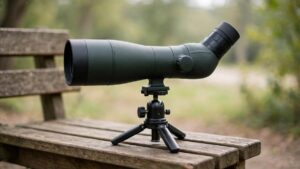
The best spotting scope for deer hunting earns its place in a pack or a truck for one reason: it lets a hunter make a better decision from further away. That decision is sometimes about whether a deer is the animal the hunter hopes it is, a legal deer under the regulations in force, of the sex, age, or antler class a tag, a season, or a management plan calls for. More often, and more valuably, it is the decision not to move, not to stalk closer through noisy ground, not to disturb a feeding area at dawn, and sometimes not to shoot at all, because the scope showed, clearly and in time, that the animal was not the right one, was not in a safe or lawful position, or was further, smaller, or more obscured than the naked eye and a binocular had suggested. A spotting scope is an observation instrument. It is not a rifle scope, it is never a substitute for identifying a target and what is beyond it through the optic you will shoot with, and it does not extend a hunter’s ethical shooting range by a single yard. Used properly, it shortens the list of mistakes a hunter can make, by moving the looking to a distance where time, light, and judgment are all on the hunter’s side.
This guide compares real, currently sold spotting scopes for deer country, in the whitetail woods and fields of the east and midwest, the mule deer basins and coulees of the west, and the mixed farms and hills most deer hunters actually hunt. It is legal and safety-focused throughout: seasons, tags, legal shooting hours, antler and sex restrictions, land permission, and optics and electronics rules vary by jurisdiction and change, and the hunter must confirm the current regulations for the exact place and dates hunted. Prices are typical ranges only.
What a Deer Hunter Needs a Spotting Scope to Do
Judge the animal: antlers, body and condition at observation range
The deer’s parish is specific. A hunter glassing a field edge at last light, a basin at dawn, or a clearcut at midday needs to resolve antler points and mass where antler restrictions or personal standards apply, read body size and condition against known animals, distinguish a young buck from a mature one by neck, belly, and posture as much as by headgear, and watch behaviour, feeding, bedding, travelling with does, responding to other deer, long enough to form a plan. That work is done, in practice, in the middle of a scope’s magnification range, on a steady tripod, in the best light of the day rather than the worst, which is why this guide weights optical quality, contrast, resolution, and colour honesty above maximum magnification. A scope that reaches a very high power with a dim, soft, heat-shimmered image judges nothing. A scope that is crisp and bright in its working range, with a focus wheel your gloved hand can turn in small, exact movements, judges a deer correctly at the distances where judging is possible, and tells you honestly, by the image’s own limits, when you are too far or the light is too poor to judge at all.
Objective size, magnification range and the light you actually hunt
Spotting scopes divide by objective lens size, roughly into compact 50 to 65 mm travellers, mid 80 mm class all-rounders, and large 85 to 95 mm instruments. For deer, the 80 to 85 mm class is the centre of the field for a reason: it gathers enough light for the first and last legal minutes in many deer parishes, supports useful magnification in poor light, and still packs and carries in a way the largest class resists. The 60 to 65 mm class is the mountain and mobile hunter’s answer, trading some low-light and top-end performance for a scope and tripod a person will actually carry up a basin. Magnification ranges in the 20-60x class on the larger scopes and 15-45x class on the compacts cover deer work entirely; the bottom of the range, wide and bright, is for finding and following, the middle for judging, and the top for the still, clear-air moments when the air itself permits it. Heat shimmer, mirage, in midday and over warm ground is the atmosphere’s limit, not the scope’s, and no price removes it; experienced glassers do their serious judging in the cool of the day for exactly that reason.
Angled or straight, and the tripod that is half the instrument
Choose the body by how you glass. An angled eyepiece is kinder for long sessions from a seated or low position, for looking uphill, and for sharing a scope between hunters of different heights, and it lets a tripod stand lower and steadier. A straight body is quicker to line up on an animal, packs more simply, and suits glassing from a vehicle window mount or a prone position for some hunters. Either is right; your posture and country decide. The tripod, by contrast, admits no economy: a spotting scope at 40x on a shaking tripod is a binocular with extra steps. Buy a tripod and head rated for the scope’s weight, smooth enough to pan a feeding deer without jerking past it, and tall or low enough for your positions, and practise deploying it quietly and quickly at home, because deer do not wait for a leg lock to be understood in the dark. A window mount is a useful second parish for vehicle-based observation where lawful and appropriate, with the obvious and absolute rule that no firearm is ever rested on, pointed from, or discharged from a vehicle except as the law of the place explicitly provides, and observation stops being observation the moment that line blurs.
Best Spotting Scope for Deer Hunting: Quick Comparison
| Model | Class / Configuration | Key Specs | Typical Price Range | Rating |
|---|---|---|---|---|
| Vortex Razor HD 27-60×85 class | 85 mm, angled and straight by model | Premium glass class in maker’s terms, wide magnification parish, tripod adaptable, strong warranty parish in its market | $1,200-$1,700 | 4.7/5 |
| Vortex Viper HD 20-60×85 / 15-45×65 class | 85 and 65 mm by model | Mid-premium HD class by model, the value centre of this table, angled and straight options by version | $700-$1,050 by model | 4.6/5 |
| Leupold SX-5 Santiam HD 27-55×80 class | 80 mm | Hunting house’s premium spotting class, stated glass and coating parish in maker’s terms, angled body class | $1,300-$1,800 | 4.6/5 |
| Athlon Ares G2 UHD 20-60×85 / 15-45×65 class | 85 and 65 mm by model | UHD glass class in maker’s terms by model, the specification value parish, angled and straight by version | $650-$1,000 by model | 4.5/5 |
| Celestron TrailSeeker 80 / 100 class | 80 to 100 mm, value | Value spotting class by model, dual focus parish on stated models, soft case and tripod parish varies by kit | $250-$450 by model | 4.2/5 |
| Swarovski ATS 80 HD / ATX class | 80 mm and modular premium | Flagship glass class, modular objective and eyepiece system on ATX parish, the low-light and resolution standard in its class | $2,300-$4,000 by configuration | 4.9/5 |
| Kowa TSN-66 / TSN-88 Prominar class | 66 and 88 mm by model | Fluorite crystal glass parish in maker’s terms on Prominar models, compact 66 and flagship 88 parishes | $1,100-$3,200 by model | 4.8/5 |
Every rating assumes a tripod of the class the scope deserves. Confirm angled or straight configuration, eyepiece supplied, and warranty terms for the exact model in the cart, because spotting scope systems vary more by configuration than almost any other optic.
Glass by Deer Country
Whitetail fields, food plots and the last half hour
The whitetail hunter glassing field edges, plots, oak flats, and powerline cuts is usually working from a fixed position, a blind, a stand approach, a truck where observation from a vehicle is lawful and the land permits, at ranges from a few hundred yards to the far side of a large field, in the day’s worst and most important light. That parish argues for the 80 to 85 mm class, in the Viper HD, Razor HD, Leupold SX-5, and Athlon Ares classes, on a full tripod, with the session planned around the light: glass early, judge in the middle magnifications, and let the scope’s low-light honesty tell you when identification is no longer certain, because legal shooting hours and positive identification are the hunter’s obligations and a bright scope extends the looking, never the certainty, past what the conditions give. In this country a spotting scope also serves the season after the season, scouting, shed and summer observation, and management, which is where its price is quietly repaid.
Western basins, coulees and the carried scope
The mule deer hunter, and the whitetail hunter of the big river bottoms and open plains, carries the scope to the deer. Weight is therefore a specification with teeth: the 65 mm class in the Viper, Ares, and Kowa TSN-66 parishes, on a tripod that folds to a pack’s parish, will be present on the ridge where an 85 mm flagship is in the truck, and a present scope judges every deer while an absent one judges none. Work this country by the classic method the scope exists for: vantage, patience, and the grid, glassing a basin in overlapping strips at low power, resting your eyes, watching for an ear, a horizontal back, a glint that is not a rock, then moving to judging power only on a found animal. Wind, shimmer, and distance will tax the image by midday; the morning and evening parishes are the scope’s, and the mobile hunter plans the day around them rather than fighting the atmosphere at noon.
Buying Guide: Glass First, Tripod With It, Judging Before Shooting
The purchase order for a deer scope
Buy in this order. Country and carry first: fixed-position and vehicle-supported observation takes the 80 to 85 mm class, carried mountain and basin work takes the 65 mm class, and no optical argument overrides the question of whether the scope will be where the deer are. Glass second: the best optical class the budget reaches, read in resolution, contrast, and low-light honesty rather than in maximum power, from a maker whose warranty and service in your market you have confirmed. Configuration third: angled for seated, shared, and uphill glassing, straight for quick lining-up and certain vehicle and prone uses, decided by a handling trial if one can be had. Tripod fourth and in the same order, rated, smooth, and practised, because an under-tripoded premium scope performs below a mid scope on a good one. Finally, confirm the whole purchase against the current regulations for your hunt: any restrictions on optics or electronics in your jurisdiction, the legal definitions your tag depends on, and the land rules for the ground you will glass, public or private, permission included.
Field discipline with a spotting scope
Use the scope as an observer, in the full sense. Set up before the light, work at low power, judge in the middle, and reserve high power for the air that supports it. Identify an animal completely, species, sex, and the legal class your tag requires, and identify the ground, what is behind and around the animal, other deer, other hunters, livestock, buildings, roads, before any decision moves from glassing to hunting, and make that identification again, finally, through the optic and by the standard your hunt and the law require at the moment it matters, because a spotting scope’s earlier judgment is information, not authorisation. If light, distance, cover, or angle leaves any element uncertain, the scope has given its most important answer, which is to wait, to move lawfully and safely to a better observation, or to pass. Keep the scope clean by its maker’s method, capped in transit, supported in the pack so its body and eyepiece take no knocks, and logged, in a notebook or a phone, with what was seen and where, because a deer hunter’s glassing log across a season is a scouting asset no optic can be bought to replace. The best spotting scope for deer hunting, an 85 in the Viper or Razor parish for the fixed hunter, a 65 in the Kowa or Ares parish for the carrier, a Swarovski for the flagship parish, is glass that judges honestly in the day’s first and last light, on a tripod that does not argue, in the hands of a hunter who lets it talk them out of as many stalks as into them, and in that company the scope pays for itself in the oldest currency in deer hunting: better decisions, made earlier, from further away.
Frequently Asked Questions
What is the best spotting scope for deer hunting overall?
For most deer hunters, an 80 to 85 mm scope in the Vortex Viper HD or Athlon Ares class is the best overall balance of judging glass, low-light performance, and price, on a tripod of matching quality. Fixed-position and field-edge hunters who glass at dawn and dusk will use every bit of that objective size, while carried, western, and mobile hunters should choose the 65 mm class in the same families, or the Kowa TSN-66 parish, because a scope that is present judges more deer than a larger one left behind. The flagship parish, Swarovski and Kowa Prominar, is a genuine step in resolution and low-light honesty for the hunter whose glassing hours justify it. In every class, identify your deer and its surroundings completely and lawfully before any shot is considered, and let the scope’s first service be the stalks and shots it persuades you not to take.
What magnification do I need to judge a buck’s antlers?
Less than the catalogues suggest, and more light and steadiness than magnification. Most antler judging that can honestly be done is done in the middle of a scope’s range, broadly in the 25x to 45x parish depending on distance, in good light, on a solid tripod, where resolution and contrast show points, mass, and shape. Maximum power has its moments in still, cool air at the day’s ends, but at midday, in shimmer, or on a light tripod, the top of the range shows a larger, softer, shaking image from which no responsible judgment should be drawn. Distance sets the honest limit: if, at sensible power in the available light, you cannot state the animal’s legal class with certainty, the answer is to observe longer, reposition lawfully for a better view, or pass, because antler restrictions and tag terms are legal definitions, and a guess at 60x is still a guess.
Is an 85 mm scope too heavy for deer hunting?
It is too heavy for some deer hunting and exactly right for other deer hunting, and the dividing line is how the scope travels. From a truck, a blind, a fixed vantage, or a short walk to a field edge, an 85 mm class scope and its full tripod are a modest load whose low-light and judging performance repays it every dawn and dusk. On a mountain pack, a long basin approach, or an all-day mobile hunt, the same outfit competes with water, food, and clothing for a finite back, and the 65 mm class, scope and lighter tripod together, is the professional answer for most carriers. Be honest about your real season rather than your aspirational one: count the days of each kind last year, and buy for the majority, borrowing or hiring the other parish for the exceptional trip instead of compromising every ordinary day in either direction.
Can I use a spotting scope to decide if a deer is legal to shoot?
A spotting scope is one of the best tools a hunter has for that decision, and it should be used to make the decision earlier and more conservatively, never to stretch it. Use it to identify the deer’s species, sex, antler configuration, and any other characteristic your current tag, season, and jurisdiction define, and to study the animal long enough that the identification is a conclusion rather than a hope. Then confirm the position: the animal’s background, other animals and people, property boundaries and permissions, safe and lawful shooting direction, all by the standards and through the final checks your hunt requires at the moment of any shot. Regulations change and differ in their definitions, sometimes in fine detail, so read the current rules for your exact hunt before the season, not from memory in the field. If the scope, the light, or the angle leaves the legal class in any doubt, the deer is, for you on that day, not a legal deer, and passing it is not a failure of the optic but its finest result.
Related guides
- Spotting Scope 50mm vs Spotting Scope 65mm: Vortex Razor 50, Diamondback 65, and Kowa Picks That Trade Pack Weight Against Dusk Light for Travellers, Hunters, and Shore Watchers
- Best Digiscoping Setup for Wildlife Photography in 2026: 7 Digiscoping Setups That Connect Your Phone or Camera to a Spotting Scope for Sharp Wildlife Photos
- Best Slope Rangefinder in 2026: 6 Top Golf Rangefinders with Slope for Accurate Yardages on Hills and Elevation
- How to Choose Cheap Digiscoping Adapter Size in 2026: Measure the Eyepiece, Match the Phone, and Why the Wrong Millimetre Vignettes Everything
More from Amazon
Programs that pair well with the guide above. Offers and eligibility are set by Amazon and may change.
Free shipping on eligible items, Prime Video and more. Eligible new members can start with a free trial.
Start a Prime free trialAudiobooks and podcasts to listen to on the go. Eligible new members can start with a free trial.
Try Audible freeAd-free music streaming. Eligible new subscribers can start with a free trial.
Try Music Unlimited freeA free business account with business pricing and bulk-buying tools for work, shop or home office.
Create a business accountAs an Amazon Associate we earn from qualifying purchases.

Write Your Review
No reviews yet. Be the first to share your experience!