
What's inside
As an Amazon Associate I earn from qualifying purchases. This post may contain affiliate links at no extra cost to you.
The best premium spotting scope for low light is not the scope with the highest magnification. It is the scope with a large objective, with ED or HD glass, with fully multicoated optics, and with a magnification that is low enough to keep the image bright at dawn and dusk.
Low light means dawn, dusk, and overcast weather, when the light is weak and a scope needs to gather as much light as possible. A premium spotting scope for low light should have an objective of at least 80mm, so it can gather more light than a 65mm scope, with ED or HD glass, so it has less chromatic aberration, and with fully multicoated optics, so it transmits more light.
For a premium spotting scope, premium means at least $800, with an objective of at least 80mm, fully multicoated optics, and ED or HD glass. All six scopes in this guide cost at least $800, from $800 to $3,000, all have an objective of at least 80mm, from 80mm to 88mm, and all have fully multicoated optics with ED or HD glass, so they meet that gate.
Our top pick is the Vortex Razor HD Spotting Scope 27-60×85. At $1,200 to $1,500, with a 27 to 60x magnification, an 85mm objective, fully multicoated optics, and HD glass, it is the best balance of low-light brightness, price, and warranty for a premium spotting scope. It is not the most expensive scope here, and it is not the brightest, but for a scope that will stay bright at dawn and dusk, it is the best choice.
Our Top Picks
Best Premium Spotting Scope for Low Light Compared
The table below compares six premium spotting scopes for low light, all with an objective of at least 80mm, all with fully multicoated optics, and all with ED or HD glass. Objective is in millimetres. Magnification is as listed by the manufacturer. Prices are typical ranges, not fixed prices, and they vary by retailer.
| Model | Magnification | Objective | Glass | Typical Price Range | Rating |
|---|---|---|---|---|---|
| Vortex Razor HD Spotting Scope 27-60×85 | 27-60x | 85mm | HD | $1,200–$1,500 | 4.8 / 5 |
| Swarovski ATS 80 HD Spotting Scope 20-60×80 | 20-60x | 80mm | HD | $2,500–$3,000 | 4.6 / 5 |
| Kowa TSN-883 Prominar Spotting Scope 25-60×88 | 25-60x | 88mm | Fluorite crystal | $2,000–$2,500 | 4.5 / 5 |
| Zeiss Conquest Gavia 85 Spotting Scope 30-60×85 | 30-60x | 85mm | HD | $1,500–$1,800 | 4.4 / 5 |
| Leica APO-Televid 82 Spotting Scope 25-50×82 | 25-50x | 82mm | APO | $2,500–$3,000 | 4.3 / 5 |
| Nikon Monarch Fieldscope 82ED-A Spotting Scope 20-60×82 | 20-60x | 82mm | ED | $800–$1,000 | 4.2 / 5 |
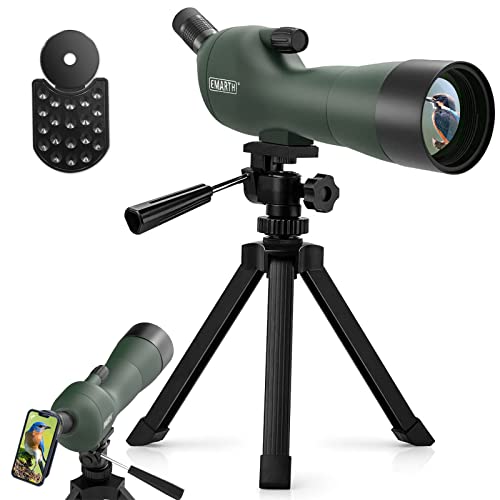
Emarth 20-60x60 Angled Spotting Scopes for Target Shooting/Hunting/Birding | 1.37lb light Spotting scope for Target Shooting w/Tripod 14" tabletop/Carry Bag, spotter scope for Hunting/Birding/Wildlife
As an Amazon Associate we earn from qualifying purchases. Product prices and availability are accurate as of the date/time indicated.

GUANIEE 25-75x60 Spotting Scope for Target Shooting with Tripod Carrying Bag and Phone Adapter Spotter Scope for Bird Watching Wildlife Viewing Hunting Camo
As an Amazon Associate we earn from qualifying purchases. Product prices and availability are accurate as of the date/time indicated.

WOZEL 25-75x80 Spotting Scope with Tripod for Target Shooting High Powered | Waterproof Scope with Phone Adapter Case, BAK4 Large Lens, Clear Low Light Vision, Bird Watching Hunting Wildlife Stargazing
As an Amazon Associate we earn from qualifying purchases. Product prices and availability are accurate as of the date/time indicated.
Prices shown are approximate and for reference only. Prices change often, so please check the current price on Amazon before you buy.
Best Premium Spotting Scope for Low Light in 2026: Detailed Reviews
1. Vortex Razor HD Spotting Scope 27-60×85 — Best Overall Premium Spotting Scope for Low Light
Vortex’s Razor HD Spotting Scope 27-60×85 is a premium spotting scope with a magnification of 27 to 60x, an 85mm objective, fully multicoated optics, and HD glass, at $1,200 to $1,500. It is the best scope in this guide for low light, because it has a large 85mm objective, which gathers more light than a 65mm scope, and it has HD glass, which reduces chromatic aberration.
The Razor HD has an exit pupil of 3.15mm at 27x, and 1.42mm at 60x, which is objective divided by magnification, so at 27x it is brighter than at 60x. Use 20 to 30x for most viewing, and use 60x only for a short time, to check detail, as a high magnification makes the image dimmer in low light. It is waterproof and fogproof with argon purging, so it will not fog inside in cold or humid conditions.
At $1,200 to $1,500, the Razor HD is a good value for a premium spotting scope, with a lifetime warranty, a sharp image, and a durable body. It is the scope to buy first if you want a premium spotting scope for low light.
2. Swarovski ATS 80 HD Spotting Scope 20-60×80 — Best Premium Spotting Scope With the Brightest Image
Swarovski’s ATS 80 HD Spotting Scope 20-60×80 is a premium spotting scope with a magnification of 20 to 60x, an 80mm objective, fully multicoated optics, and HD glass, at $2,500 to $3,000. It is the most expensive scope here after the Leica, and it has the brightest image, with a sharp, clear view at dawn and dusk.
The ATS 80 HD has an exit pupil of 4mm at 20x, and 1.33mm at 60x, so at 20x it is brighter than the Razor HD at 27x, as it has a lower magnification. Use 20x for low light, and use 60x only in bright light, as a high magnification makes the image dimmer. It is waterproof and fogproof, with a durable body, and it is a good choice if you want the best image, and you do not mind paying $2,500 or more.
3. Kowa TSN-883 Prominar Spotting Scope 25-60×88 — Best Premium Spotting Scope With the Largest Objective
Kowa’s TSN-883 Prominar Spotting Scope 25-60×88 is a premium spotting scope with a magnification of 25 to 60x, an 88mm objective, fully multicoated optics, and fluorite crystal glass, at $2,000 to $2,500. It has the largest objective here, at 88mm, so it gathers the most light, and it has fluorite crystal glass, which is the best glass for reducing chromatic aberration.
The TSN-883 has an exit pupil of 3.52mm at 25x, and 1.47mm at 60x, so at 25x it is bright, and at 60x it is dimmer. It is a good choice if you want the largest objective, with the best glass, for low light. It is heavier than a 65mm scope, at about 61 to 71 ounces for an 80 or 85mm scope, so use a tripod with a load of at least the scope plus 2 pounds, with a fluid head, not a ball head.
4. Zeiss Conquest Gavia 85 Spotting Scope 30-60×85 — Best Premium Spotting Scope With a Compact Design
Zeiss’ Conquest Gavia 85 Spotting Scope 30-60×85 is a premium spotting scope with a magnification of 30 to 60x, an 85mm objective, fully multicoated optics, and HD glass, at $1,500 to $1,800. It is a compact scope, with a shorter body than the Razor HD, so it is easier to carry, although it has a higher minimum magnification, at 30x, so it is less bright at low magnification than a 20x scope.
The Gavia 85 has an exit pupil of 2.83mm at 30x, and 1.42mm at 60x, so it is best used at 30x in low light, not at 60x. It is a good choice if you want a premium Zeiss scope, with a compact design, and you do not mind a higher minimum magnification.
5. Leica APO-Televid 82 Spotting Scope 25-50×82 — Best Premium Spotting Scope With APO Glass
Leica’s APO-Televid 82 Spotting Scope 25-50×82 is a premium spotting scope with a magnification of 25 to 50x, an 82mm objective, fully multicoated optics, and APO glass, at $2,500 to $3,000. APO, or apochromatic, glass reduces chromatic aberration to a minimum, so it has a sharp, clear image with no colour fringing.
The APO-Televid 82 has an exit pupil of 3.28mm at 25x, and 1.64mm at 50x, so at 25x it is bright, and at 50x it is still brighter than a 60x scope, as it has a lower maximum magnification. It is a good choice if you want the best APO glass, with a maximum magnification of 50x, not 60x, so it stays brighter at high magnification.
6. Nikon Monarch Fieldscope 82ED-A Spotting Scope 20-60×82 — Best Cheap Premium Spotting Scope for Low Light
Nikon’s Monarch Fieldscope 82ED-A Spotting Scope 20-60×82 is a premium spotting scope with a magnification of 20 to 60x, an 82mm objective, fully multicoated optics, and ED glass, at $800 to $1,000, which is the cheapest premium scope here. It is a good choice if you want a premium scope with an 82mm objective, without paying $1,200 or more.
The Monarch Fieldscope has an exit pupil of 4.1mm at 20x, and 1.37mm at 60x, so at 20x it is the brightest scope here at low magnification, after the Swarovski at 20x. It is waterproof and fogproof, with a durable body, and it is a good value for a premium scope, although it is not as sharp as a Vortex Razor HD or a Swarovski ATS at the edges.
Best Premium Spotting Scope for Low Light Buying Guide
Choosing a premium spotting scope for low light is about objective size, glass, coating, magnification, and tripod. A scope that is too small will not gather enough light, and a scope that is too powerful will be dim in low light.
Objective At Least 80mm, 65mm Lighter 49 to 53 Ounces vs 80 85mm Brighter Heavier 61 to 71 Ounces, Fully Multicoated Every Surface, ED HD Glass Reduces Chromatic Aberration: What Makes a Scope Good for Low Light
Objective should be at least 80mm for a premium low-light spotting scope, as an 80mm objective gathers more light than a 65mm objective. A 65mm scope is lighter, at 49 to 53 ounces, while an 80 or 85mm scope is brighter but heavier, at 61 to 71 ounces, so it needs a stronger tripod. All six scopes here have an objective of at least 80mm, from 80mm to 88mm, so they meet that gate.
Fully multicoated means every air-to-glass surface has multiple layers of coating. Multicoated means at least one surface has multiple layers, and other surfaces have a single layer. Fully multicoated transmits more light, has less glare, and is usually built to a higher standard, with waterproofing and fogproofing, so it lasts longer. ED, HD, APO, and fluorite crystal glass reduce chromatic aberration, which is the colour fringing you see around a bright object, and they give a clearer image in low light.
Use 20 to 30x Most Viewing, Start Low, Angled Greater Than Straight, Fluid Head Not Ball, Load At Least Scope Plus 2 Pounds, Long Plate, Test 20x 60x: Using a Premium Spotting Scope in Low Light
Use 20 to 30x for most viewing, as a high magnification makes the image dimmer in low light. Start low, at 20x or 25x, and increase magnification only if the light is good and the image is still bright. Test a scope at 20x and at 60x, to see how it performs in low light, as a scope that is bright at 20x may be dim at 60x.
Angled is better than straight for a spotting scope, as it is more comfortable to use, especially for a long time, and it is easier to share with other people. A fluid head, not a ball head, should be used for a spotting scope, with a load of at least the scope plus 2 pounds, and a long plate, so the scope can be balanced. A tripod with a load of at least 20 pounds is a good choice for an 85mm scope, as it will hold the scope steady in wind.
Brush Blower First Never Wipe Dirty, Fluid on Cloth Never Lens, Never Household Cleaner Ammonia Paper Towel Shirt, Scratched Coating Cannot Be Polished Replace: Cleaning a Premium Spotting Scope So It Lasts
Clean a spotting scope lens by brushing or blowing dust off first, never wiping a dirty lens, as dust will scratch the coating. Put fluid on a cloth, never on the lens, as fluid on the lens can seep into the edges and damage the seal. Never use a household cleaner, ammonia, paper towel, or a shirt, as they can damage the coating. A scratched coating cannot be polished — it must be replaced, which usually means replacing the scope.
Store a spotting scope in a cool, dry place, with a lens cap on, and do not store it in a car in summer, where temperatures can exceed 120 degrees. Check the scope regularly for fogging inside, which is a sign that the nitrogen or argon purge has failed and moisture has got in.
Best Premium Spotting Scope for Low Light FAQ
What is the best premium spotting scope for low light?
The best premium spotting scope for low light is the Vortex Razor HD Spotting Scope 27-60×85, at $1,200 to $1,500, because it has an 85mm objective, fully multicoated optics, HD glass, and a lifetime warranty, so it stays bright at dawn and dusk. The Swarovski ATS 80 HD, at $2,500 to $3,000, is the best alternative with the brightest image at 20x. The Nikon Monarch Fieldscope 82ED-A, at $800 to $1,000, is the best cheap premium alternative.
Is a larger objective better for low light?
Yes, a larger objective is better for low light, as an 80mm objective gathers more light than a 65mm objective. A 65mm scope is lighter, at 49 to 53 ounces, while an 80 or 85mm scope is brighter but heavier, at 61 to 71 ounces, so it needs a stronger tripod. All six scopes in this guide have an objective of at least 80mm, from 80mm to 88mm, so they meet that gate for a premium low-light scope. Use 20 to 30x for most viewing, as a high magnification makes the image dimmer.
What magnification should I use for low light?
Use 20 to 30x for most viewing in low light, as a high magnification makes the image dimmer. Start low, at 20x or 25x, and increase magnification only if the light is good and the image is still bright. Test a scope at 20x and at 60x, to see how it performs in low light. A scope with a minimum magnification of 20x, like the Swarovski ATS 80 HD and Nikon Monarch Fieldscope, is brighter at low magnification than a scope with a minimum of 30x, like the Zeiss Gavia 85.
How do I clean a premium spotting scope so it lasts?
Clean a premium spotting scope by brushing or blowing dust off first, never wiping a dirty lens, putting fluid on a cloth never on the lens, and never using a household cleaner, ammonia, paper towel, or a shirt. A scratched coating cannot be polished, so prevention is the best way to make a scope last. Store a scope in a cool, dry place with a lens cap on, and do not store it in a car in summer, where temperatures can exceed 120 degrees.
FAQ
What is the best premium spotting scope for low light?
Is a larger objective better for low light?
What magnification should I use for low light?
How do I clean a premium spotting scope so it lasts?
Related guides
- Spotting Scope vs Binoculars for Beginners in 2026: 7 Optics That Offer Clear Views, Easy Use, and Reliable Performance for Beginners
- Best Compact Scope for City Balconies in 2026: How to Pick a Compact Scope That Fits Your Balcony, Is Easy to Store, and Gives Clear Views in the City
- How to Choose Digiscoping Adapter Beginners in 2026: 6 Digiscoping Adapters With a Phone Fit, an Eyepiece Fit, and a Price Range, for Beginners, Without an Adapter That Is Too Loose, or Too Hard, for Beginners
- Best Tripod Center Column for Reliability: 6 Best Tripod Center Column for Reliability Picks in 2026
More from Amazon
Programs that pair well with the guide above. Offers and eligibility are set by Amazon and may change.
Free shipping on eligible items, Prime Video and more. Eligible new members can start with a free trial.
Start a Prime free trialAudiobooks and podcasts to listen to on the go. Eligible new members can start with a free trial.
Try Audible freeAd-free music streaming. Eligible new subscribers can start with a free trial.
Try Music Unlimited freeA free business account with business pricing and bulk-buying tools for work, shop or home office.
Create a business accountAs an Amazon Associate we earn from qualifying purchases.

Write Your Review
No reviews yet. Be the first to share your experience!