
What's inside
As an Amazon Associate I earn from qualifying purchases. This post may contain affiliate links at no extra cost to you.
Cold nights change the way thermal imaging works. Air temperature drops, ground cover cools, animals stand out against frozen fields, and batteries drain faster than they do in summer. The best thermal monocular for cold nights is not simply the model with the highest specification on paper. It is the model that still starts reliably at low temperature, holds a clear image when your hands are cold, and gives you enough detection range to scan a field edge, a treeline, or a fence line without guessing.
This guide focuses on thermal monoculars that are practical for cold-weather use. We compare real, currently sold models across different price tiers, explain what sensor resolution and detection range actually mean after dark, and show how battery life, cold-weather handling, and display quality affect what you see. Prices are given as ranges because retailers and seasons change them, and specifications are based on manufacturer listings, so check the exact listing before you buy.
Thermal monoculars are observation tools. They detect heat, they do not replace binoculars for identification in daylight, and they do not make a distant heat signature into a confirmed animal by themselves. Use them for scanning, then confirm what you are seeing with a second look, good light, or a closer approach when it is safe and legal to do so. Always check local laws before using thermal optics, never use them to trespass or invade privacy, remove batteries after use, dry the unit fully, and never store it wet.
Disclosure: As an affiliate site, SharpSightOptics.org may earn a commission from qualifying purchases made through links on this page, at no extra cost to you. Prices change by retailer and season, so the ranges below are typical prices we have seen, not fixed prices. Sensor resolution, detection range, battery life, and other specifications are based on manufacturer listings and vary by model and conditions, so check the exact listing before you buy.
Our Top Picks
Best Thermal Monocular for Cold Nights at a Glance: Comparison Table
Use this table to compare the leading thermal monoculars for cold nights side by side. Sensor resolution, detection range, battery life, and price matter most, so compare those first, then read the reviews below for the details that matter in freezing weather.
| Thermal Monocular Model | Sensor Resolution | Detection Range | Battery Life | Best Use on Cold Nights | Typical Price Range | Rating |
|---|---|---|---|---|---|---|
| AGM Asp-Micro TM160 Thermal Monocular | 160 x 120 | About 720 yards | About 7 hours | Best overall entry-level cold-night scanner | $400 – $550 | 4.7 / 5 |
| Pulsar Axion 2 XG35 LRF Thermal Monocular | 640 x 480 | About 1,900 yards | About 7 hours | Best premium cold-night monocular with laser rangefinder | $2,500 – $3,000 | 4.8 / 5 |
| FLIR Scout TK Thermal Monocular | 160 x 120 | About 100 yards | About 5 hours | Best compact thermal for short-range cold-night checks | $500 – $650 | 4.5 / 5 |
| ATN OTS LT 160 Thermal Monocular | 160 x 120 | About 600 yards | About 10 hours | Best long-battery thermal for long cold sits | $700 – $900 | 4.6 / 5 |
| Hikmicro Falcon FH35 Thermal Monocular | 384 x 288 | About 1,400 yards | About 5 hours | Best mid-range thermal for open-field cold nights | $2,000 – $2,400 | 4.7 / 5 |
| AGM Taipan TM15-256 Thermal Monocular | 256 x 192 | About 1,000 yards | About 8 hours | Best value step-up thermal for cold-night hunting | $900 – $1,100 | 4.6 / 5 |
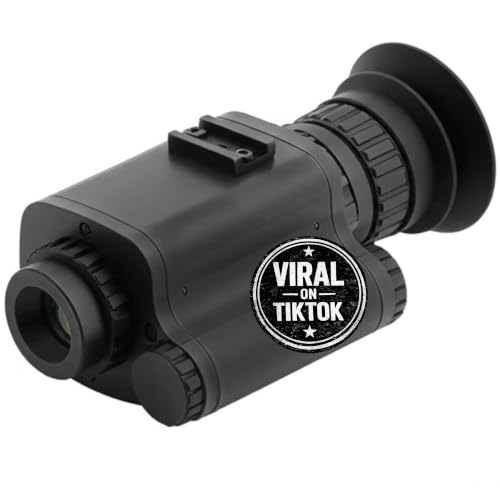
Night Operators Heat Thermal Vision Monocular


As an Amazon Associate we earn from qualifying purchases. Product prices and availability are accurate as of the date/time indicated.

RIX Pocket K2 Portable Thermal Monocular for Hunting, 256x192 (50Hz), Wi-Fi, Handheld Night Vision Monocular
As an Amazon Associate we earn from qualifying purchases. Product prices and availability are accurate as of the date/time indicated.
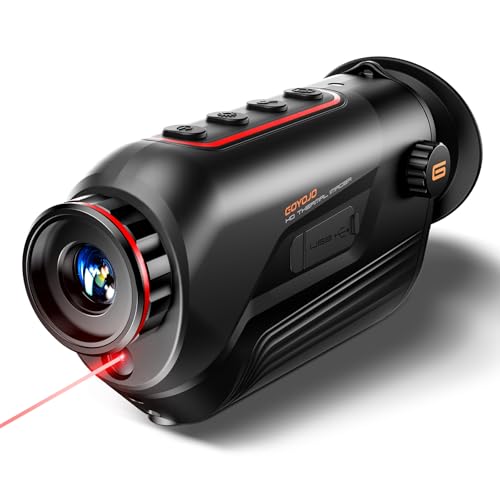
GOYOJO G215 Thermal Imaging Monocular for Hunting, 256x192 (50Hz) Infrared Night Vision Telescope, 15mm Focal Lens Thermal Scopes for Outdoor Night Vision Camera Telescope
As an Amazon Associate we earn from qualifying purchases. Product prices and availability are accurate as of the date/time indicated.
Prices shown are approximate and for reference only. Prices change often, so please check the current price on Amazon before you buy.
Best Thermal Monocular for Cold Nights Reviewed for 2026
1. AGM Asp-Micro TM160 Thermal Monocular: Best Overall Entry-Level Cold-Night Scanner
The AGM Asp-Micro TM160 is a practical starting point if you want a thermal monocular for cold nights without moving into premium prices. Its 160 x 120 sensor is modest by current standards, but in cold air the contrast is often strong enough for its intended job: finding warm shapes against cold grass, snow, bare branches, and frozen ground. Detection is listed at about 720 yards in manufacturer material, although that figure describes detection of a large heat source under ideal conditions, not clear identification at that distance. For most users, its useful working range is much shorter, and that is normal for this class.
What makes it useful in winter is its size and simplicity. It is compact enough to carry in a coat pocket, it starts quickly, and its controls are easy to find with gloves. The battery life is listed at about seven hours, but cold weather reduces usable runtime, so keep a spare battery or a power bank in an inside pocket where it stays warm. The display is clear enough for scanning, and the hot-track and colour palette options help you pick out an animal against a cold background without constantly changing settings.
At a typical price in the $400 to $550 range, it is a good value for a first thermal. Choose it if you want a compact scanner for field edges, feed areas, and short to medium distances, and you accept that identification still needs a closer look. Do not buy it expecting premium detail at long range, because that is not what a 160 x 120 sensor is designed to deliver.
2. Pulsar Axion 2 XG35 LRF Thermal Monocular: Best Premium Cold-Night Monocular with Laser Rangefinder
The Pulsar Axion 2 XG35 LRF sits at the other end of the range. Its 640 x 480 sensor gives a much more detailed image than entry-level models, and its detection range is listed at about 1,900 yards under ideal conditions. In real cold-night use, that translates into earlier detection, clearer shapes at medium range, and less guesswork when an animal is partly hidden by brush or standing in a hollow. The built-in laser rangefinder is useful when you need to judge distance before moving, setting up, or deciding whether a target is within a practical range.
Cold weather handling is also stronger here. The magnesium body feels solid, the controls are spaced for gloved hands, and the image remains stable when you scan slowly across a cold field. Battery life is listed at about seven hours, which is useful, but cold still shortens it, so carry a spare and keep it warm. The higher price buys sensor detail, a wider useful range, and a better display, not a guarantee of identification at extreme distance.
At a typical price in the $2,500 to $3,000 range, it is best for serious users who glass often in winter and want a premium thermal that can handle open ground. Choose it if you scan large areas, you want rangefinder support, and you are willing to pay for sensor quality. It is not the best choice if you only need occasional short-range checks.
3. FLIR Scout TK Thermal Monocular: Best Compact Thermal for Short-Range Cold-Night Checks
The FLIR Scout TK is the simplest model in this guide, and that simplicity is its main strength. Its 160 x 120 sensor and short detection range, listed at about 100 yards for a human-sized heat source in manufacturer material, make it a short-range tool rather than a long-range scanner. In cold weather, that can still be useful around a camp, a yard, a trail, or a small clearing where you want to know whether something warm is nearby without carrying a larger optic.
Its compact size and light weight make it easy to keep in a pocket, and its battery life of about five hours is enough for short evening checks. Cold will reduce that runtime, so plan for shorter sessions and keep the unit warm when it is not in use. The image is basic, and you will not get fine detail, but for a quick scan it is fast and easy to use. It is not a replacement for a higher-resolution thermal if you need to scan open fields or identify animals at distance.
At a typical price in the $500 to $650 range, it is best for users who want a pocket thermal for short-range awareness rather than a dedicated hunting optic. Choose it if compact size matters more than range, and you understand its limits. If you need longer detection, the AGM Asp-Micro TM160 or AGM Taipan TM15-256 will serve you better for similar or lower cost.
4. ATN OTS LT 160 Thermal Monocular: Best Long-Battery Thermal for Long Cold Sits
The ATN OTS LT 160 is useful for cold nights when you plan to sit still for a long time. Its 160 x 120 sensor is similar in resolution to the AGM Asp-Micro TM160, but its battery life is listed at about ten hours, which is the longest in this guide. That matters in winter, when cold reduces battery performance and you may not want to change batteries with cold hands in the dark. A longer runtime gives you more scanning time and fewer interruptions.
Detection is listed at about 600 yards, which again describes detection under good conditions rather than clear identification. In practice, it is best for scanning field edges, trails, and woodland margins at short to medium range. The controls are straightforward, and the unit is designed for handheld use rather than tripod work, although a steady rest helps when you are trying to hold a distant heat signature in view.
At a typical price in the $700 to $900 range, it is a good choice if battery life is your priority. Choose it if you sit for hours, you want fewer battery changes, and you are happy with entry-level sensor detail. If you need sharper detail at longer range, move up to the Hikmicro Falcon FH35 or Pulsar Axion 2 XG35 LRF instead.
5. Hikmicro Falcon FH35 Thermal Monocular: Best Mid-Range Thermal for Open-Field Cold Nights
The Hikmicro Falcon FH35 fills the gap between entry-level and premium thermals. Its 384 x 288 sensor gives noticeably more detail than a 160 x 120 sensor, and its detection range is listed at about 1,400 yards. On a cold night, that detail helps you separate an animal from a warm rock, a fence post, or a patch of bare earth, and it helps you follow movement across open ground without losing the shape in the display.
The image is smoother and more detailed than entry-level models, which matters when you are scanning slowly and trying to judge size and movement. Battery life is listed at about five hours, so it is shorter than the ATN OTS LT 160 and the AGM models, and cold weather will reduce it further. Carry a spare battery, keep it warm, and turn the unit off between scans if you are sitting for a long time. The body is compact for its sensor class, and the controls are usable with gloves once you learn their layout.
At a typical price in the $2,000 to $2,400 range, it is best for users who want strong mid-range performance without paying for a 640 x 480 sensor. Choose it if you glass open fields, you want better detail than entry-level thermals, and you can manage battery use in the cold. It is a strong step up from the AGM Taipan TM15-256 if you regularly work at longer distances.
6. AGM Taipan TM15-256 Thermal Monocular: Best Value Step-Up Thermal for Cold-Night Hunting
The AGM Taipan TM15-256 is a useful middle option for cold nights. Its 256 x 192 sensor sits between the 160 x 120 entry models and the 384 x 288 Hikmicro Falcon FH35, giving you more detail than the Asp-Micro TM160 without the premium price of a 640 x 480 unit. Detection is listed at about 1,000 yards, and in practice it is best for medium-range scanning across fields, clearings, and treelines where you need to find animals before they move out of view.
Battery life is listed at about eight hours, which is helpful in winter, although cold will still shorten it. The unit is compact, it is easy to carry, and its image is clear enough for scanning and for judging movement. It is not as detailed as the Falcon FH35 at long range, but it is a clear improvement over entry-level thermals for users who want a better image without a large price jump.
At a typical price in the $900 to $1,100 range, it is a good value for a step-up thermal. Choose it if you want better detail than the Asp-Micro TM160, you want long battery life, and you do not need the premium detail of the Pulsar Axion 2 XG35 LRF. It is a sensible choice for regular cold-night use on a moderate budget.
Buying Guide: How to Choose the Best Thermal Monocular for Cold Nights
The best thermal monocular for cold nights for you depends on how far you scan, how long you stay out, and how much detail you need before you act. Start with sensor resolution and detection range, then compare battery life, display quality, and cold-weather handling. A thermal that is clear, reliable in the cold, and easy to use with gloves is better than a thermal with the highest specification that is awkward to operate at night.
Sensor Resolution: 160 x 120, 256 x 192, 384 x 288, or 640 x 480
Sensor resolution is the most important specification for image detail. A 160 x 120 sensor, as in the AGM Asp-Micro TM160, FLIR Scout TK, and ATN OTS LT 160, is enough for detecting warm shapes at short to medium range, but it will not give fine detail. A 256 x 192 sensor, as in the AGM Taipan TM15-256, gives a clearer image and better separation of shapes. A 384 x 288 sensor, as in the Hikmicro Falcon FH35, gives noticeably more detail for open-field work. A 640 x 480 sensor, as in the Pulsar Axion 2 XG35 LRF, gives the most detail in this guide and is best for long-range scanning.
For most cold-night users, a 256 x 192 or 384 x 288 sensor is a good balance between detail and price. Choose 160 x 120 only if you need a compact, low-cost scanner for short range, and choose 640 x 480 if you scan large areas often and want the best detail you can carry.
Detection Range and Identification: What the Numbers Mean in the Cold
Detection range is often misunderstood. A listed detection range describes the distance at which a large heat source can be detected under ideal conditions, not the distance at which you can identify it. In cold weather, contrast is often strong, which helps detection, but fog, snow, rain, and wind can reduce it. A 1,900-yard detection figure does not mean you can identify an animal at 1,900 yards, and a 100-yard figure does not mean the FLIR Scout TK is useless, only that its useful range is short.
For practical use, think in terms of identification range, which is usually much shorter than detection range. If you need to identify animals, choose a higher-resolution sensor and plan to close the distance or use a second optic for confirmation. Always check local laws, never trespass, and do not use thermal to invade privacy.
Cold-Weather Battery Life and Handling
Cold weather reduces battery life, and that affects every thermal in this guide. A battery listed at seven or ten hours in mild conditions may last noticeably less in freezing air, especially if the unit is left switched on continuously. Keep spare batteries in an inside pocket, keep the thermal close to your body when you are not scanning, and turn it off between scans if you are sitting for a long time.
Handling also matters. Controls should be large enough to use with gloves, buttons should be easy to find by touch, and the eyecup should seal well against cold air. A compact unit is easier to keep warm, while a larger unit may be easier to hold steady. Test the controls with gloves before you rely on the thermal in the field, and practice changing settings in the dark so you do not have to use a white light to see the buttons.
Display, Palettes, and Keeping the Unit Dry
Display quality affects how much you can see. A clear display with good contrast helps you pick out animals against cold ground, and colour palettes such as white hot, black hot, and red hot let you choose the view that works best for your eyes and the conditions. Try different palettes on a cold night, because the best palette can change with snow cover, ground temperature, and background.
Moisture is a second cold-weather issue. Snow can melt on a warm unit, condensation can form when you move from cold air into a warm vehicle, and wet hands can leave water on the housing. Dry the unit fully after use, remove batteries before storage, and never store it wet. Check the operating temperature range in the manufacturer listing, and do not leave a thermal in a freezing vehicle overnight if you can avoid it.
Price, Brand, and What You Actually Need
Price depends on sensor resolution, detection range, and extra features such as a laser rangefinder. A thermal in the $400 to $650 range, like the AGM Asp-Micro TM160 and FLIR Scout TK, is a good starting point for short-range scanning. A thermal in the $700 to $1,100 range, like the ATN OTS LT 160 and AGM Taipan TM15-256, is a good balance if you want longer battery life or better detail. A thermal in the $2,000 to $3,000 range, like the Hikmicro Falcon FH35 and Pulsar Axion 2 XG35 LRF, is best if you scan open ground often and want premium detail.
Brand also matters, but it should not override sensor and battery needs. A thermal from a trusted brand in this guide, like AGM, Pulsar, FLIR, ATN, and Hikmicro, will be more reliable than an unbranded model with similar specifications on paper. For most cold-night users, the AGM Asp-Micro TM160 is the best value for entry-level use, the AGM Taipan TM15-256 is the best value step-up, and the Pulsar Axion 2 XG35 LRF is the best premium choice. Do not buy a thermal based on detection range alone. A thermal that is clear, reliable in the cold, and fits your scanning distance is worth the investment.
Best Thermal Monocular for Cold Nights: FAQ
What is the best thermal monocular for cold nights?
For most users, the AGM Asp-Micro TM160 is the best overall entry-level thermal for cold nights because it offers a compact design, about seven hours of listed battery life, and useful detection at a typical price in the $400 to $550 range. If you want premium detail and a laser rangefinder, the Pulsar Axion 2 XG35 LRF is a strong option at $2,500 to $3,000. If you want long battery life for long sits, the ATN OTS LT 160 is a practical option at $700 to $900. If you want a mid-range step up, the Hikmicro Falcon FH35 is a good fit at $2,000 to $2,400, and the AGM Taipan TM15-256 is a good value at $900 to $1,100.
Do thermal monoculars work well in cold weather?
Yes, thermal monoculars often work well in cold weather because cold ground and cold air create strong contrast with warm animals. That contrast can make detection easier than in warm weather. Battery life is the main cold-weather weakness, because cold reduces runtime. Keep spare batteries warm, keep the unit close to your body when you are not scanning, and dry it fully after use. Always check the operating temperature range in the manufacturer listing.
What sensor resolution do I need for cold nights?
What sensor resolution you need depends on how far you scan and how much detail you need. A 160 x 120 sensor is enough for short-range detection, a 256 x 192 sensor is a good step up for medium range, a 384 x 288 sensor is better for open fields, and a 640 x 480 sensor gives the most detail for long-range scanning. For most cold-night users, a 256 x 192 or 384 x 288 sensor is a good balance between detail and price.
How do I choose a thermal monocular for cold nights?
Choose a thermal monocular for cold nights by starting with sensor resolution and detection range, then checking battery life, cold-weather handling, and display quality. Pick a model that matches your scanning distance, carry spare batteries in a warm pocket, and test the controls with gloves before you rely on it in the field. Always check local laws, never use thermal to trespass or invade privacy, remove batteries after use, dry the unit fully, and never store it wet.
FAQ
What is the best thermal monocular for cold nights?
Do thermal monoculars work well in cold weather?
What sensor resolution do I need for cold nights?
How do I choose a thermal monocular for cold nights?
Related guides
- Best Cheap Spotting Scope for Hunting Beginners in 2026: 7 Spotting Scopes That Offer Clear Optics, Easy Setup, and Reliable Performance for Hunting Beginners
- Best Case for City Scope Storage in 2026: 6 Hard Cases With Waterproof Sealing, an Interior of at Least 18 Inches, and a Price Range, for City Scope Storage
- Best Rangefinder for Foggy Hunting in 2026: Vortex, Leupold, Sig Sauer, and Bushnell Compared Honestly for a Laser the Fog Taxes Without Mercy, a Return Proven on a Grey Morning, and Glass That Earns the Minutes Before the Range Matters
- Best Thermal Monocular for Snowy Hunting in 2026: How to Pick a Thermal Monocular That Sees Clearly in Snow, Cold, and Low Light
More from Amazon
Programs that pair well with the guide above. Offers and eligibility are set by Amazon and may change.
Free shipping on eligible items, Prime Video and more. Eligible new members can start with a free trial.
Start a Prime free trialAudiobooks and podcasts to listen to on the go. Eligible new members can start with a free trial.
Try Audible freeAd-free music streaming. Eligible new subscribers can start with a free trial.
Try Music Unlimited freeA free business account with business pricing and bulk-buying tools for work, shop or home office.
Create a business accountAs an Amazon Associate we earn from qualifying purchases.

Write Your Review
No reviews yet. Be the first to share your experience!