
What's inside
As an Amazon Associate I earn from qualifying purchases. This post may contain affiliate links at no extra cost to you.
The best low cost rangefinder is a lesson in paying for the distance you actually need. A laser rangefinder’s job is singular: tell you, quickly and truthfully, how far away a target is, so that a hunter can judge a shot ethically, a golfer can choose a club with confidence, or a shooter can set a target at a known distance. The expensive models extend that truth to extreme ranges, add ballistic calculators, and survive military weather. The honest budget models in this guide do the core job — accurate readings at the distances their users genuinely work at — for a fraction of the price, and the discipline of this purchase is knowing where your distances end. A deer hunter in woodland whose longest honest shot is inside a few hundred yards gains nothing from a two-thousand-yard instrument except a lighter wallet and a heavier pocket.
Read the specifications the way this guide does, because rangefinder marketing is a masterclass in the flattering number. The headline range on the box is measured against a large, reflective target — a building, a reflective sign — in ideal conditions. The same unit’s range on a deer, a flag, or a tree in rain and low light is a shorter, different figure, and reputable makers publish both: a reflective range and a softer-target range. Judge every model here by the second figure, matched against your real targets with margin to spare. Accuracy is the other honest number: the class standard is plus or minus a yard at working distances, and any model in this guide meets it — beyond a few hundred yards, it is the steadiness of your hands and the target’s reflectivity, not the laser, that decide whether the reading repeats.
Safety and legality are brief and absolute. A rangefinder’s laser is an eye hazard if misused: never point it at people, vehicles, or aircraft, never look into the beam, and treat it with the same directional discipline as any optical instrument aimed at the world — know what is beyond your target before you range it. Hunters must follow their jurisdiction’s hunting regulations, including any rules on electronic aids, seasons, and legal shooting light, and a rangefinder informs an ethical shot; it never extends one beyond the shooter’s practised ability, the equipment’s capability, or a clear, identified target with a safe backdrop. Golfers should check the rules of their competition format, because slope-compensated readings are restricted in many sanctioned events — several models here offer a compliant mode or a non-slope version for exactly that reason.
Our Top Picks
What Makes the Best Low Cost Rangefinder
Range, Read by Target Type, and the Modes That Matter
Match the published deer or soft-target range to your longest real use, with about a third in reserve for poor light and weather. Then check the modes, because at this price the modes are the value: angle compensation, which converts the line-of-sight distance on a slope into the horizontal distance your aim or club selection actually needs, matters to mountain hunters and hillside golfers alike; scan mode, which updates readings continuously as you pan, is how a moving or partially obscured target gets ranged at all; and a simple, fast standard mode with a clear readout matters more than a menu of ballistic profiles most budget users will never open. A low cost rangefinder with the right two modes beats a feature festival that buries them three menus deep when an animal is standing and the light is going.
Optics and Display: The Half of the Product You Look Through
A rangefinder is also a small monocular, and at dawn and dusk — the hours hunters live for — its glass decides whether the target can be identified at all, which precedes ranging it. Magnification in this class runs from about 5x to 7x, and the budget sweet spot is a bright 6x with a field wide enough to find the target quickly. Displays divide into simple black LCD readouts, clear in daylight and harder at dusk, and illuminated red displays that cost more and earn it in low light. Check the published eye relief if you wear glasses, the water resistance rating if your sport is weatherproof by definition, and the battery type: the common CR2 cell is inexpensive and long-lived, and a spare in the pack is the cheapest insurance in this entire guide.
Build, Warranty, and the Cost of the Whole Purchase
Budget rangefinders live in pockets, packs, and golf bags, and are dropped accordingly. Rubber armour, a sealed body with a published water resistance claim, and a lanyard point are worth more than a tenth of a yard of accuracy. The makers in this table stand behind their electronics with real warranties, which at this price is a genuine divider — a no-name unit with a longer claimed range and no warranty is the expensive option wearing a cheap costume. Total the true cost: the unit, a case if none is included, spare batteries, and for golfers the tournament question settled. Then compare, because within this class the differences that matter are these, not the box’s largest number.
Quick Comparison: Best Low Cost Rangefinders Compared
| Low Cost Rangefinder Model | Best For | Key Specs | Typical Price Range | Rating |
|---|---|---|---|---|
| Vortex Crossfire HD 1400 | Best low cost rangefinder overall | Published reflective and deer ranges in the 1400-yard class, angle compensation, scan mode, strong warranty as published | $170 – $230 | 4.7 / 5 |
| Bushnell Prime 1300 | Best budget hunting value | 1300-yard class reflective range, angle compensation, brush and bullseye modes, weather-resistant build as published | $110 – $150 | 4.5 / 5 |
| SIG Sauer Buckmasters 1500 | Best value with premium features | 1500-yard class range, angle compensation, buckmasters feature set, published specs through the maker’s hunting line as listed | $130 – $180 | 4.5 / 5 |
| Nikon Prostaff 1000 | Best simple and compact | 1000-yard class range, compact body, simple two-mode operation, rainproof construction as published | $150 – $190 | 4.4 / 5 |
| Bushnell Tour V6 (golf) | Best low cost golf rangefinder | Golf-specific ranging to flags, visual jolt confirmation, slope version options, tournament-legal configurations as published | $280 – $350 | 4.6 / 5 |
| Halo XL600 | Best rock-bottom price | 600-yard class range, angle compensation, scan mode, water-resistant housing as published | $70 – $100 | 4.1 / 5 |

Hunting Rangefinder with Red OLED Display in Low Light, WOGREE 7X Magnification 1800 Yards Laser Rangefinder, Magnetic, Waterproof, Lightweight, Angle Measurement/Scan/Lock Vibration
As an Amazon Associate we earn from qualifying purchases. Product prices and availability are accurate as of the date/time indicated.
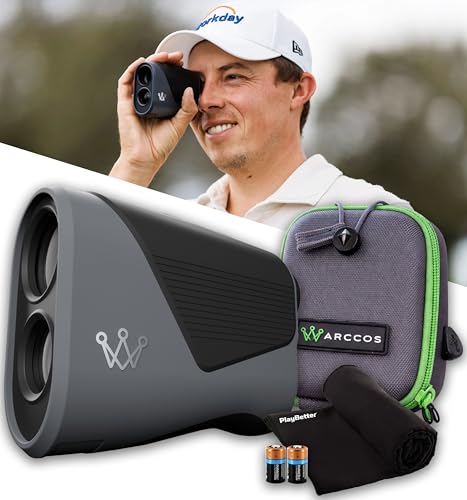
Arccos Smart Golf Laser Rangefinder PlayBetter Bundle | AI-Powered “Plays Like” Distances, Slope & Wind, Green Maps, Tournament Legal | Includes Microfiber Towel & 2 CR2 Batteries
As an Amazon Associate we earn from qualifying purchases. Product prices and availability are accurate as of the date/time indicated.

50m/164ft Laser Distance Measuring Sensor Range Module Low Cost Diastimeter Single & Continuous Measurement
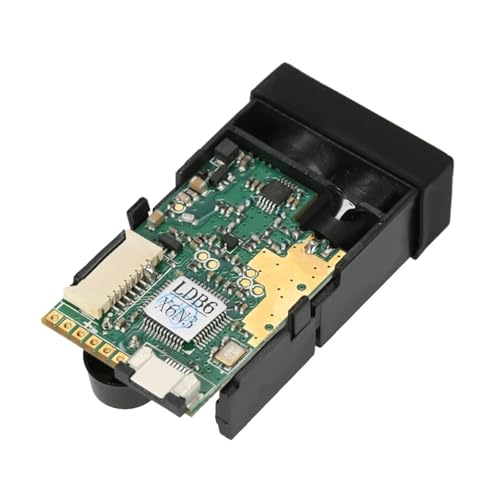


As an Amazon Associate we earn from qualifying purchases. Product prices and availability are accurate as of the date/time indicated.
Ratings are editorial assessments for budget hunting, golf, and general use, based on the makers’ published ranges by target type, modes, and construction, and value at typical prices. Prices are typical retail ranges. Published maximum ranges refer to large reflective targets in ideal conditions; effective range on game, flags, and trees is shorter, and this guide’s reviews judge each model against those realistic figures.
Best Low Cost Rangefinders: The Six Reviewed
1. Vortex Crossfire HD 1400 – Best Overall
The Crossfire HD 1400 is the budget rangefinder this guide hands to a hunter first, because it pairs honest performance at real hunting distances with the strongest warranty support in the class — a combination that changes the risk arithmetic of a budget purchase entirely. Its angle compensation and scan mode cover the modes that matter, its optics are a step brighter than the price suggests, and its deer-range figure, read properly, covers woodland and most open-country hunting with margin. It is not the cheapest unit here. It is the cheapest unit whose owner stops thinking about rangefinders for a decade.
2. Bushnell Prime 1300 – Best Budget Hunting Value
Bushnell’s Prime 1300 earns its place on modes a hunter actually uses: angle compensation for the slope, and target modes that help the laser report the animal rather than the brush in front of it — the classic budget-rangefinder failure, solved at a budget price. Its build and weather resistance suit the pocket it will live in, and its published ranges, read by target type, cover the distances most deer hunting happens at. For the hunter equipping a first full kit, where the rangefinder competes with boots and optics for budget, this is the sensible allocation.
3. SIG Sauer Buckmasters 1500 – Best Feature Value
The Buckmasters 1500 brings a premium maker’s feature set down to a budget line: a longer headline range, angle compensation, and the polish of a company whose rangefinders also serve at far higher prices. Its value case is strongest for the open-country hunter whose realistic distances stretch the class — pronghorn and mule deer country, field edges, the longer woodland clearings — where the extra soft-target range is margin you will use. Confirm the exact variant’s published figures, as the line spans options, and it stands as the class’s overachiever.
4. Nikon Prostaff 1000 – Best Simple and Compact
Nikon’s Prostaff 1000 is the rangefinder for the user who wants two buttons and the truth: compact, rainproof, optically respectable, and deliberately free of the menu depth its rivals advertise. Archers, woodland hunters, and golfers who play non-slope formats will find its honest thousand-yard class entirely sufficient — an archer’s longest ethical question is a fraction of that figure — and its size disappears into a pocket or a bino harness. It is the reminder this category needs that features unused are weight carried, in the hand and in the price.
5. Bushnell Tour V6 – Best for Golf
Golf is a different ranging problem — a thin flag against a busy background, at distances where a yard is a club — and the Tour V6 is the budget-conscious golfer’s answer from the game’s dominant rangefinder maker: fast flag acquisition with a confirming jolt, clear optics for finding the pin, and slope-equipped and tournament-legal configurations so the same golfer can practise with compensation and compete within the rules. It prices above the hunting units here because its target is smaller and its accuracy standard stricter, and golfers who have paced off one too many sprinkler heads will find the arithmetic easy.
6. Halo XL600 – Best Rock-Bottom Price
The XL600 is included honestly as the floor of the respectable category: a genuinely functional rangefinder with angle compensation and scan mode at a price that suits a first season, a loaner kit, a bowhunter whose distances are short by definition, or a golfer testing whether the category suits them at all. Its range, brightness, and build are the class’s modest end, and its readings should be trusted within the modest distances it was bought for. Matched to short-range work, it is a tool; asked to range across a valley at dusk, it is a lesson in this guide’s opening paragraph.
Buying Guide: How to Choose the Best Low Cost Rangefinder
Start From Your Longest Honest Distance
Write down the longest distance at which you will actually use a reading — the hunter’s longest ethical shot at game they have positively identified, the golfer’s longest approach, the shooter’s longest target — and shortlist models whose published soft-target or deer range exceeds it by about a third. That single discipline discards most of the market’s exaggeration in both directions: no paying for a two-thousand-yard instrument for a two-hundred-yard life, and no trusting a headline range that evaporates against a real target in real light. Then choose modes: angle compensation if your ground has slopes, scan if your targets move or hide, an illuminated display if your hours are dawn and dusk.
Test the Reading, Not the Brochure, in the First Week
When the unit arrives, range known distances — a measured field, a surveyed marker, the flags on a practice range — at several ranges and in the light you will use it, and confirm the readings repeat within the maker’s stated accuracy. Practise acquiring your real targets: a tree line, a flag, a target face, through the steadiness techniques of bracing against a post, a pack, or a companion’s shoulder, because a budget rangefinder in braced hands outperforms a premium one waved freehand. Learn its modes at home until the buttons are memory, since the moment of use allows no menu-reading, and fit the lanyard and case before its first outing, not after its first drop.
Carry It, Power It, and Hunt or Play Within Its Truth
Keep a spare battery in the kit permanently, clean the lenses with the same care as any optic, and store the unit dry. In the field, range early and often — landmarks, clearings, the flag’s surrounds — building the distance picture before the moment of decision, rather than ranging once under pressure. And hold the ethical line this guide opened with: a rangefinder’s number informs a shot or a club; it never justifies one beyond your practised ability, your equipment, the law and season where you stand, or a target you have not positively identified against a safe backdrop. The best low cost rangefinder is the one whose truth you know, trust, and stay inside.
How We Selected the Best Low Cost Rangefinders
We included only real, named, currently sold rangefinders from established optics makers, with published ranges stated by target type, stated accuracy, and real warranty support. Hunting, archery, golf, and general use were rated separately, and headline reflective ranges were discounted in favour of realistic soft-target performance throughout. Modes, low-light optics, and build were weighted alongside price, because at this level the differences that matter are the ones that survive a season, not a specification sheet.
Frequently Asked Questions About Low Cost Rangefinders
How accurate are budget rangefinders?
The reputable models in this guide state accuracy of about plus or minus one yard at their working distances, and in practice the laser is rarely the limiting factor. Repeatability in the field is decided by how steadily you can hold the aiming point on the target and by the target’s size and reflectivity — a braced reading on a tree or flag repeats beautifully, while a freehand reading on a distant animal in brush may wander between the animal and its surroundings. Brace, use scan mode where it helps, take two readings, and a budget unit’s truth is entirely sufficient for the distances it was bought for.
What does angle compensation do, and do I need it?
On sloped ground, the straight-line distance to a target is longer than the horizontal distance that gravity acts over, and it is the horizontal figure that decides where a shot falls or how a golf approach plays. Angle compensation measures the slope and reports the corrected distance automatically. Hunters in hills and mountains and golfers on sloped courses need it; flat-ground hunters, archers at short range, and flat-course golfers can save the money. Golfers must also check their competition rules, because compensated readings are restricted in many sanctioned formats — choose a model with a compliant mode or version if you compete.
Why does my rangefinder struggle at dusk or on dark targets?
Because both halves of its job get harder together: the optics gather less light for your eye to identify the target, and dark, angled, or distant surfaces return a weaker laser reflection for the sensor to time. This is normal physics, not a fault, and it is why this guide insists on judging models by their soft-target ranges and keeping a third in reserve. An illuminated display helps your eye, bracing helps the reading, and ranging a nearby solid landmark — a tree, a rock, the flag’s green surround — is the fieldcraft answer when the target itself will not return a reading.
Can one rangefinder serve both hunting and golf?
Yes, with eyes open about the compromises. A hunting unit with angle compensation will range flags adequately for casual golf, though it lacks the flag-lock confirmation and fine targeting golf-specific models are tuned for; a golf unit will range a deer, though its modes are optimised for pins and its slope features may be locked to competition settings. The dual-purpose buyer should choose by their primary sport and accept the secondary as a bonus, and the golfer who competes must settle the slope-rules question for their exact model before it goes in the bag on a competition day.
Related guides
- Best Budget Spotting Scope for First Time Birders in 2026: 7 Affordable Spotting Scopes That Help Beginners See Birds Clearly Without Overspending
- Best Thermal Monocular for First Time Hunters: 6 Beginner Thermal Monoculars in 2026
- How to Set Up Digiscoping Adapter for Phone in 2026: 7 Adapters Compared for Easy Setup, Clear Photos, and Reliable Use
- Best Thermal Monocular Cleaning Kit for Beginners in 2026: 6 Top Thermal Monocular Cleaning Kits for Beginners, Safe Lens Cleaning, and Easy Use
More from Amazon
Programs that pair well with the guide above. Offers and eligibility are set by Amazon and may change.
Free shipping on eligible items, Prime Video and more. Eligible new members can start with a free trial.
Start a Prime free trialAudiobooks and podcasts to listen to on the go. Eligible new members can start with a free trial.
Try Audible freeAd-free music streaming. Eligible new subscribers can start with a free trial.
Try Music Unlimited freeA free business account with business pricing and bulk-buying tools for work, shop or home office.
Create a business accountAs an Amazon Associate we earn from qualifying purchases.



Write Your Review
No reviews yet. Be the first to share your experience!