
What's inside
- Why a Mirrorless Rangefinder Camera Is Different
- Best Mirrorless Rangefinder Camera: Sensor, Lens and Viewfinder
- Best Mirrorless Rangefinder Camera Comparison Table
- Top Mirrorless Rangefinder Cameras Reviewed
- Buying Guide: How to Choose the Best Mirrorless Rangefinder Camera
- How to Shoot With a Mirrorless Rangefinder Camera
- Frequently Asked Questions
As an Amazon Associate I earn from qualifying purchases. This post may contain affiliate links at no extra cost to you.
Finding the best mirrorless rangefinder camera is about choosing a camera that looks like a classic rangefinder, with a design that is compact, and with a camera that has a viewfinder on the side, with a design that is discreet, and with a camera that is ideal for street photography, for travel, and for everyday use, with a design that is practical. A good mirrorless rangefinder camera should have a large sensor, with a design that is sharp, and with a camera that is fast, with a design that is responsive, and with a camera that is easy to carry, with a design that is light.
This guide explains what to look for in a mirrorless rangefinder camera, how to compare sensor size, lens, viewfinder, and autofocus, and which models work well in 2026. We focus on practical use for photographers who shoot street, travel, and documentary, with a camera that is used every day, and with a design that is suitable for a beginner and for an experienced photographer. Whether you shoot with a fixed lens or with interchangeable lenses, the same principles apply: choose a camera that is compact, with a design that is discreet, and with a camera that is sharp.
Our Top Picks
 OM SYSTEM Pen Black Mirrorless Camera with M.ZuikoCompact9.38 x 7.5 x 5.5 inches2.52 poundsCheck on Amazon
Why a Mirrorless Rangefinder Camera Is Different
A mirrorless rangefinder camera is different from a DSLR because it has no mirror, with a design that is smaller, and with a camera that is quieter, with a design that is discreet, and with a camera that has an electronic viewfinder, with a design that shows you exactly what your photo will look like. A rangefinder-style camera, such as the Fujifilm X100VI, is a good choice, because it has a viewfinder on the left side, with a design that is classic, and with a camera that is easy to hold to your eye, with a design that is comfortable. A DSLR, with a design that is large, is heavier, with a design that is tiring, and with a camera that is less discreet, with a design that is obvious on the street.
A mirrorless rangefinder camera also matters because it is ideal for street photography, with a design that is small, and with a camera that does not attract attention, with a design that is subtle. A camera such as the Leica Q3, with a design that is premium, is a good choice, because it has a fixed 28mm lens, with a design that is wide, and with a camera that is perfect for street, travel, and landscape. A rangefinder camera is also good for travel, because it fits in a small bag, with a design that is portable, and with a camera that is ready to shoot, with a design that is fast.
Best Mirrorless Rangefinder Camera: Sensor, Lens and Viewfinder
Sensor matters most for a mirrorless rangefinder camera, because it determines image quality, with a design that is important for a photographer. A camera with a full-frame sensor, such as the Leica Q3, has better low-light performance, with a design that is cleaner, and with a camera that is ideal for night street photography, while a camera with an APS-C sensor, such as the Fujifilm X100VI, is also good, with a design that is sharp, and with a camera that is lighter and cheaper. A camera with a sensor of 40 megapixels, such as the Fujifilm X100VI, is a good choice, because it gives you detail, with a design that is high resolution, and with a camera that lets you crop, with a design that is flexible.
Lens also matters, because a fixed lens camera, such as the Fujifilm X100VI with a 23mm f/2 lens, is simple, with a design that is fast, and with a camera that forces you to move, with a design that is creative, while an interchangeable lens camera, such as the Fujifilm X-Pro3, lets you change lenses, with a design that is versatile, and with a camera that is ideal for different subjects. A camera with a viewfinder that is hybrid, with a design that lets you switch between optical and electronic, is a good choice, because it gives you the best of both, with a design that is unique to Fujifilm, and with a camera that is ideal for a rangefinder user.
Best Mirrorless Rangefinder Camera Comparison Table
| Model | Sensor | Resolution | Lens | Viewfinder | Typical Price Range | Rating |
|---|---|---|---|---|---|---|
| Fujifilm X100VI | APS-C | 40.2 MP | 23mm f/2 fixed | Hybrid OVF / EVF | $1600-$1800 | 4.9/5 |
| Leica Q3 | Full-frame | 60 MP | 28mm f/1.7 fixed | Electronic, 5.76M dots | $5500-$6000 | 4.9/5 |
| Fujifilm X-Pro3 | APS-C | 26.1 MP | Interchangeable, X mount | Hybrid OVF / EVF | $1700-$1900 | 4.8/5 |
| Leica M11 | Full-frame | 60 MP | Interchangeable, M mount, manual focus | Optical rangefinder | $8000-$9000 | 4.8/5 |
| Fujifilm X-E4 | APS-C | 26.1 MP | Interchangeable, X mount | Electronic, 2.36M dots | $800-$900 | 4.7/5 |
| Ricoh GR IIIx | APS-C | 24.2 MP | 40mm f/2.8 fixed | None, rear screen | $900-$1000 | 4.7/5 |
OM SYSTEM Pen Black Mirrorless Camera with M.Zuiko Digital 14-42mm F3.5-5.6 III Lens, 20.4MP, 4K Video, 5-Axis Image Stabilization, Compact Camera


As an Amazon Associate we earn from qualifying purchases. Product prices and availability are accurate as of the date/time indicated.
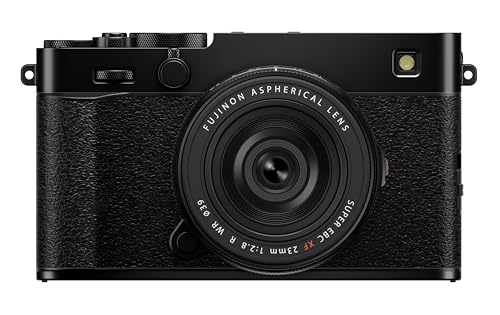
FUJIFILM X-E5 Mirrorless Digital Camera XF23mmF2.8 Lens Kit - Black | 40.2MP X-Trans CMOS 5 HR Sensor, X-Processor 5 with AI-Powered Subject Detection
As an Amazon Associate we earn from qualifying purchases. Product prices and availability are accurate as of the date/time indicated.

Canon RF35mm F1.8 is Macro STM Lens | Mirrorless Compact Macro Lens, Compatible with EOS R Series Mirrorless Cameras
As an Amazon Associate we earn from qualifying purchases. Product prices and availability are accurate as of the date/time indicated.
Top Mirrorless Rangefinder Cameras Reviewed
Fujifilm X100VI
The Fujifilm X100VI is a camera with an APS-C sensor, a resolution of 40.2 megapixels, a 23mm f/2 fixed lens, a hybrid optical and electronic viewfinder, and a price of $1600 to $1800. It has a design that is known for Fujifilm quality, with a camera that is compact, and with a design that is popular with street photographers. It is a good choice if you want the best mirrorless rangefinder camera, with a design that is a good balance, and with a camera that is ideal for street and travel.
Leica Q3
The Leica Q3 is a camera with a full-frame sensor, a resolution of 60 megapixels, a 28mm f/1.7 fixed lens, an electronic viewfinder with 5.76 million dots, and a price of $5500 to $6000. It has a design that is known for Leica quality, with a camera that is premium, and with a design that is sharp. It is a good choice if you want a mirrorless rangefinder camera that is the best for image quality, with a design that is top tier, and with a camera that is worth it if you want Leica.
Fujifilm X-Pro3
The Fujifilm X-Pro3 is a camera with an APS-C sensor, a resolution of 26.1 megapixels, interchangeable X mount lenses, a hybrid optical and electronic viewfinder, and a price of $1700 to $1900. It has a design that is known for Fujifilm quality, with a camera that is versatile, and with a design that is ideal for a photographer who wants to change lenses. It is a good choice if you want a mirrorless rangefinder camera that is flexible, with a design that is good and with a camera that is ideal for documentary.
Leica M11
The Leica M11 is a camera with a full-frame sensor, a resolution of 60 megapixels, interchangeable M mount lenses with manual focus, an optical rangefinder viewfinder, and a price of $8000 to $9000. It has a design that is known for Leica quality, with a camera that is a true rangefinder, and with a design that is classic. It is a good choice if you want a mirrorless rangefinder camera that is a true rangefinder, with a design that is manual, and with a camera that is ideal for a purist.
Fujifilm X-E4
The Fujifilm X-E4 is a camera with an APS-C sensor, a resolution of 26.1 megapixels, interchangeable X mount lenses, an electronic viewfinder with 2.36 million dots, and a price of $800 to $900. It has a design that is known for Fujifilm quality, with a camera that is the smallest X series camera, and with a design that is portable. It is a good choice if you want a mirrorless rangefinder camera that is affordable, with a design that is good and with a camera that is ideal for a beginner.
Ricoh GR IIIx
The Ricoh GR IIIx is a camera with an APS-C sensor, a resolution of 24.2 megapixels, a 40mm f/2.8 fixed lens, no viewfinder and a rear screen, and a price of $900 to $1000. It has a design that is known for Ricoh quality, with a camera that is pocketable, and with a design that is discreet. It is a good choice if you want a mirrorless rangefinder camera that is the most portable, with a design that is pocket-sized, and with a camera that is ideal for everyday carry.
Buying Guide: How to Choose the Best Mirrorless Rangefinder Camera
Start with sensor, lens, and your shooting style. Look for a full-frame camera, such as the Leica Q3, if you want the best low-light performance, with a design that is clean, and with a camera that is ideal for night photography, while an APS-C camera, such as the Fujifilm X100VI, is a good choice if you want a lighter camera, with a design that is portable, and with a camera that is cheaper. A fixed lens camera, with a design that is simple, is better if you want to focus on composition, with a design that is creative, while an interchangeable lens camera, with a design that is versatile, is better if you shoot different subjects, with a design that is flexible. A camera with a 28mm lens, with a design that is wide, is ideal for street, while a camera with a 40mm lens, with a design that is normal, is ideal for everyday.
Next, check viewfinder, autofocus, and your comfort. Look for a camera with a hybrid viewfinder, with a design that lets you switch between optical and electronic, because it gives you a bright optical view, with a design that is classic, and an electronic view that shows exposure, with a design that is useful. A camera with fast autofocus, with a design that is responsive, is important, because it lets you capture a moment quickly, with a design that is essential for street, while a camera with manual focus, such as the Leica M11, is slower, with a design that is deliberate, although it is more precise, with a design that is rewarding for a patient photographer. A camera with a tilting screen, with a design that is flexible, is also useful, because it lets you shoot from low angles, with a design that is creative.
Check size, weight, and your travel. Look for a camera that weighs less than 1.5 pounds, because it is easy to carry all day, with a design that is portable, and with a camera that does not tire you. A camera such as the Ricoh GR IIIx, with a weight of about 9 ounces, is the most portable, with a design that is pocketable, while a camera such as the Leica Q3, with a weight of about 25 ounces, is heavier, with a design that is more substantial, although it is still portable. A camera with weather sealing, with a design that is protected, is also important, because it lets you shoot in rain, with a design that is reliable, and with a camera that is durable. A camera that fits in a small bag, with a design that is compact, is better for travel, with a design that is convenient.
Consider your budget, your brand, and your future. If you want Fujifilm, a camera such as the X100VI, with a price of $1600 to $1800, is a good choice, because it has film simulations, with a design that is popular, and with a camera that gives you beautiful colours straight out of camera. If you want Leica, a camera such as the Q3, with a price of $5500 to $6000, is a good choice, because it has the best lens, with a design that is sharp, and with a camera that is premium. If you want a budget camera, a camera such as the Fujifilm X-E4, with a price of $800 to $900, is a good choice, because it is affordable, with a design that is good, and with a camera that lets you change lenses. A camera that is in a system you already use, with a design that is compatible, is better, because you can use your existing lenses, with a design that is economical.
Finally, set a realistic budget. Mirrorless rangefinder cameras typically cost $800 to $9000, depending on sensor and brand. A camera from $800 to $1000, such as the Fujifilm X-E4 or Ricoh GR IIIx, offers a good way to start rangefinder-style photography, with a design that is affordable. A camera from $1600 to $1900, such as the Fujifilm X100VI or X-Pro3, offers a good balance, with a design that is high quality, and with a camera that is worth it if you shoot regularly. A camera from $5500 to $9000, such as the Leica Q3 or Leica M11, offers the best quality, with a design that is premium, and with a camera that is worth it if you want Leica. Do not buy a camera based only on megapixels. Choose one that is compact, with a design that is discreet, and with a camera that is comfortable, so you will carry it every day.
How to Shoot With a Mirrorless Rangefinder Camera
To shoot with a mirrorless rangefinder camera, first set your camera to aperture priority, with a design that is simple, and set your aperture to f/5.6 or f/8, with a design that is sharp, and let your camera choose shutter speed, with a design that is automatic. Use zone focusing, with a design that is useful, by setting your focus distance to about 10 feet, with a design that is practical, and shoot without refocusing, with a design that is fast, for street photography. Look through your viewfinder, with a design that is clear, and wait for a moment, with a design that is patient, and press the shutter, with a design that is quiet, to capture your subject. A camera that is used correctly, with a discreet approach, will give you natural photos, with a design that is candid, and with a camera that is ideal for street.
Frequently Asked Questions
Is a rangefinder camera good for beginners?
Yes, a rangefinder camera is good for beginners, if you choose a camera such as the Fujifilm X100VI or X-E4, with a design that is simple, and with a camera that has autofocus, with a design that is easy, and with a camera that lets you learn composition, with a design that is creative. A true rangefinder, such as the Leica M11, with manual focus, is harder for a beginner, with a design that is deliberate, although it is rewarding, with a design that is precise, for a patient learner. For most beginners, a rangefinder-style mirrorless camera, with autofocus, is a good choice, with a design that is friendly, and with a camera that is ideal for learning street photography.
What is the difference between a rangefinder and a mirrorless camera?
What is the difference between a rangefinder and a mirrorless camera is that a true rangefinder, such as the Leica M11, uses an optical rangefinder to focus, with a design that is manual, and with a camera that has no electronic viewfinder, while a mirrorless camera, such as the Fujifilm X100VI, uses an electronic viewfinder, with a design that is digital, and with a camera that shows you exposure, with a design that is useful. A rangefinder-style mirrorless camera, with a design that looks like a rangefinder, combines the classic look, with a design that is discreet, and the modern convenience of mirrorless, with a design that is fast. For most photographers, a rangefinder-style mirrorless camera is the best of both, with a design that is practical.
Can I change lenses on a rangefinder camera?
Can you change lenses on a rangefinder camera depends on the model, with a camera such as the Fujifilm X-Pro3 or Leica M11 letting you change lenses, with a design that is versatile, and with a camera that is ideal for different subjects, while a camera such as the Fujifilm X100VI or Leica Q3 has a fixed lens, with a design that is simple, and with a camera that cannot change lenses, with a design that is a limitation. A fixed lens camera, with a design that is fast, is better for simplicity, with a design that is creative, while an interchangeable lens camera, with a design that is flexible, is better for versatility. Choose a fixed lens if you like one focal length, with a design that is focused, and choose interchangeable if you want options, with a design that is varied.
Is the Fujifilm X100VI worth it in 2026?
Yes, the Fujifilm X100VI is worth it in 2026, if you want a compact, rangefinder-style camera, with a design that is popular, and with a camera that has a 40 megapixel sensor, with a design that is sharp, and with a camera that has in-body stabilisation, with a design that is useful, and with a camera that is ideal for street and travel. A camera such as the X100VI, with a price of $1600 to $1800, is expensive, with a design that is premium, although it is worth it if you will carry it every day, with a design that is practical, and with a camera that gives you beautiful photos, with a design that is consistent. For most street photographers, the X100VI is a good investment, with a design that is reliable.
Related guides
- Best Value Digiscoping Phone Mount Birding in 2026: 7 Affordable Phone Mounts That Turn Your Spotting Scope Into a Birding Camera
- Best Tripod for Travel Lightweight Packing in 2026: 7 Lightweight Travel Tripods That Pack Small, Hold a Spotting Scope Steady, and Fit in Your Carry-On
- Best Spotting Scope for Beginners Easy Setup in 2026: Forgiving Scopes, Simple Tripods, and a First Session That Ends With a Bird — Not a Manual
- Best Spotting Scope vs Binoculars for Beginners in 2026: 6 Top Spotting Scope vs Binoculars for Beginners Options, Easy Viewing, and Easy Use
More from Amazon
Programs that pair well with the guide above. Offers and eligibility are set by Amazon and may change.
Free shipping on eligible items, Prime Video and more. Eligible new members can start with a free trial.
Start a Prime free trialAudiobooks and podcasts to listen to on the go. Eligible new members can start with a free trial.
Try Audible freeAd-free music streaming. Eligible new subscribers can start with a free trial.
Try Music Unlimited freeA free business account with business pricing and bulk-buying tools for work, shop or home office.
Create a business accountAs an Amazon Associate we earn from qualifying purchases.

Write Your Review
No reviews yet. Be the first to share your experience!