
What's inside
- How to Choose Thermal Monocular Under 100 Dollars by Real Job
- Quick Comparison: Thermal Options Near and Above the 100 Dollar Budget
- Detailed Reviews: The Real Thermal Options, From the Budget Upward
- Buying Guide: How to Choose Thermal Under and Around 100 Dollars
- Frequently Asked Questions About Choosing a Thermal Monocular Under 100 Dollars
As an Amazon Associate I earn from qualifying purchases. This post may contain affiliate links at no extra cost to you.
How to choose thermal monocular under 100 dollars begins with an answer this guide owes you before any table: at the time of writing, no major optics maker sells a true, standalone thermal monocular — a self-contained handheld instrument with its own sensor, screen, and battery, of the kind AGM, Pulsar, and FLIR build — for under one hundred dollars, and any listing that claims one at that price should be read as a warning rather than as a bargain. Thermal sensors are the expensive heart of the instrument, and their floor price, in the makers’ real ranges, sits several times above this budget. What genuinely exists near one hundred dollars is thermal’s other form: the phone-attached thermal camera, a small sensor module that plugs into a smartphone and uses the phone’s screen, battery, and processor as the rest of the instrument. FLIR, Seek Thermal, TOPDON, HIKMICRO, and UNI-T all sell real, currently available modules in classes that begin not far above this guide’s budget and stretch upward from it — and for many buyers, they deliver the actual thing the budget was dreaming of: seeing heat, finding the warm animal, the lost dog, the hot pipe, the cold corner of the house, in the dark. This guide therefore does the honest work: it explains what thermal costs and why, compares the real phone thermal cameras that live nearest the budget alongside the cheapest true monocular as a save-up benchmark, and teaches you to choose between stretching, saving, and walking away from the listings that are lying to you.
The comparison fields six real products in their makers’ stated classes. FLIR’s ONE class is the phone thermal reference, in its stated sensor and connection classes. Seek Thermal’s Compact class is its long-standing rival, in Seek’s stated classes. TOPDON’s TC002 class and HIKMICRO’s Mini class are the value challengers whose stated resolutions and prices have moved the parish’s floor in recent seasons, as their documents describe. UNI-T’s mobile thermal class brings a test-instrument house’s take, in its stated classes. And AGM’s Taipan TM10 class stands in the table as the benchmark — the cheapest true standalone monocular from a major optics maker, priced in a different world from this budget, included so the save-up decision can be made with real numbers rather than with longing. Sensor resolution, thermal sensitivity in the makers’ stated terms, connection type, phone compatibility, and stated battery arrangement — phone modules draw on the phone or their own stated cells — are each maker’s specification for the current exact model and must be confirmed in that maker’s current documents, against your exact phone model and its connector, before purchase. Prices are typical ranges rather than exact figures, and in this category they move with promotions enough that the range, honestly read, is the specification. One legal note belongs in the first page: thermal devices are regulated differently by place and purpose, most sharply anywhere near hunting, and the local rules for your use must be checked with the authority that governs it, whatever the budget.
The second honesty is about what the budget buys in capability, because thermal marketing is written in a dialect this guide will translate. A phone thermal module in the classes near this budget resolves the world coarsely beside a true monocular’s sensor classes — it finds the warm shape, the hot spot, the presence — and it does so at room and garden distances rather than across valleys, in the makers’ stated terms. That is not a failure; for the budget’s real jobs — is the dog in the garden, where is the heat escaping, which pipe is hot, is something warm in the dark corner — coarse and near is the whole assignment. The failure would be buying it for the valley: for scanning fields for deer at distance, the instrument is the benchmark row or above, and no phrasing in any listing changes the physics. Choose by the job, priced honestly, and the hundred-dollar question becomes a good question; choose by the dream at the listing’s price, and it becomes tuition.
Our Top Picks
How to Choose Thermal Monocular Under 100 Dollars by Real Job
The home and garden job: phone thermal in its element
For finding the escaped cat in the hedge, checking the house’s cold corners and hot pipes, seeing which radiator is lying, and taking a first wondering look at the garden’s night traffic, the phone thermal classes in this table are not the compromise — they are the correct instrument, handier than a monocular because the phone is already charged, pocketed, and able to photograph what the sensor sees in the makers’ stated app arrangements. TOPDON’s and HIKMICRO’s value classes and UNI-T’s instrument class serve exactly this parish at the prices nearest the budget, and FLIR’s and Seek’s classes serve it with the longest app and support histories in their makers’ stated terms. Buy these by your phone’s connector and the maker’s current compatibility list, because in phone thermal, the phone is half the product and its documents are half the manual.
The field job: the benchmark, and the discipline of saving
For scanning ground for animals — the night watcher’s, the farmer’s, the searcher’s real distances — the honest rows are the true monoculars, and the cheapest of them from a major maker, AGM’s Taipan TM10 class in its stated sensor class, sits several hundred dollars above this budget in its typical range. That gap is not a conspiracy; it is the sensor, the lens, the screen, and the battery, itemised by physics. The discipline this guide recommends is the one its readers have always reported back with gratitude: buy the phone thermal now for the home parish if that parish is real, and save the difference toward the monocular while the phone module teaches you thermal’s habits — or, if the field is the only parish, skip the intermediate purchase entirely and let every dollar walk toward the benchmark, because a tool bought for a job it cannot do is the most expensive tool in the shed.
The listing that lies: how the under-100 monocular scam reads
Learn the dialect of the impossible listing, because it is this budget’s native predator. It promises a standalone monocular at a toy’s price, with a detection range in heroic numbers, a sensor resolution borrowed from a flagship, and a brand name that dissolves when searched. Its photographs are borrowed, its reviews are a choir of first names, and its maker’s documents — the thing every real row in this table has — do not exist. The defences are this guide’s whole method: a maker with documents, a sensor class stated in its own terms, a seller who can be found next year, and a price that physics permits. Any thermal product failing those four tests at any price is not a bargain; at under one hundred dollars for a standalone monocular, it is a certainty.
Quick Comparison: Thermal Options Near and Above the 100 Dollar Budget
| Model | Key Specs | Best For | Typical Price Range | Rating |
|---|---|---|---|---|
| TOPDON TC002 Class | Phone-attached thermal camera, sensor and sensitivity classes, connector classes per TOPDON documents for the exact model | Best value near the budget | $150 – $230 | 4.3 / 5 |
| HIKMICRO Mini2 Class | Phone-attached thermal camera, sensor classes, app and connector classes per HIKMICRO documents for the exact model | Best compact phone thermal | $170 – $250 | 4.3 / 5 |
| FLIR ONE Class | Phone-attached thermal camera, sensor and image enhancement classes, connector classes per FLIR documents for the exact model | Best supported phone thermal | $200 – $300 by model class | 4.4 / 5 |
| Seek Thermal Compact Class | Phone-attached thermal camera, sensor and field classes, connector classes per Seek Thermal documents | Best established alternative | $200 – $280 | 4.2 / 5 |
| UNI-T UTi120 Mobile Class | Phone-attached thermal camera, sensor and measurement classes per UNI-T documents for the exact model | Best instrument-house option | $140 – $210 | 4.1 / 5 |
| AGM Taipan TM10-256 Class | Standalone thermal monocular, 256-class sensor, magnification and battery classes per AGM documents | Cheapest true monocular benchmark | $500 – $650 | 4.5 / 5 |

Handheld Thermal Camera, Monocular Thermal Imaging Camera, 240 x 240 Infrared Resolution, HVAC Tools, Infrared Thermometer, Electrical Wiring Inspection — Black and Red
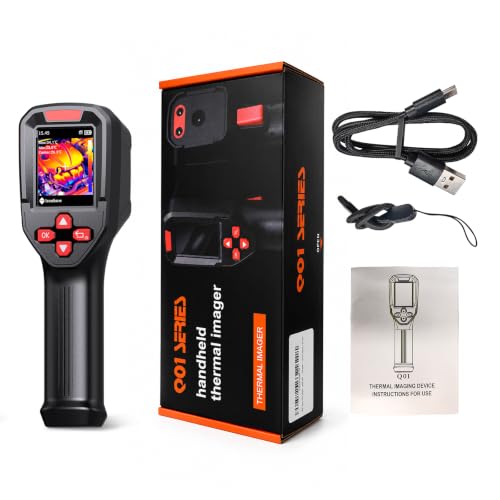


As an Amazon Associate we earn from qualifying purchases. Product prices and availability are accurate as of the date/time indicated.
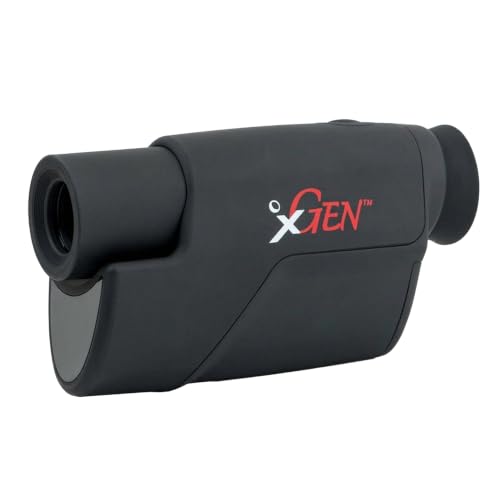
Night Owl Optics xGen2 Night Vision Monocular with Thermal Imaging - Perfect for Beginners & Kids, with Built-in IR Illuminator, 70yd Range, Mode Selection, and Easy Focus Adjustment
As an Amazon Associate we earn from qualifying purchases. Product prices and availability are accurate as of the date/time indicated.

Fabater Digital Monocular Telescope, 16X Digital Zoom 2500mAh Battery Monocular Night, Thermal Imaging with 1 54 Inch Color LED Supports 8 128GB Memory Card for Adult


As an Amazon Associate we earn from qualifying purchases. Product prices and availability are accurate as of the date/time indicated.
Sensor resolution, thermal sensitivity, field of view, connector type and phone compatibility list, app arrangement, and battery arrangement are each maker’s specification for the current exact model and must be confirmed in that maker’s current documents, against your exact phone and its connector, before purchase. Prices are typical street ranges as described; no standalone thermal monocular from a major maker is offered near the 100 dollar budget at the time of writing, and listings claiming one should be treated as described in this guide. Stated detection ranges in makers’ terms describe detection under stated conditions, not identification.
Detailed Reviews: The Real Thermal Options, From the Budget Upward
1. TOPDON TC002 Class – Best Value Near the Budget
TOPDON’s phone thermal class leads the realistic table because its stated sensor class, in TOPDON’s documents for its models, brought genuine thermal capability down toward this guide’s budget further than the established houses had — a value disruption the parish needed, from a maker whose automotive diagnostic world runs on sensors behaving honestly. For the home and garden jobs, its heat pictures answer the questions those jobs actually ask, through the phone its owner already carries.
Confirm the exact model’s connector and your phone’s place on TOPDON’s current compatibility list before purchase, because a phone module that does not fit the phone is a paperweight with a lens. Fitted, it is the budget’s best honest stretch: close enough to one hundred dollars to respect the intention, real enough to respect the physics.
2. HIKMICRO Mini2 Class – Best Compact Phone Thermal
HIKMICRO’s Mini class brings a thermal-imaging house’s sensor lineage — the maker’s stated classes across its range run from these phone modules to professional instruments — into the smallest of these modules, with an app in its stated arrangement that treats the images as records rather than as novelties. For the buyer who suspects the phone module is a first step toward the field instruments, starting inside a thermal house’s ecosystem is a rational pleasure.
Its documents, like every row’s, govern: sensor class, connector, compatibility, in HIKMICRO’s current terms for the exact model. Within them, it is the connoisseur’s value pick — the module whose images carry a professional house’s processing at a parish price.
3. FLIR ONE Class – Best Supported Phone Thermal
FLIR’s ONE class is the category’s reference for a reason of years: the longest app history, the broadest phone compatibility story in its maker’s stated lists, and image enhancement in FLIR’s stated design that blends the thermal picture with the phone camera’s detail, as its documents describe, making heat legible to a beginner at first switch-on. For the buyer whose terror is abandonment — the app orphaned, the phone upgraded past the module — FLIR’s support tradition is the premium its price buys.
Choose its exact model by FLIR’s current documents for your phone’s connector and generation, because the family’s classes span real differences in sensor and features. So chosen, it is the phone thermal least likely to be replaced, which at these prices is a form of thrift the budget rows should salute.
4. Seek Thermal Compact Class – Best Established Alternative
Seek’s Compact class is the other founding house’s answer: a sensor in Seek’s stated class with a field of view in its stated terms that serves the scanning jobs — the room, the roofline, the garden — with a sweep the narrower modules make tedious, in an app whose history matches FLIR’s for length. Between the two founding houses, the choice is made on the exact models’ stated fields, sensors, and compatibility lists, in both makers’ documents, and either choice is defensible in the morning.
Seek’s instrument heritage in the test and inspection world suits the home-energy job particularly — the cold corner, the missing insulation, the draught’s portrait — where its pictures pay for the module in a single heating season’s decisions, a return on investment no other row needs to promise because this one’s parish provides it.
5. UNI-T UTi120 Mobile Class – Best Instrument-House Option
UNI-T’s mobile thermal class comes from the multimeter’s world: a test-instrument house’s module in its stated classes, with measurement manners — spot temperatures and ranges in its stated terms — that suit the buyer whose thermal questions are a technician’s: which connection is hot, which motor is labouring, where the underfloor pipe actually runs. Its price sits among the nearest to this guide’s budget, and its documents read like an instrument’s, which for its parish is praise.
Confirm its phone compatibility and its app arrangement in UNI-T’s current documents as with every module here. For the home technician, it may be the most-used row in this table within a month of arrival, because houses generate thermal questions the way gardens generate weeds.
6. AGM Taipan TM10-256 Class – The True Monocular Benchmark
The Taipan TM10 class stands in this table as the truth the budget must negotiate with: a standalone thermal monocular in AGM’s stated design — its own 256-class sensor, its own screen, battery, and magnification in AGM’s stated classes — that does the field job the phone modules cannot, finding warm animals across real ground in total darkness, as its documents describe in their stated detection terms. Its typical price, several times this guide’s budget, is not an insult to the budget; it is the itemised cost of the physics, and this guide prints it so the saving plan can be a plan.
For the reader whose only parish is the field, this row is the recommendation, reached by patience: skip the intermediate, save the difference, and buy the instrument the job specifies, once, from a maker whose documents and warranty will be findable in five years. AGM’s thermal range climbs from this benchmark upward in sensor classes, and the notebook a season of saving produces — distances, species, ground — will choose among them better than any table.
Buying Guide: How to Choose Thermal Under and Around 100 Dollars
Translate the specifications: sensor, sensitivity, and the detection dialect
Read thermal documents with three translations in hand. The sensor resolution, in the maker’s stated class, is the picture’s true size: the phone modules near this budget state classes that find shapes and hot spots honestly at near distances, while the true monoculars’ classes resolve animals at field distances — and any listing whose stated resolution sounds like a flagship’s at a toy’s price is lying in the guide’s first dialect. Thermal sensitivity, stated in the makers’ terms as a temperature difference the sensor can distinguish, governs the picture’s subtlety — the faint warm trail, the barely-warmer pipe — and lower stated numbers in the makers’ terms describe the finer instrument, compared only within the makers’ own stated methods. And the detection range, wherever it appears, means detection in the maker’s stated conditions: a warm shape registering, at that distance, as present — not identified, not counted, not watched. Identification lives at a fraction of detection’s distance in every technology in this table, and the buyer who budgets by identification’s honest fraction will never be disappointed by a specification again. Add the phone module’s own first specification — your phone’s connector and the maker’s current compatibility list — because it outranks every number above: the finest sensor ever moulded is a paperweight on the wrong connector.
The three honest strategies: stretch, save, or serve the near parish
Choose a strategy before choosing a product. Strategy one, serve the near parish: if your thermal jobs are the house and the garden — heat leaks, hot pipes, the cat in the hedge, the night’s small visitors at a fence’s distance — buy the phone module nearest the budget from a maker with documents, in the TOPDON, UNI-T, or HIKMICRO classes, and consider the assignment complete rather than compromised. Strategy two, stretch with support: if the jobs are the same but the instrument will be kept for years and the phone will change beneath it, stretch to the FLIR or Seek classes for their app and compatibility histories, in their makers’ stated terms, because a module’s life is its software’s life. Strategy three, save for the field: if the job is animals at distance, buy nothing yet; open the notebook, walk the ground with the torch and the patience, and let the Taipan-class benchmark be the savings target, with the season’s observations choosing its exact sensor class when the money arrives. What no strategy includes is the standalone monocular listing at this budget, in any marketplace, under any name that cannot produce its documents — the four tests of the earlier section, maker, sensor, seller, and physics, applied without exception and without hope’s discount.
Use, law, and care for the budget thermal owner
Use the instrument inside its parish and its law. The law first: check the current rules for thermal possession and use for your purpose and place with the authority that governs them — the restrictions bite hardest around hunting and around protected land, and they bind the phone module exactly as they bind the flagship, because the law reads the technology, not the receipt. The parish second: phone modules live on the phone’s battery or their stated cells, so the night kit carries the power bank the arithmetic demands; their lenses are small and their coatings ordinary, cleaned as their makers direct and capped against the pocket’s geology; and their apps should be installed, updated, and test-run at home in daylight before the night’s first question is asked of them, because a compatibility surprise is a daylight discovery or it is a disaster. Keep the records the apps make — the heat leak’s portrait is the insulation contractor’s brief, the garden visitor’s portrait is the naturalist’s notebook — and let a season of them arbitrate the save-up question with evidence. How to choose thermal monocular under 100 dollars is finally a question with a grown-up answer: you cannot, quite — but you can choose thermal itself, honestly, at the budget’s real address, in a phone module from a maker with documents, for the jobs that live near at hand; or you can let the budget become a savings plan with a flagship’s name on it. Either choice, made with the physics in view, is a good purchase. The only bad one is the listing that promised the physics away, and after this guide, it will have to find its customer elsewhere.
Frequently Asked Questions About Choosing a Thermal Monocular Under 100 Dollars
Can I really buy a thermal monocular for under 100 dollars?
A true standalone thermal monocular — its own sensor, screen, and battery, from a maker with documents — is not sold near that price by any major optics house at the time of writing; the cheapest such benchmark in this table, AGM’s Taipan TM10 class, typically sits several hundred dollars above it, because the thermal sensor itself sets a floor that marketing cannot repeal. What exists near the budget is the phone-attached thermal camera — real thermal imaging from FLIR, Seek Thermal, TOPDON, HIKMICRO, and UNI-T in their stated classes, using your phone as the screen and computer — with the value classes beginning in the low hundreds and occasionally approaching the budget on promotion. Listings that promise a standalone monocular at under one hundred dollars, with flagship detection ranges and a brand that cannot produce its own documents, fail every test this guide applies and should be left to find their customers elsewhere. Your honest choices are the phone module for the near jobs, or the savings plan for the field instrument — and both are good answers, which the scam listing, notably, is not.
What can a budget phone thermal camera actually do?
More than its price suggests, within its parish. In its maker’s stated sensor and sensitivity classes, a phone thermal module draws the world by heat at room, house, and garden distances: it finds the pet in the dark hedge and the hedgehog at the fence, portraits the house’s heat leaks, cold corners, and draughts well enough to brief a contractor or plan insulation, shows which pipe, radiator, motor, or electrical connection is hot and which is lying, and checks a beehive’s, a compost heap’s, or a parked car’s warmth without opening anything. It photographs and records what it sees through its maker’s app, in the stated arrangements, which makes it a notebook as well as a viewer. What it does not do is the field monocular’s work: animals identified across a valley, in its stated terms detection at distance shrinks to presence long before identification, and its small lens and sensor classes are not a firmware update away from the flagship’s. Bought for the near parish, it is among the most-used instruments a household can own; bought for the valley, it is tuition — and this guide’s strategies exist to make it the former.
What specifications matter most in a cheap thermal camera?
Four, read in the maker’s own documents. Compatibility first, because it is binary: your phone’s connector and the maker’s current compatibility list for the exact module — a module that does not fit your phone has no other specifications. Sensor resolution second, in its stated class, which sets the picture’s honesty: the classes near this budget find shapes and hot spots at near distances, and a listing claiming flagship resolution at a toy price is identifying itself. Sensitivity third, in the maker’s stated terms, which sets the picture’s subtlety for the faint warm trail and the barely-hot connection. And the app fourth, because a phone module is half software: its maker’s history of supporting it, in its stated arrangements, is the instrument’s lifespan, and it is why this table weights the founding houses’ support records alongside the challengers’ prices. Detection ranges, wherever advertised, should be read as detection under the maker’s stated conditions — a presence registering — with identification living at a fraction of that distance, in this technology at every price.
Should I buy a cheap thermal now or save for a real monocular?
Let your jobs vote. If the thermal work in your life is the house and the garden — energy, pipes, pets, the night’s near visitors — buy the phone module now, from a maker with documents, at the value classes in this table; it will serve those jobs completely for years, and saving for a field instrument you do not need would be the waste. If the work is animals at distance — the field, the farm, the search — save: walk the ground meanwhile, keep the notebook of distances and species that will choose the monocular’s sensor class, and let the AGM Taipan class benchmark be the target, because a module bought for a job it cannot do spends the monocular’s money on the monocular’s delay. If both parishes are real, the order follows the passion: the module first if the house is urgent, the monocular first if the field is the life’s point — and in either order, the second purchase will be specified by the first’s evidence, which is how a kit grows up. What the vote never elects is the impossible listing: at this budget, in this technology, the too-cheap standalone is the one purchase guaranteed to satisfy neither parish, and its money is the only sum in this guide that is truly thrown away.
Related guides
- Best Value Digiscoping Phone Mount Birding in 2026: 7 Affordable Phone Mounts That Turn Your Spotting Scope Into a Birding Camera
- Best Tripod for Travel Lightweight Packing in 2026: 7 Lightweight Travel Tripods That Pack Small, Hold a Spotting Scope Steady, and Fit in Your Carry-On
- Best Spotting Scope for Beginners Easy Setup in 2026: Forgiving Scopes, Simple Tripods, and a First Session That Ends With a Bird — Not a Manual
- Best Spotting Scope vs Binoculars for Beginners in 2026: 6 Top Spotting Scope vs Binoculars for Beginners Options, Easy Viewing, and Easy Use
More from Amazon
Programs that pair well with the guide above. Offers and eligibility are set by Amazon and may change.
Free shipping on eligible items, Prime Video and more. Eligible new members can start with a free trial.
Start a Prime free trialAudiobooks and podcasts to listen to on the go. Eligible new members can start with a free trial.
Try Audible freeAd-free music streaming. Eligible new subscribers can start with a free trial.
Try Music Unlimited freeA free business account with business pricing and bulk-buying tools for work, shop or home office.
Create a business accountAs an Amazon Associate we earn from qualifying purchases.

Write Your Review
No reviews yet. Be the first to share your experience!