
What's inside
- Best Rangefinder Accessories for Hunting by Job
- Quick Comparison: Best Rangefinder Accessories for Hunting Models
- Detailed Reviews: Best Rangefinder Accessories for Hunting Picks
- Buying Guide: Choosing the Best Rangefinder Accessories for Hunting
- Frequently Asked Questions About the Best Rangefinder Accessories for Hunting
As an Amazon Associate I earn from qualifying purchases. This post may contain affiliate links at no extra cost to you.
The best rangefinder accessories for hunting exist because a rangefinder’s failures in the field are almost never optical. The laser ranges what it is pointed at with indifferent accuracy; what fails is the human system around it. The unit is at the bottom of the pack when the animal steps out. It swings on a lanyard against the binoculars until its owner stops carrying it where it can be reached. Its lens wears the morning’s frost, a thumbprint, and the inside of a pocket. Its battery dies on the season’s coldest morning because it was last year’s battery. And once in a career — the story every hunting camp has — it leaves a hand, a harness, or a truck bed and joins the mountain permanently. The accessories in this guide are the unglamorous engineering that prevents each of those failures: the harness pouch that puts the rangefinder at the sternum, silent and one-handed; the tether that makes dropping a retrieval instead of a loss; the case that protects it in the pack and the truck; the lens tools that keep its window honest; and the battery discipline that is an accessory in everything but name. A rangefinder is only as good as its presence at the moment of truth, and presence is an accessory’s whole profession.
The comparison fields the real, currently sold accessories across that system: Marsupial Gear’s enclosed rangefinder pouch class and FHF Gear’s pouch class as the harness-mounted references in their makers’ stated designs; KUIU’s rangefinder holder class as the ultralight house’s answer in its stated arrangement; Alaska Guide Creations’ harness system class, in which the rangefinder pouch joins the binocular harness as one chest-borne office in its maker’s stated design; Vortex’s GlassPak Pro class as the protective case for transport and the pack; and the LensPen class as the lens care instrument every optic in the field should travel with, in its maker’s stated design. Fit, in every row, is the governing specification: pouch dimensions and the rangefinders they are stated to contain, harness compatibility in the makers’ stated terms, and closure and tether arrangements as the makers describe them — each to be confirmed in the maker’s current documents against your exact rangefinder, measured with its battery and its case as you actually carry it, before purchase, because an accessory bought a size proud or a size shy is a failure purchased in advance. Prices are typical ranges rather than exact figures, and they are small against the rangefinder’s own price, which is the accessories’ eternal argument: the instruments cost hundreds, their safe and ready carriage costs tens, and the ratio is the cheapest insurance in the hunting kit.
One discipline precedes the table, because the rangefinder’s place in hunting is a specific and honourable one. The rangefinder measures distance; it identifies nothing, and the identification of an animal — species, sex, legality under the current season’s rules — belongs to the binoculars and the naked eye, by the standards the hunting authorities publish, never to a hurried glance through the ranging optic. Carry it and use it inside the law of the place and season: licence, tags, legal hours, and the land’s permission, all read from the governing authority’s current documents, with the rangefinder ranged on the landscape and the landmarks during the long glassing hours, so that when an animal appears, the distance to its ground is already known and the final range, if taken, is a confirmation rather than a scramble. An accessory system that makes the rangefinder instant must never make the decision instant; the ethics are the shooter’s, the accessories merely keep the instrument worthy of them.
Our Top Picks
Best Rangefinder Accessories for Hunting by Job
The sternum office: harness pouches from Marsupial, FHF, and KUIU
For the hunter who glasses and ranges in alternation — which is to say, for the spot-and-stalk and still-hunting world — the harness pouch is the system’s heart: the rangefinder rides at the chest, beside or below the binoculars, drawn and replaced one-handed, silently, without the pack coming off or the eyes leaving the hillside for longer than a breath. Marsupial’s enclosed class answers with a fully enclosing pouch in its maker’s stated design, for the hunter whose weather and brush argue for total coverage; FHF’s class answers with its stated open-and-structured arrangement, for the hunter whose priority is the fastest draw in the parish; KUIU’s holder class answers for the ounce-counting backcountry hunter, in its stated minimal design. Between them, choose on your rangefinder’s measured size against each maker’s stated fit, on the closure’s silence — a magnet, a flap, a lid, each with its own sound signature to be rehearsed at home — and on the harness you already wear, whose compatibility the makers’ documents state. The pouch is bought once per rangefinder and worn for the instrument’s life; fit it like it matters, because at the moment of truth it is the only specification that does.
The whole chest system: Alaska Guide Creations and the integrated harness
For the hunter rebuilding the chest system entire — binoculars, rangefinder, and the small parish of wind checker, calls, and licence — Alaska Guide Creations’ harness class is the integrated answer in its maker’s stated design: a binocular harness whose system adds the rangefinder pouch in its stated arrangement, so the whole office is bought, fitted, and worn as one instrument. Its virtue is the absence of improvisation — no pouches married to strangers’ straps with hope and zip ties — and its discipline is the fitting session: the harness adjusted, the pouches placed, the draw rehearsed with gloves, at home, until the chest works in the dark by touch, because that is precisely the condition under which it will be asked to work in November.
Transport, glass, and power: GlassPak protection, LensPen care, and the battery rule
Vortex’s GlassPak Pro class serves the journey rather than the moment: a structured protective case in its maker’s stated design for the rangefinder’s life in the pack, the truck, and the gear room, where more optics are damaged than any mountain has managed. The LensPen class serves the glass itself — its stated brush-and-compound design, in its maker’s terms, clearing the dust and the fingerprint from the rangefinder’s windows in the field, because a rangefinder ranged through a smeared lens is an instrument guessing at its own eyesight. And the battery rule, this guide’s honorary accessory, serves the power: the rangefinder’s stated battery type in its maker’s documents, a fresh one fitted before the season, a spare carried in the warm pocket the cold morning dictates, and the old one retired to the household’s lesser duties — a discipline that costs almost nothing and has saved more hunts than any pouch in this table.
Quick Comparison: Best Rangefinder Accessories for Hunting Models
| Model | Key Specs | Best For | Typical Price Range | Rating |
|---|---|---|---|---|
| Marsupial Gear Enclosed Rangefinder Pouch Class | Enclosed pouch classes, stated rangefinder fit classes, closure and harness attachment classes per Marsupial Gear documents | Best rangefinder accessories for hunting overall | $55 – $75 | 4.6 / 5 |
| FHF Gear Range Finder Pouch Pro Class | Pouch classes, stated fit classes, harness compatibility classes per FHF Gear documents for the exact model | Best fast-draw pouch | $60 – $85 | 4.5 / 5 |
| Alaska Guide Creations Harness System Class | Binocular harness and rangefinder pouch system classes, stated fit classes per Alaska Guide Creations documents | Best integrated chest system | $110 – $160 by configuration | 4.5 / 5 |
| KUIU Rangefinder Holder Class | Lightweight holder classes, stated fit and attachment classes per KUIU documents for the exact model | Best ultralight holder | $35 – $55 | 4.4 / 5 |
| Vortex GlassPak Pro Class | Protective case classes, stated interior fit classes, carry arrangement classes per Vortex documents for the exact model | Best transport protection | $45 – $70 | 4.4 / 5 |
| LensPen Original Class | Lens cleaning pen classes, brush and cleaning compound classes per LensPen documents for the exact model | Best lens care accessory | $10 – $16 | 4.6 / 5 |

REVASRI Hunting Laser Rangefinder with Rechargeable Battery 1000 Yards Hunting Range Finder with Target Acquisition Technology Easy-to-Use Clear Accurate Rangefinders for Hunters
As an Amazon Associate we earn from qualifying purchases. Product prices and availability are accurate as of the date/time indicated.

TIDEWE Hunting Rangefinder, Rechargeable Camo Laser Range Finder 700 Yards | 6.5X Magnification Range Finder, Distance/Angle/Speed/Continuous Scan Modes, Rechargeable Battery, Carry Case
As an Amazon Associate we earn from qualifying purchases. Product prices and availability are accurate as of the date/time indicated.
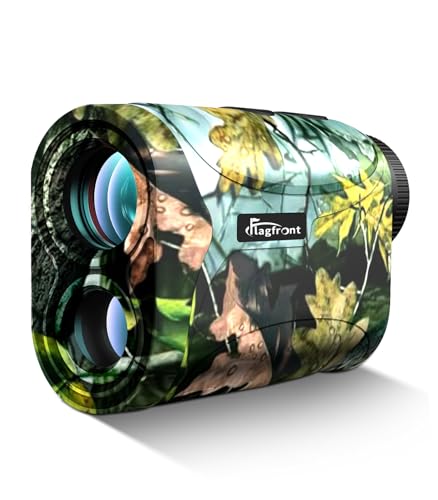
Flagfront Hunting Range Finder, 1200Yd Laser Rangefinder for Archery | 6x Magnification, Rechargeable Rangefinder with Slope/Speed/Angle/Distance Modes, HD LCD Waterproof Range Finder for Hunter
As an Amazon Associate we earn from qualifying purchases. Product prices and availability are accurate as of the date/time indicated.
Pouch and case interior dimensions, stated rangefinder fit lists, closure type, harness and strap compatibility, tether arrangement where supplied, and materials are each maker’s specification for the current exact model and must be confirmed in that maker’s current documents, against your exact rangefinder measured as carried, before purchase. Prices are typical street ranges as described. No accessory in this table alters a rangefinder’s stated ranging performance; accessories govern carriage, protection, and readiness, as this guide describes.
Detailed Reviews: Best Rangefinder Accessories for Hunting Picks
1. Marsupial Gear Enclosed Rangefinder Pouch Class – Best Overall
Marsupial’s enclosed pouch leads the accessories table because total enclosure is the field’s honest requirement: brush, rain, snow, and the dust of a hundred truck miles all argue that the rangefinder should travel in a closed room of its own, and this pouch, in its maker’s stated design, provides that room at the sternum — drawn one-handed by its stated closure arrangement, replaced the same way, with the instrument protected in every second it is not actively ranging. Its stated fit classes cover the parish’s common rangefinders, and its harness attachments in its stated terms marry it to the chest systems hunters actually wear.
Rehearse its closure’s sound at home, with gloves, until the draw is a habit rather than an event, because an enclosed pouch’s only tax is the half-second its lid costs, and rehearsal pays that tax down to nothing. Paid, the enclosure is pure gain — the rangefinder that arrives at the season’s end with its lens and body unmarked is this pouch’s annual report, and it is a persuasive document.
2. FHF Gear Range Finder Pouch Pro Class – Best Fast-Draw Pouch
FHF’s pouch class is built around the draw: a structured, open arrangement in its maker’s stated design that presents the rangefinder to the hand with the least ceremony in this table, for the hunter whose moments arrive unannounced — the animal that steps from the timber at last light, the opportunity measured in seconds. Its stated fit and harness classes, in FHF’s documents, place it on the chest systems of its parish, and its build carries the house’s fishing-and-hunting design lineage in its stated materials.
Its openness is its honest trade — less sealed against the weather than the enclosed leader — and the hunter in the wet country should weigh it as such. In the dry and the fast, it is the pouch this guide’s own hands would reach for, and a system is allowed its specialists.
3. Alaska Guide Creations Harness System Class – Best Integrated Chest System
AGC’s system is the accessories question answered at the level of the whole chest: binocular harness and rangefinder pouch in one maker’s stated design, fitted together, with the small parish of the stalk carried in its stated arrangement of pockets and places. For the hunter tired of the improvised chest — three brands, two adapters, one recurring tangle — it is the peace treaty, and its stated fit classes in AGC’s documents cover the binocular and rangefinder combinations its parish actually hunts with.
Buy it as the system it is, fit it in the home rehearsal this guide prescribes for every chest rig, and let its integration retire a category of small annoyances permanently. A chest that works by touch, in gloves, in the dark, is not a luxury on a November morning; it is the difference between ranging the animal and remembering the animal.
4. KUIU Rangefinder Holder Class – Best Ultralight Holder
KUIU’s holder class serves the backcountry hunter whose kit is weighed in grams and whose rangefinder must justify its carriage like everything else: a minimal holder in KUIU’s stated design, at a weight in its stated class that the ounce ledger forgives, attaching in its stated terms to the harness or pack the hunter already carries. Its minimalism is its specification — coverage traded for carriage, knowingly, by the hunter whose miles are the hunt’s first fact.
Confirm its stated fit against your rangefinder with the seriousness its minimal margins demand, because a minimal holder bought a size wrong is a rangefinder carried by optimism. Fitted exactly, it disappears into the kit — which, in the ultralight parish, is the highest praise a holder can be paid.
5. Vortex GlassPak Pro Class – Best Transport Protection
The GlassPak Pro class guards the journey: a structured case in Vortex’s stated design whose interior classes, in Vortex’s documents, cradle the rangefinder — and in its larger configurations the binoculars beside it — through the pack’s crush, the truck’s floor, and the gear room’s archaeology. More hunting optics are retired by transport than by weather, and this case is the specific answer to the statistic, priced like the afterthought it should never have been.
Use it as the system’s home base: the rangefinder lives in it off the chest, travels in it to the trailhead, and returns to it at the truck, with the spare battery and the LensPen riding in its stated pockets if the configuration provides them. A kit with a home is a kit that gets checked, and a checked kit is the accessories’ whole philosophy in one habit.
6. LensPen Original Class – Best Lens Care Accessory
The LensPen is the smallest row and, gram for gram, the hardest-working: a retractable brush at one end for the dust and grit, a cleaning compound tip at the other for the fingerprint and the breath-fog’s residue, in its maker’s stated design, sized for a shirt pocket and priced for every pocket in the party. A rangefinder’s windows are its eyes, and the field’s insults to them are daily; the pen answers daily, in seconds, without a cloth’s grit or a shirttail’s lint.
Use it as its maker directs — brush first, compound second, never the compound on a gritty lens, because grit dragged is a scratch written — and replace it on the maker’s stated terms when its compound is spent. Carried beside the rangefinder in whichever pouch this table has sold you, it completes the readiness the pouches begin, and its absence from any hunting kit is, to this guide, genuinely inexplicable.
Buying Guide: Choosing the Best Rangefinder Accessories for Hunting
Fit the pouch to the measured rangefinder, and the system to the hunt
Measure before you shop: your rangefinder’s height, width, and depth with a ruler, as you actually carry it — in its own small case if it wears one, with its lanyard attached — and set those numbers against each pouch’s stated interior fit in its maker’s documents, because rangefinders span sizes that share names loosely and pouches forgive nothing. Decide the carriage philosophy by your hunting’s shape: the alternating glass-and-range of the stalk argues for the sternum pouch; the stand and blind, where the instrument can live on a shelf of the hunter’s own arrangement, argues for the case and the tether; the backcountry argues for the holder’s grams. Then check the marriages in the makers’ documents — pouch to your harness’s straps and buckles, holder to your pack’s stated webbing, case to your pack’s stated pockets — because an accessory system is a set of fittings, and every fitting verified on paper is a fitting that will not be improvised with cord at the trailhead. Rehearse the complete system at home in the dark, with the gloves of the season: draw, range the hallway’s far wall, replace, ten times, until the hands know it — the mountain is not the place to introduce your equipment to itself.
Tethers, silence, and the small parish of readiness
Tether the rangefinder to the pouch or the harness by the arrangement its maker provides or describes, always: the tether is the cheapest line in this guide and the one that converts the career’s worst accessory moment — the fumbled unit above a canyon floor — into a story about a string. Audit the system’s silence with a hunter’s ear: closures opened slowly and quickly, buckles against the binoculars’ housing, the pouch’s fabric against a jacket’s, because a rangefinder drawn noisily at forty yards is an accessory that has ranged the hunter for the animal. Complete the parish of readiness in the same purchase: the spare battery in the rangefinder maker’s stated type, carried warm; the LensPen or its kin in the pouch’s stated pocket; the microfibre for the morning’s frost, used as the optic’s maker directs; and the rangefinder’s own settings — its stated modes, its units matched to your scope’s or your dope’s, its display brightness set for the dark timber rather than the shop — verified before the season, because an accessory system that delivers the wrong mode instantly has merely accelerated the error. Let the hunt’s law and ethics govern the whole assembly, as this guide’s opening insists: identification by binocular and eye to the authority’s standards, ranges taken on landmarks in the glassing hours, and no shot whose certainty the accessories were invented to support ever borrowed from the accessories themselves.
Buy the system once, maintain it in the off-season
Buy the accessories from their makers or authorised retailers, with the fit documents kept — pouch size, harness configuration, the rangefinder’s battery type — in the hunting kit’s own file, because next season’s new rangefinder will be fitted from that file or from a ruler at midnight before opening day. Maintain the system as the makers direct: pouches brushed and aired after the wet hunts, closures and tethers inspected for the wear that a season writes into straps and cords, the case’s interior emptied and dried, the LensPen replaced on its stated terms, and the rangefinder itself cleaned, its battery renewed, and its stated settings re-verified at the season’s start rather than at its first opportunity. Replace on evidence — the tether’s fray, the closure’s weakening grip, the pouch’s fit outgrown by a new instrument — and let the replaced piece retire to the truck kit, where a second readiness lives for the forgotten-at-home morning. The best rangefinder accessories for hunting are finally a promise kept at the sternum: the instrument present, clean, powered, silent, and tethered, at the one moment the season has been building toward — and any accessory in this table, fitted by its documents, rehearsed in the dark, and maintained in the off-season, will keep that promise for as many seasons as the rangefinder itself, which is the whole of what accessories are for, and more than enough glory for a pouch, a pen, and a piece of string.
Frequently Asked Questions About the Best Rangefinder Accessories for Hunting
What are the best accessories for a hunting rangefinder?
The system this table assembles: a harness pouch that carries the rangefinder at the sternum — Marsupial Gear’s enclosed class leading it, FHF’s class for the fastest draw, KUIU’s holder for the ultralight, Alaska Guide Creations’ system for the whole chest bought as one — a tether so a fumble is a retrieval, a protective case in Vortex’s GlassPak Pro class for transport, a LensPen for the glass, and a fresh battery with a warm spare in the rangefinder maker’s stated type. Fitted by the makers’ stated dimensions against your measured rangefinder, rehearsed at home with gloves until the draw is silent and automatic, that system prevents the field failures that actually retire rangefinders from service — absence, noise, dirt, death by battery, and the drop — none of which are optical, and all of which are final. Buy the pieces from their makers’ documents rather than from a marketplace’s optimism, and the rangefinder you already own becomes the instrument it was supposed to be.
Is a rangefinder pouch or a harness system better?
It depends on what your chest already carries, and the makers’ documents arbitrate. If your binocular harness is chosen and loved, a rangefinder pouch in the Marsupial, FHF, or KUIU classes — confirmed in its maker’s stated compatibility with your harness — adds the instrument to a working system with the least disturbance, and the enclosed-versus-open choice is made on your weather and your draw’s urgency. If the chest is being built or rebuilt entire, an integrated system in Alaska Guide Creations’ stated design buys binocular and rangefinder carriage as one fitted instrument, retiring the adapters and improvisations that piecemeal systems accumulate. Stand and blind hunters, whose rangefinder lives within arm’s reach rather than on the body, may honestly need neither — the case and the tether are their system — and this guide counts that a legitimate answer rather than an underspend. In every case the tests are the same: the measured fit, the silent one-handed draw rehearsed with gloves, and the tether fitted, because the moment the system exists for will not wait for a second attempt.
How do I keep my rangefinder from being dropped or lost?
By layers, because each layer in this guide has caught what the layer above it missed. The first layer is carriage with an address: the rangefinder lives in its pouch or its case, on the chest or in the pack’s stated pocket — never loose in a jacket, never on the truck’s roof, never set on a rock “for a second,” which is the field’s most expensive unit of time. The second layer is the tether: the unit attached to its pouch or harness by the maker’s provided or described arrangement, so the fumble above the canyon ends with the instrument swinging at your ribs instead of beginning its own descent. The third layer is ritual: the same pocket, the same draw, the same replacement, rehearsed until a deviation feels wrong — because most losses are not drops but leavings, the unit set down during the excitement and remembered at the truck. The fourth layer is the homecoming check: the rangefinder counted into its case at the truck, every time, before the tailgate closes, as the last act of every hunt. Run the four layers and the mountain’s collection of other hunters’ rangefinders will grow no richer by yours.
Can rangefinder accessories improve my hunting success?
They can protect it, which is the honest form of the claim. No pouch in this table ranges further, judges an animal, or steadies a shot; what the system does is guarantee the preconditions of the ethical shot the rangefinder exists to serve — the instrument present at the moment rather than in the pack, its lens clean enough to range the animal and not the brush in front of it, its battery alive on the cold morning, its reading taken calmly on a landmark ranged during the glassing hours, and the animal itself identified by binoculars and eye to the standard the season’s rules demand, with the rangefinder confirming distance and never identity. Success in hunting is mostly the absence of the small failures, and accessories are the small failures’ specific enemies. Buy them fitted and rehearsed, keep the law and the ethics where this guide put them — ahead of the equipment, in the authority’s current documents and the hunter’s own standards — and the system will have done everything equipment can honourably do: be there, be ready, and otherwise stay out of the moment’s way.
Related guides
- Best Value Digiscoping Phone Mount Birding in 2026: 7 Affordable Phone Mounts That Turn Your Spotting Scope Into a Birding Camera
- Best Tripod for Travel Lightweight Packing in 2026: 7 Lightweight Travel Tripods That Pack Small, Hold a Spotting Scope Steady, and Fit in Your Carry-On
- Best Spotting Scope for Beginners Easy Setup in 2026: Forgiving Scopes, Simple Tripods, and a First Session That Ends With a Bird — Not a Manual
- Best Spotting Scope vs Binoculars for Beginners in 2026: 6 Top Spotting Scope vs Binoculars for Beginners Options, Easy Viewing, and Easy Use
More from Amazon
Programs that pair well with the guide above. Offers and eligibility are set by Amazon and may change.
Free shipping on eligible items, Prime Video and more. Eligible new members can start with a free trial.
Start a Prime free trialAudiobooks and podcasts to listen to on the go. Eligible new members can start with a free trial.
Try Audible freeAd-free music streaming. Eligible new subscribers can start with a free trial.
Try Music Unlimited freeA free business account with business pricing and bulk-buying tools for work, shop or home office.
Create a business accountAs an Amazon Associate we earn from qualifying purchases.

Write Your Review
No reviews yet. Be the first to share your experience!