
What's inside
- Best Premium Thermal Monocular With Glasses: Eye Relief, Eyecups, and Diopters
- Best Premium Thermal Monocular With Glasses: Quick Comparison
- The Six Premium Thermal Monoculars Reviewed
- Buying Guide: How to Choose the Best Premium Thermal Monocular With Glasses
- Frequently Asked Questions About Thermal Monoculars and Glasses
As an Amazon Associate I earn from qualifying purchases. This post may contain affiliate links at no extra cost to you.
The best premium thermal monocular with glasses is a niche inside a niche, and it exists because of a simple ergonomic fact the spec sheets bury: a thermal monocular is viewed through an eyepiece with a fixed eye relief, and the eyeglass wearer’s eye sits a centimeter or more farther back than the designer’s assumed eye, behind a lens of their own, so the image the sensor captured so expensively arrives cropped, vignetted, and swimming at the edges unless the optic was built, eyecup, diopter, and relief together, to accommodate the frames. This guide grades six real, currently sold premium thermal monoculars for glasses wearers specifically: eye relief generous enough to see the full display with frames on, eyecups that fold or extend to seal light without crushing the glasses against the face, diopter ranges that let some wearers work without glasses at all, and displays bright and sharp enough that the remaining compromise is worth it. It carries the thermal honesty this site applies everywhere: thermal detects heat, it does not show faces, text, or detail the way glass does; its lawful uses, wildlife observation, search, property and livestock checks, and hunting only where your jurisdiction expressly permits thermal equipment, must be verified before purchase, since regulations on thermal optics vary sharply by place and purpose; and no optic justifies identifying a target you cannot positively confirm by other means.
Understand the glasses problem’s three parts before the table, because each part has a different cure and the marketing conflates them. Eye relief is the distance from the eyepiece’s last surface to where the eye must sit to see the whole image; below roughly fifteen millimeters, frames wearers lose the display’s edges, and the premium class’s better designs reach toward and past twenty, which is the single number this guide weighs most. The eyecup is the relief’s partner: a rigid cup shaped for a bare eye will hold glasses at a standoff that wastes the relief the optic has, while a soft, folding, or extendable cup lets the frames approach, seals the light leak that a standoff otherwise guarantees, and protects the glasses’ lenses from the eyepiece’s rim. The diopter is the escape hatch: a generous diopter range, commonly plus-or-minus five in the serious class, corrects many wearers’ prescriptions well enough to view bare-eyed, which is the best glasses experience of all where the prescription allows, though astigmatism, which diopters do not correct, keeps many wearers in their frames regardless, and the guide grades for that reality rather than for the brochure’s optimism.
Our Top Picks
Best Premium Thermal Monocular With Glasses: Eye Relief, Eyecups, and Diopters
Eye Relief: The Number That Decides Everything
Shop this category by eye relief the way a rifleman shops a scope, because it is the same physics at a different scale. The wearer should find the figure in the maker’s full specification, not the headline copy, and should treat anything unstated as short until proven otherwise, since makers advertise the relief they are proud of. In the hand, the test is absolute and takes five seconds: frames on, monocular up, and either the whole display, corners and status icons included, is visible in one view, or the unit has failed its only audition, whatever its sensor’s pedigree. A related trap is the display’s size and the eyepiece’s magnification: a large, high-resolution display viewed through a short-relief eyepiece crops more cruelly than a modest display through generous relief, so the pairing, not either number alone, earns the grade. The rows below are ordered by this guide’s judgment of the whole viewing system, frames on, in the dark, at arm’s fatigue in the second hour, which is the only viewing condition a premium price is allowed to assume.
Eyecups and Fit: Sealing Light Without Wearing the Optic on Your Frames
The eyecup’s work is threefold and its failures are felt within minutes: it sets the eye’s distance repeatably, so the full image returns at every raise without hunting; it seals the gap between face and eyepiece against ambient light, which in thermal viewing is not a comfort but an image-quality issue, since stray light across a display being read in darkness washes the very contrast the sensor was bought for; and it does both without pressing the glasses’ frames into the wearer’s nose and temples, the slow ache that ends sessions early. Soft rubber cups that fold back for glasses use, extendable cups that telescope to the wearer’s geometry, and the simple discipline of trying the cup with your own frames, at your own bridge width, before the return window closes, are the category’s practical wisdom. Wearers of large or wide frames should be especially empirical: frame width against cup diameter is a fit question no specification publishes, and the audition in the hand, at a dealer or on a returnable order, is the only honest data, a sentence this guide will repeat in its steps because premium prices deserve empirical purchases.
Diopter Range and the Bare-Eye Option
Test the bare-eye option with clear eyes about its limits. If your prescription is a simple sphere within the monocular’s diopter span, the diopter can focus the display for your naked eye, and the viewing becomes the best in this article: full relief recovered, no double lens to fog, no frames to bump. Fogging deserves its sentence, since glasses in the cold, moving between a warm face and night air at an eyepiece, mist at the worst moments, and the bare-eye viewer is immune to the one fog no coating fully prevents. But astigmatism is uncorrected by any diopter, progressives complicate the eye’s position, and the wearer who removes glasses to view must then manage the glasses, in the dark, on a lanyard, with cold hands, every time the optic comes down, a handling tax the frames-on viewer never pays. Grade the diopter, therefore, as a valuable second mode rather than the plan, choose the monocular that serves you best with frames on, and let a workable diopter be the bonus it honestly is.
Best Premium Thermal Monocular With Glasses: Quick Comparison
| Thermal Monocular Model | Key Specs | Best For | Typical Price Range | Rating |
|---|---|---|---|---|
| Pulsar Axion 2 XG35 / LRF class | 640-class sensor in line, AMOLED display positioning, generous eye relief class, magnesium body in line | Best premium thermal monocular with glasses overall | $2,500 – $3,500 by variant | 4.7 / 5 |
| HIKMICRO Falcon FQ50 class | 640-class sensor, large lens in line, high-resolution display positioning, long viewing comfort emphasis | Best image for glasses wearers | $2,800 – $3,600 | 4.6 / 5 |
| Zeiss DTI 6/40 class | 640-class sensor positioning, premium display and ergonomics in line, established optics maker | Best premium ergonomics | $3,000 – $4,000 | 4.6 / 5 |
| Leica Calonox View class | 640-class sensor in line, large display positioning, premium build | Best display experience | $3,500 – $4,500 | 4.5 / 5 |
| ATN OTS 4T 640 class | 640-class sensor, feature-rich platform in line, multiple lens options positioning | Best feature set | $2,500 – $3,300 by lens | 4.3 / 5 |
| AGM Taipan V2 25-384 class | 384-class sensor, strong value positioning in line, compact body | Best premium-entry value | $1,400 – $1,900 | 4.4 / 5 |

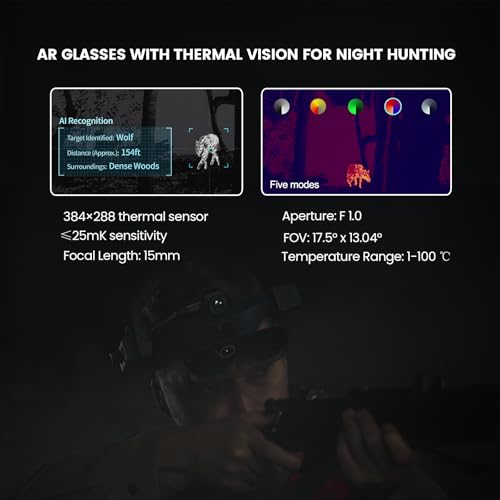
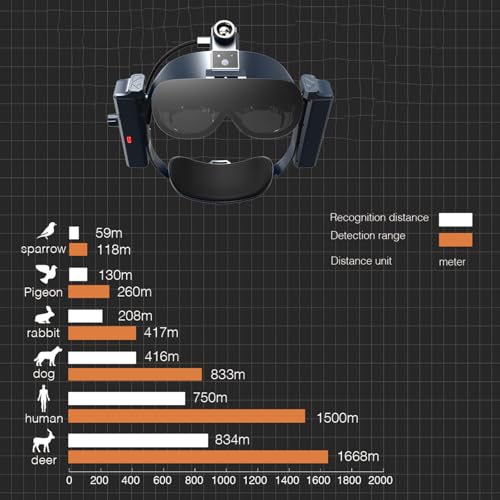
First Thermal Night Vision AR Glasses 384x288 Thermal Monocular 1500M Detection Thermal Imaging Multi-Functional Use,128GB Video Recording 80" AR Display,Thermal Vision for Hunting,Fishing,Inspection




As an Amazon Associate we earn from qualifying purchases. Product prices and availability are accurate as of the date/time indicated.

Thermal Master T2 Max Thermal Monocular for Any iPhone & Android, Plug&Play | 512x384 X³ 256x192 Ir Resolution, 15mK Ultra-Sensitive, 15mm Manual Lens, 910-Yard Night Vision, 50Hz Comfortable Display
As an Amazon Associate we earn from qualifying purchases. Product prices and availability are accurate as of the date/time indicated.
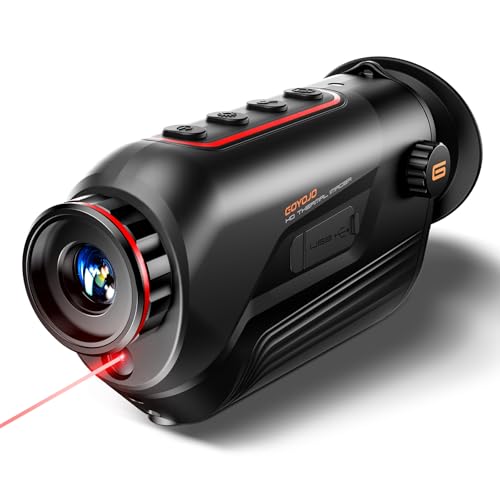
GOYOJO G215 Thermal Imaging Monocular for Hunting, 256x192 (50Hz) Infrared Night Vision Telescope, 15mm Focal Lens Thermal Scopes for Outdoor Night Vision Camera Telescope
As an Amazon Associate we earn from qualifying purchases. Product prices and availability are accurate as of the date/time indicated.
Prices shown are approximate and for reference only. Prices change often, so please check the current price on Amazon before you buy.
Sensor classes, displays, and relief figures summarize manufacturers’ published information for current versions; verify the stated eye relief and diopter range for the exact variant before purchase. Ratings are editorial, weighing eye relief and eyecup fit with frames, display quality, sensor performance, and value at the premium tier.
The Six Premium Thermal Monoculars Reviewed
1. Pulsar Axion 2 XG35: Best Overall for Glasses Wearers
The Axion 2 line leads this guide because Pulsar designs its eyepieces like an optics company rather than an electronics one: eye relief in the generous class, a display and eyepiece pairing that presents the whole image to a framed eye, a diopter span that gives the bare-eye mode a genuine chance, and a magnesium body whose compactness keeps the unit at the eye for the long scans where glasses comfort is decided. Its sensor and image processing sit in the premium class without excess, its battery system is the swappable kind field users demand, and its variants, including the rangefinder model, let the buyer pay only for the ranging they need. For the glasses wearer buying one premium thermal, it is the recommendation this guide defends, on the audition standard of its own section: frames on, whole display, no hunting, hour after hour.
2. HIKMICRO Falcon FQ50: Best Image
The Falcon’s argument is the picture: a 640-class sensor behind a large, fast lens, processed into the kind of detailed, low-noise thermal image that makes observers forget the medium’s limits, presented on a display that rewards the glasses wearer who can access it fully, and this guide grades its viewing system a half-step behind the leader’s while grading its image a half-step ahead. Its body is a substantial, two-handed-feeling monocular despite its single eye, its controls suit gloves and darkness, and its price is the premium tier’s honest middle. The wearer whose frames are slim and whose eye relief test passes in the hand will find it the most beautiful view in this table, and beauty, in an observation instrument, is a working property and not a luxury.
3. Zeiss DTI 6: Best Premium Ergonomics
Zeiss brings a century of eyepiece manners to the DTI 6: viewing comfort treated as a specification, controls placed by people who have held optics in the cold, and an image pipeline tuned for the natural, low-fatigue rendering an observer can watch for an evening. Its glasses fit sits in the guide’s top class, its build is the established maker’s, and its price is the premium the name has always carried, defended here on the ergonomics that this particular niche values above almost everything. For the wearer whose sessions are long and whose tolerance for fiddly interfaces is spent, it is the connoisseur’s row, and its rating reflects a product whose excellence is in the hours rather than in the headline numbers.
4. Leica Calonox View: Best Display Experience
The Calonox View stakes its premium on the screen: a large, high-quality display that presents the thermal image with a size and clarity its owners describe in superlatives, which for the glasses wearer cuts both ways this guide has taught, magnificent when the relief admits the whole of it, demanding when it does not, so its audition, frames on, corners visible, is the most important in this table relative to its price. Its sensor and build are its maker’s class, its ergonomics considered, and its cost the table’s summit. The wearer who passes its eye test acquires arguably the finest viewing instrument here; the wearer who does not should believe the test over the brand, which is this guide’s doctrine in one row.
5. ATN OTS 4T: Best Feature Set
ATN’s platform packs the electronics era’s whole toolbox: a 640-class sensor in its upper variants, video and streaming, ballistic-adjacent features inherited from its scopes, and lens options across a wide span, in a body whose eyepiece and relief sit in the working class rather than this guide’s top class for framed eyes. Its value is the feature-per-dollar arithmetic its constituency loves, and its ownership asks the updating and interface patience that rich platforms commonly do. For the glasses wearer whose frames are undemanding and whose wants include the recording and connectivity suite, it is a rational row; for the wearer whose whole purchase is the viewing fit, the rows above serve the brief more directly, and the ratings state that division without rancor.
6. AGM Taipan V2: Best Premium-Entry Value
The Taipan V2’s 384-class row is the table’s doorway: a sensor class below the leaders’, an image honestly less fine, at roughly half their price, in a compact body whose viewing system this guide grades respectably for frames, better than its price predicts. It is the correct purchase for the wearer who needs thermal’s detection gift, scanning fields, finding stock, watching a treeline, more than its identification finesse, and who would rather own a good thermal than finance a great one. Its presence disciplines the whole table: every dollar above its row must justify itself in the audition, sensor and screen and relief together, and a premium unit that cannot beat it frames-on has failed the only test this niche is allowed to grade by.
Buying Guide: How to Choose the Best Premium Thermal Monocular With Glasses
Step One: Verify the Lawful Use and the Real Job First
Before any audition, settle the two questions that outrank optics. The legal question: confirm, from official sources for your jurisdiction and your intended use, that possessing and using a thermal monocular for that purpose is lawful, since thermal equipment is regulated unevenly, hunting applications being the most restricted and observation the least, and the rules where you will actually use it, including parks and managed lands, being the ones that bind. The job question: name what the thermal is for in the honest verbs, detecting heat signatures at range, observing wildlife’s night behavior, locating livestock or a lost dog, checking a property’s perimeter, because the job sets the sensor class and lens the budget should serve, detection at distance wanting lens and resolution, near observation wanting field of view, and no job on the list wanting a purchase justified by a use the law forbids. With both answers written down, the premium tier’s prices become a specification to meet rather than a fog to wander, and the audition can begin.
Step Two: Audition With Your Own Frames, in the Dark
Buy this category empirically or not at all: the unit in your hand, your frames on your face, in dim conditions, the display lit, and the checklist performed in order. Whole image, corners and icons, in one natural view, no pressing, no hunting. Cup seal, ambient light excluded without the frames being driven into your face, the cup’s fold or extension set for you. Ten-minute hold, the honest minimum, since glasses discomfort is a slow negotiator and the ache at minute eight is data. Diopter trial, frames off, lanyard managed, the bare-eye image focused and judged, astigmatism and all. Controls by touch, power and palette and focus found blind, because the field use is blind. Buy from a seller whose return terms honor the audition’s possibility of failure, keep every film and tag until the verdict is final, and let no specification, including this guide’s ratings, outvote your own face, which is the instrument the monocular must fit and the only one that cannot be exchanged.
Step Three: Set Up, Protect, and Maintain the Viewing System
Once chosen, commission the unit like the premium instrument it is: diopter and eyecup set and noted, display brightness disciplined to the lowest comfortable level, which preserves both the battery and the viewer’s dark adaptation; palettes learned in daylight against known heat sources so the night’s reading is fluent; and the glasses themselves made part of the kit, a lanyard for the bare-eye mode, a microfiber in the case, and an anti-fog habit for the cold transitions that mist frames at the eyepiece. Protect the purchase in kind: the case used, the lens capped, the unit stored dry and temperate with its battery tended by its maker’s guidance, and the firmware updated on the calm schedule rather than the night before a trip. Used so, a premium thermal serves for many seasons, and its glasses fit, the property this guide bought so carefully, will still be serving on the night, years in, when the wearer finds exactly what they came to see and watches it, whole image, unhurried, for as long as it stays.
Frequently Asked Questions About Thermal Monoculars and Glasses
Can you use a thermal monocular while wearing glasses?
Yes, provided the monocular’s viewing system was designed with the room for it, which is this entire guide’s subject: sufficient eye relief, commonly in the high-teens of millimeters and upward in the class that serves wearers best, an eyecup that folds or extends to let the frames approach and seal, and a display-and-eyepiece pairing that presents the whole image at the distance a framed eye sits. The wearer’s part is empirical: frames vary enormously in size and in how far they hold the eye from an eyepiece, so the five-second audition, whole display visible at a natural hold, outranks every published figure, and the return policy is part of the purchase. Wearers should also expect the small disciplines of the combination, a lanyard’s security, an anti-fog routine in the cold, and brightness kept low, after which glasses and thermal coexist so well that the wearer stops thinking of it as a combination at all, which is the premium tier’s actual product.
What eye relief do glasses wearers need on a thermal monocular?
As a working rule drawn from the eyepiece’s physics, wearers should look for stated eye relief in the high teens of millimeters and prefer the twenty-millimeter class where the choice exists, since the frames and the eye’s own anatomy together consume several millimeters beyond the bare-eye design point, and every millimeter short of the need crops the display’s edges in proportion. Treat the figure as a screening tool rather than a verdict: makers measure relief by their own conventions, eyecup design returns or wastes millimeters the number cannot express, and two units with identical stated relief can fit the same face differently, which is why this guide’s audition, your frames, the whole display, in the dark, remains the deciding instrument. Where a specification omits eye relief entirely, assume the design did not prioritize it and audition with corresponding skepticism, because in this niche the missing number is itself information, and it is rarely good news wearing a disguise.
Is it better to use the diopter and take my glasses off?
For wearers whose prescription is a simple correction within the monocular’s diopter span, often plus-or-minus five in the premium class, the bare-eye mode is genuinely excellent: the full relief is recovered, the fogging that plagues frames at a cold eyepiece disappears, and the image is the one the designer intended. Its limits are equally real: astigmatism is not corrected by a diopter at any setting, so many prescriptions focus almost and never quite; progressive and bifocal wearers lose the distance correction the moment the glasses come off, leaving the walk between views blurred; and the glasses themselves must be managed in the dark, on a lanyard, in cold hands, dozens of times a session. The wise purchase therefore optimizes for frames-on viewing and treats a workable diopter as a second mode for long, settled watches, and the wise wearer tests both modes in the audition, since the answer is written in their own prescription and nowhere else.
Are premium thermal monoculars legal to own and use?
Ownership of thermal monoculars is broadly lawful for civilians in many places, and use is where the rules live: hunting with thermal equipment is restricted or prohibited in numerous jurisdictions and seasons, some lands and parks impose their own conditions, export and travel with thermal devices are regulated in many countries, and the specifics change often enough that this guide’s only responsible answer is its standing one, verify your exact use, in your exact place, from official sources, before purchase and before each new kind of use. Observation of wildlife, property and livestock checks, and search activities sit at the less restricted end in most places, and even they inherit local rules worth the ten minutes of checking. Two safety duties ride along regardless of legality: never treat a thermal image as positive identification for any consequential decision, since heat signatures do not show faces, weapons, or intent; and observe wildlife and people with the restraint the law and ordinary decency both expect, because an instrument that sees in darkness carries a responsibility that its price tag does not mention and its owner should not need told twice.
Related guides
- Best Low Cost Rangefinder: 6 Best Low Cost Rangefinder Picks in 2026
- Best Rangefinder for Kids Fishing Trips: 6 Best Rangefinder for Kids Fishing Trips Picks in 2026
- Best Non Leica Rangefinder in 2026: 6 Non Leica Rangefinders With Red OLED, at Least 1,000 Yards Reflective, and a Price Range, for Golf and Hunting
- Best Rangefinder for Windy Hunting: 6 Best Rangefinder for Windy Hunting Picks in 2026
More from Amazon
Programs that pair well with the guide above. Offers and eligibility are set by Amazon and may change.
Free shipping on eligible items, Prime Video and more. Eligible new members can start with a free trial.
Start a Prime free trialAudiobooks and podcasts to listen to on the go. Eligible new members can start with a free trial.
Try Audible freeAd-free music streaming. Eligible new subscribers can start with a free trial.
Try Music Unlimited freeA free business account with business pricing and bulk-buying tools for work, shop or home office.
Create a business accountAs an Amazon Associate we earn from qualifying purchases.



Write Your Review
No reviews yet. Be the first to share your experience!