
What's inside
- Best Anti Fog Treatment for Scopes: Diagnose the Fog, Then Treat the Glass
- Best Anti Fog Treatment for Scopes: Quick Comparison
- The Six Anti-Fog Treatments Reviewed
- Buying Guide: How to Choose and Use the Best Anti Fog Treatment for Your Scope
- Frequently Asked Questions About Anti Fog Treatments for Scopes
As an Amazon Associate I earn from qualifying purchases. This post may contain affiliate links at no extra cost to you.
The best anti fog treatment for scopes begins with a distinction that decides whether any product in this article can help you at all. A scope fogs in two places, and they are different diseases. External fog is condensation on the outside of the lenses, the eyepiece above all, formed when your breath, your body’s warmth, or a climb from a cold truck into humid air puts moisture on glass that is colder than the dew point; it is annoying, common, and treatable, by the anti-fog treatments compared below and by the habits in the buying guide. Internal fog is moisture inside the sealed tube, and it means the scope’s waterproofing and its nitrogen or argon fill have failed; no wipe, spray, or paste on earth can reach it, and its only cures are the maker’s warranty service or the scope’s retirement. This guide is honest about that boundary in its first paragraph because the anti-fog market is not: half the disappointed reviews under every product below were written by owners treating internal fog externally, polishing a symptom while the seal’s failure waited for the phone call that would actually fix it. Diagnose which fog you have, it takes one minute and the guide teaches it, then choose from six real, currently sold treatments graded for external scope fog specifically, lens coatings’ safety first, because a treatment that saves the morning and eats the coating has cured the cheap problem by creating the expensive one.
Understand what an anti-fog treatment physically does, because the mechanism explains every difference in the table. Bare glass is hydrophilic in patches: condensation nucleates into millions of tiny droplets, each one a lens scattering light, and the view whites out. An anti-fog treatment leaves a hydrophilic film that persuades the same moisture to spread into a continuous, transparent sheet instead of beading into droplets, so the lens can be wet and still see-through. The treatments divide by how that film is delivered and how long it survives: pastes buffed on and polished thin, sprays misted and wiped, pre-treated wipes that combine cleaner and film in one pass, and kits built around a treated cloth. All of them are temporary, hours to days depending on humidity, handling, and how often the lens is wiped by a sleeve in the field, and all of them share the field law this guide repeats until it is reflex: a treatment is applied at home, on a clean lens, before the hunt or the match, never improvised on a fogged lens in the moment with whatever cloth is nearest, because grinding field grit across a coating under pressure is the one outcome worse than fog.
Our Top Picks
Best Anti Fog Treatment for Scopes: Diagnose the Fog, Then Treat the Glass
External vs Internal Fog: The One-Minute Diagnosis
Perform this test before buying anything. Fog the scope as it fogged in the field, or find it fogged, and look carefully at where the mist lives. Wipe the outer surface of the eyepiece and the objective gently with a clean microfiber: if the fog clears, it was external, and this entire article is yours. If the mist remains, visible as a haze behind the glass, softening the view uniformly, sometimes with droplets visible on an inner element when you look through the scope backward in good light, the fog is internal. Internal fog often appears after a temperature swing, the cold scope brought into a warm room showing its inner weather, and it may fade as the scope equalizes, which tempts owners to ignore it; do not, because a scope that has breathed moisture in will fog again at the field’s worst moment, and the correct action is the maker’s warranty process, with the scope’s purchase records, while the failure is documented. Everything below serves the external disease, which is fortunately the common one, and serves it well when the diagnosis is right.
Coating Safety: The Rule Above All Product Claims
A modern scope’s lenses carry antireflective coatings measured in molecular layers, and they are the optic’s value. The anti-fog treatment’s first duty is to do them no harm, which excludes a shelf of improvisations this guide names so they can be refused: dish soap, shaving cream, toothpaste, saliva in the diving tradition, automotive glass treatments, and any household glass cleaner with ammonia or abrasives, all of which range from coating-risky to coating-fatal and none of which belong on a scope regardless of the forum testimonials behind them. The products in this table are formulated and sold for optics, camera lenses, goggles, and instruments, with track records on coated glass. Even among them, technique is the safety: clean the lens first with air and a brush so no grit is trapped under the treatment, apply with the applicator or a clean microfiber, never with a shirttail or a field glove, and buff gently, because coatings are scratched by particles and pressure, not by approved chemistry. A treatment used this way is safer than the untreated lens’s fate, which is the sleeve wipe in the fogged moment that every hunter has performed and every coating remembers.
Where Scope Fog Actually Strikes: The Eyepiece’s Microclimate
Scope fog is overwhelmingly an eyepiece disease, and knowing why shapes the whole defense. The objective, out at the muzzle end in the ambient air, equalizes with the morning and mostly behaves. The eyepiece lives in the microclimate behind the shooter’s face: breath rising from a collar on a cold stand, the warmth of an eye and a cheek against the stock, the scope carried against a warm body under a jacket and then mounted into cold air at the shot. Each is a dew point appointment the eyepiece keeps. The treatments therefore earn their keep on the ocular lens above all, and the habits that support them are aimed there too: the scope capped until the moment of use, lens covers being the cheapest anti-fog ever sold; the rifle carried muzzle down or the scope shielded from breath on the climb; the glass given a minute to equalize when moving from the truck’s heat to the field’s cold before the caps come off. Products and habits together are the system, and the table grades the products while the buying guide installs the habits, because either alone loses mornings that both together save.
Best Anti Fog Treatment for Scopes: Quick Comparison
| Anti Fog Treatment for Scopes | Key Specs | Best For | Typical Price Range | Rating |
|---|---|---|---|---|
| EK Ekcessories Cat Crap Anti-Fog Paste | Paste in a small tub, apply and buff, long track record on optics and goggles, a little covers many applications | Best anti fog treatment for scopes overall | $8 – $14 | 4.6 / 5 |
| MotoSolutions FogTech DX Wipes | Pre-treated single-use wipes, cleaner and anti-fog in one pass, long-lasting film claims in class, pocketable packets | Best for field kits and long hunts | $12 – $20 per pack | 4.5 / 5 |
| ZEISS Anti-Fog Kit | Spray and cloth kit from an optics maker, formulated for coated lenses in class, eyeglass and instrument heritage | Best maker-trusted kit | $10 – $18 | 4.4 / 5 |
| Optix 55 Anti-Fog Spray | Spray bottle, multi-surface optics and goggles positioning, large volume per price in class | Best value spray | $10 – $16 | 4.3 / 5 |
| Nikon Fog Eliminator Wipes | Pre-moistened wipes in individual packs, dry-to-clear application in class, camera and optics brand | Best grab-and-go wipes | $8 – $14 per pack | 4.2 / 5 |
| Clarity Labs Defog It Wipes | Anti-fog wipes, reusable treated cloth format options in class, safety-glasses and optics heritage | Best reusable cloth option | $10 – $16 | 4.2 / 5 |

View Swimming Gear TEC-52A Super Anti-Fog Treatment
As an Amazon Associate we earn from qualifying purchases. Product prices and availability are accurate as of the date/time indicated.
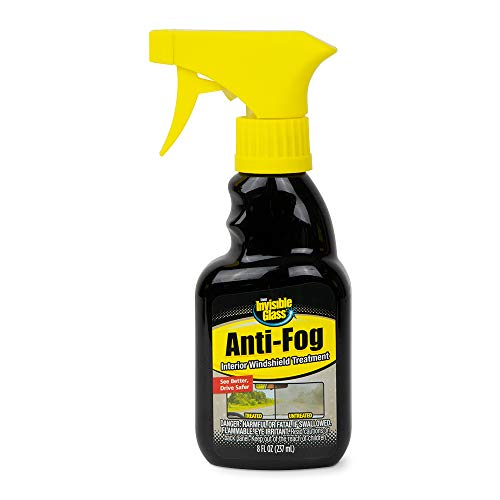
Invisible Glass 92472 Anti-Fog Interior Windshield Treatment Car Glass Defogger Cleaning Spray Prevents Windshield Fogging To Improve Driving Visibility, No Streaks or Haze, 8 Fl Oz, Pack of 1

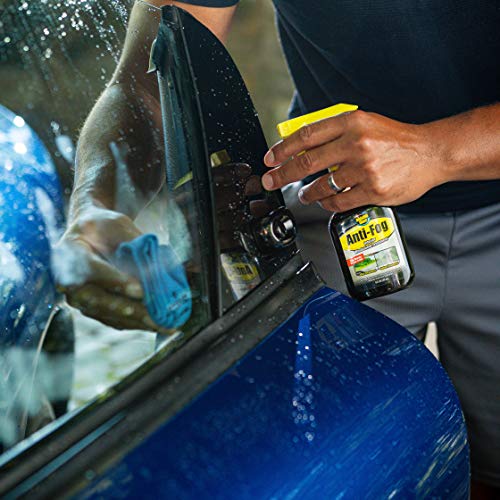


As an Amazon Associate we earn from qualifying purchases. Product prices and availability are accurate as of the date/time indicated.

Adam's Anti-Fog Spray 4oz - Windshield, Mirror & Lens Fog Treatment | Windshield Anti-Fog Spray, Glass, Mirrors, Lenses & Visors, Hydrophilic Formula, Tint Safe, Microfiber Application, 4 oz
As an Amazon Associate we earn from qualifying purchases. Product prices and availability are accurate as of the date/time indicated.
Prices shown are approximate and for reference only. Prices change often, so please check the current price on Amazon before you buy.
All products treat external condensation only; none can remedy internal fogging, which is a seal failure for warranty service. Prices are typical street ranges for standard consumer sizes. Ratings are editorial, weighing effectiveness on scope eyepieces, coating safety record, application ease, longevity of the film, and value.
The Six Anti-Fog Treatments Reviewed
1. Cat Crap Anti-Fog Paste: Best Overall
Cat Crap’s unfortunate name sits on the category’s most trusted tub. The paste application is its discipline and its advantage: a fingertip’s worth worked over the clean lens and buffed to invisibility leaves a film that skiers, riders, and scope owners have relied on for decades of mornings, and because you apply it deliberately, at home, with the lens inspected and cleaned first, it fits the ritual this guide prescribes better than any spray’s haste. A tub lasts seasons, its cost per treated morning approaches zero, and its record on coated optics is the longest in this table. Its weaknesses are the paste’s own: overapply and the view hazes until the excess is buffed away, a beginner’s error cured by the rule that the film should be invisible when you are done, and the tub wants a clean finger or applicator rather than a field glove. For the scope owner who treats the night before, it is the default this guide defends.
2. FogTech DX Wipes: Best for the Field Kit
FogTech’s wipes are the treatment as a sealed unit: one packet cleans and treats in a pass, leaves a film the maker positions for longevity, and weighs nothing in the pack’s lid, which is where anti-fog belongs when the hunt is measured in days and the basecamp is a tent. The wipe format removes the paste’s technique from the equation, the dose is the packet’s rather than your judgment’s, and the film’s durability across a wet weekend is the strongest claim in this table’s class, borne out by the safety and shooting communities that standardized on it. Their cost per application is the table’s highest, the arithmetic of convenience, and the used wipe must be packed out like everything else in this site’s field ethics. For the backcountry hunter and the match shooter whose kit is counted in grams and certainties, they are the professional’s row.
3. ZEISS Anti-Fog Kit: Best Maker-Trusted Kit
The ZEISS kit sells reassurance with an optics maker’s name on it: a spray and cloth formulated and marketed for coated lenses by a company that coats more famous glass than anyone in this article, which settles the coating safety question for the cautious owner more completely than any review can. Its performance is the spray class’s honest standard, a clean application the evening before, a film good for the morning’s conditions, reapplied as a multi-day trip requires, and its cloth is the right tool for the buffing. It will not outlast the FogTech film or out-economize the Cat Crap tub, and it is not trying to: it is the choice of the owner whose scope cost enough that the treatment’s pedigree matters as much as its chemistry, a reasoning this guide respects because the anxiety it cures is real.
4. Optix 55 Anti-Fog Spray: Best Value Spray
Optix 55 is the spray bottle for the household with many lenses: scopes, binoculars, range glasses, and the bathroom mirror all treated from one inexpensive bottle whose volume makes the cost per application trivial. Spray application is the fastest and the least precise in the table, a mist, a settle, a gentle buff with a clean microfiber, and its film’s longevity is the spray class’s usual, a morning to a day depending on the humidity’s ambition. Its positioning spans goggles and optics generally rather than scopes specifically, which the careful owner answers with the patch discipline this guide teaches for every newcomer product: first use on the eyepiece’s edge, inspect, then commit. For the family armory and the range bag that serves three shooters’ glasses, it is the economy row, honestly graded.
5. Nikon Fog Eliminator Wipes: Best Grab-and-Go
Nikon’s wipes bring a camera and optics house’s name to the simplest format in the table: individual packets that live in the range bag, the truck’s console, and the scope case’s pocket, opened in the evening, wiped on, and allowed to dry to clarity. Their film is the wipe class’s lighter end, a morning’s protection rather than a weekend’s, and their virtue is presence: the best treatment is the one actually applied, and no product here is more likely to be at hand when the decision is made. Photographers standardized on them for viewfinders, an eyepiece by another name, which is the most relevant testimonial a scope owner could ask for. Keep a packet in every kit you own and the fog question is answered before it is asked, which is a strategy, not just a product.
6. Clarity Defog It: Best Reusable Cloth Option
Defog It offers the treated cloth format, a reusable microfiber carrying the anti-fog treatment, wiped over the lens to clean and protect in one motion, with the cloth’s treatment renewing across its working life by the maker’s design. Its heritage is the safety glasses world, where fog is an industrial hazard rather than an inconvenience, and its scope manners are the cloth’s: convenient, gentle, always in the case, with a film lighter than the paste’s best and a longevity measured in the day rather than the weekend. Its buyers are the high-frequency users, the range officer, the instructor, the shooter whose eyepiece fogs at every weekly session and who values the cloth’s zero ritual above the paste’s stronger film. It closes the table as the convenience champion of a category where convenience, honestly, decides what gets used.
Buying Guide: How to Choose and Use the Best Anti Fog Treatment for Your Scope
Step One: Diagnose, Then Choose the Format That Fits Your Ritual
Run the diagnosis in this guide’s first section and spend nothing until it acquits the seals: external fog buys a treatment, internal fog makes a warranty call, and the owner who confuses them wastes both money and a season. Then choose the format by the ritual you will actually perform. The night-before preparer takes the paste or the kit and treats at the bench, lens cleaned, film buffed invisible, caps on. The backcountry traveler takes the wipes, dosed and sealed, and treats at camp. The range regular takes the cloth or the grab-and-go packets that live where the fog happens. Match the product to the habit with the same honesty you would match a scope to a rifle, because the most effective treatment in this table, left in the wrong drawer, loses every morning to the adequate one that was there.
Step Two: Apply It Like a Lens Technician, Not Like a Camper
The application protocol is identical for every row and it is not optional. Work indoors or in the tent, in good light, with the scope supported. Clean first: blow the lens clear, brush it with a lens brush, and only then touch it, because treatment applied over grit is a grinding compound with good intentions. Apply the product sparingly by its format’s instructions, paste thinnest, spray misted, wipe passed once without scrubbing, and buff gently with a clean microfiber until the film is invisible, inspecting against the light for haze, which is excess product asking to be polished down, not a failure. Treat both lenses, eyepiece first in importance, and cap the scope immediately. In the field, maintain the system rather than re-treating it: caps on until the shot, breath directed away, the scope given its minute to equalize after a temperature change, and a fogged lens in the moment dabbed, never rubbed, with the cleanest microfiber you carry, accepting a degraded view for one opportunity rather than a scratched coating for the scope’s life.
Step Three: Build the Anti-Fog System Around the Product
The treatment is one layer of a system whose other layers are free. Keep the scope’s storage dry, a desiccant pack in the safe or case where this site’s storage guidance already puts one, so the hunt starts with dry glass and a dry microclimate in the tube’s neighborhood. Use quality flip caps or a neoprene scope cover as the default state, because a covered eyepiece meets neither breath nor body heat until the moment of the shot. Manage the transitions that cause the worst fog: the scope that sleeps in the warm truck and hunts in the frost should ride the last mile in the cold bed or the unheated case, equalizing gradually, and the hunter who climbs hard to a stand should let the glass settle while their own breathing slows, since the foggiest eyepieces in the record were fogged by their owners’ lungs in the first excited minute. Store the treatment where the ritual happens, paste by the bench, wipes in the pack, packets in the case, and the system holds. Fog will still visit on the worst mornings; the system decides whether it visits as a wipe and a wait, or as the story of the deer that stood in a white circle and walked away.
Frequently Asked Questions About Anti Fog Treatments for Scopes
Can an anti-fog treatment fix a scope that fogs on the inside?
No, and this guide gives the answer its own question because the misunderstanding is the category’s most expensive. Internal fog is moisture that has entered the sealed tube through a failed seal, displacing or overwhelming the dry nitrogen or argon fill the maker sealed inside, and it condenses on the inner lens surfaces where no wipe, spray, paste, or prayer applied outside can reach it. The scope may clear as temperatures equalize, which is the failure’s disguise rather than its recovery, and it will fog again under the field’s temperature swings, reliably at the worst moments. The correct response is documentary and procedural: note when it fogs, photograph it if you can, and contact the maker’s warranty service, because internal fogging is precisely the failure that reputable scope warranties exist to repair or replace. Spending on treatments for an internally fogged scope is not harmless, either, since the season spent polishing a symptom is a season the warranty clock and the hunting calendar both count. Diagnose first, by the wipe test in this guide, and let the diagnosis spend your money.
Are anti-fog treatments safe for lens coatings?
The optics-formulated products in this table, yes, used by the protocol: clean lens first, sparing application, gentle buffing with a clean microfiber. Their safety records rest on decades of use on coated camera lenses, binoculars, and scopes, surfaces at least as delicate as yours, and the makers who sell them stake an optics reputation on the compatibility. The danger in this category has never been the approved chemistry; it is the particle trapped under a cloth and dragged by pressure, which is why the cleaning step precedes the treatment step and why field improvisations, the sleeve, the glove, the shirttail, have scratched more coatings than every product here combined. The improvisations to refuse outright are the household ones, soaps, shaving foams, toothpaste, automotive treatments, and ammonia cleaners, whose formulations were never asked the coating question. When a new product tempts you, the discipline is the patch test: apply first at the eyepiece’s edge, inspect in good light, and commit only when the glass answers clean.
How long does an anti-fog treatment last on a scope?
Hours to days, and the honest range depends on the format, the humidity, and your hands. Paste films, carefully applied, typically carry a scope through a long day of temperature swings and often into a second; the durable wipes position themselves for the multi-day trip and in practice earn it when the lens is left alone; sprays and cloths serve the morning or the session they were applied for. Everything shortens the film that touches the lens: every wipe, every cap brushed across it, every rainstorm the objective endures, and the high humidity stand in a river bottom will spend a film faster than a dry mountain ridge spends the same one. The practical doctrine is to treat the night before every serious outing, carry the format’s renewal for the multi-day trip, and judge any product claiming weeks of protection from one application on a working scope the way this guide judges all such claims, as marketing’s weather rather than the field’s. A treatment is a consumable, priced like one in this table, and its budget line belongs with the ammunition and the batteries.
What else can I do to stop my scope fogging while hunting?
Build the system in this guide’s third step, because the habits outperform any single product. Keep the eyepiece covered until the moment of use; flip caps or a scope cover are the cheapest anti-fog in existence. Manage temperature transitions gradually, letting the scope ride cold to a cold hunt rather than shocking it from the truck’s heater to the frost at the shot. Aim your breath away from the ocular lens on the stand, a scarf or a turned head at the critical minute, and let a climbed-to stand settle, glass and hunter together, before uncapping. Carry the scope so the eyepiece does not ride against your warm back under layers, and when fog does form in the moment, dab with the clean microfiber you now carry for exactly this, never rub, and wait the minute it asks for if the opportunity allows. Finally, keep the home storage dry with desiccant where the scope lives, because a scope that starts the morning dry, treated, capped, and equalized has to be defeated by genuinely exceptional weather, and on those mornings, every other hunter on the ridge is looking through the same white circle you are, which is the field’s own consolation.
Related guides
- Best Low Cost Rangefinder: 6 Best Low Cost Rangefinder Picks in 2026
- Best Rangefinder for Kids Fishing Trips: 6 Best Rangefinder for Kids Fishing Trips Picks in 2026
- Best Non Leica Rangefinder in 2026: 6 Non Leica Rangefinders With Red OLED, at Least 1,000 Yards Reflective, and a Price Range, for Golf and Hunting
- Best Rangefinder for Windy Hunting: 6 Best Rangefinder for Windy Hunting Picks in 2026
More from Amazon
Programs that pair well with the guide above. Offers and eligibility are set by Amazon and may change.
Free shipping on eligible items, Prime Video and more. Eligible new members can start with a free trial.
Start a Prime free trialAudiobooks and podcasts to listen to on the go. Eligible new members can start with a free trial.
Try Audible freeAd-free music streaming. Eligible new subscribers can start with a free trial.
Try Music Unlimited freeA free business account with business pricing and bulk-buying tools for work, shop or home office.
Create a business accountAs an Amazon Associate we earn from qualifying purchases.



Write Your Review
No reviews yet. Be the first to share your experience!